
Spying on Your Partner’s Phone: A Professional’s Guide to the Truth
The impulse behind spying on your partner’s phone is one of the most common and painful dilemmas in modern relationships. It often starts not with malice, but with a deep-seated anxiety—a missed call that goes unexplained, a new password on a device, or a growing emotional distance that words cannot bridge. For ten years, I have worked as a digital security consultant and private investigator, and I have seen how this crisis of trust can push people toward desperate, and often illegal, technological solutions.
Updated February 2026

This article will provide an unflinching look at the reality of partner surveillance. We will explore the powerful technology that makes it possible, dissect the severe legal and personal consequences of its use, and, most importantly, outline the healthier paths to address the root cause: broken trust. My goal is not to facilitate spying but to inform you of its true cost and guide you toward ethical resolutions.
The Harsh Legal Reality: It’s Not Just Wrong, It’s a Crime
Before examining a single app, you must understand the legal boundary. Installing monitoring software on another adult’s personal device without their explicit consent is illegal. This act transforms a commercial app into what security experts and law enforcement term stalkerware or spouseware.
In the United States, this violates federal laws like the Computer Fraud and Abuse Act, which prohibits unauthorized access to a computer system. It also breaches state-level wiretapping and electronic surveillance statutes. Convictions can result in felony charges, significant fines, and even imprisonment. Beyond criminal court, you can be sued civilly for invasion of privacy. Any evidence gathered this way is typically inadmissible in family court and may work against you in custody or divorce proceedings.
How Partner Spyware Actually Works
The technology behind spying on your partner’s phone is sophisticated. Apps marketed for “parental control” or “employee monitoring” are often repurposed for this illegal use. They generally require one-time physical access to the target phone for installation. Once installed, they operate in a stealth or hidden mode, with no icon on the home screen, and transmit a vast array of data to a private online dashboard controlled by the installer.
This dashboard can reveal:
- Location Data: Real-time GPS tracking and a full history of movements.
- Private Communications: Every SMS, iMessage, and chat from social media apps like WhatsApp, Facebook Messenger, Instagram, and Snapchat.
- Call Logs: Records of all incoming and outgoing calls, often with durations.
- Digital Activity: Browsing history, photos, videos, and even keystrokes (via a keylogger).
Comparative Analysis: Three Commonly Misused Applications
When misused for spying on your partner’s phone, these applications offer a disturbing depth of insight. The following table compares their general capabilities, which are legally intended for parental control with consent.
| Application | Primary Legal Purpose | Common Features When Misused | Key Risk Factor |
|---|---|---|---|
| Sphnix Tracking App | Device Monitoring | GPS tracking, social media & call monitoring, ambient listening, keylogging. | Extreme invasiveness; offers remote microphone/camera access. |
| mSpy | Parental Control | Comprehensive social media & SMS tracking, keylogging, geofencing, stealth operation. | Industry leader; widely promoted but frequently abused for partner surveillance. |
| Parentaler | Family Safety | Location tracking, call/SMS monitoring, app blocking, screen time management. | Simpler interface; often perceived as “less harmful” but remains illegal for covert use. |
1. Sphnix Tracking App: The Covert Surveillance Suite
Sphnix represents the high end of intrusive monitoring. It is designed to be completely hidden and provide a total digital snapshot of a person’s life.
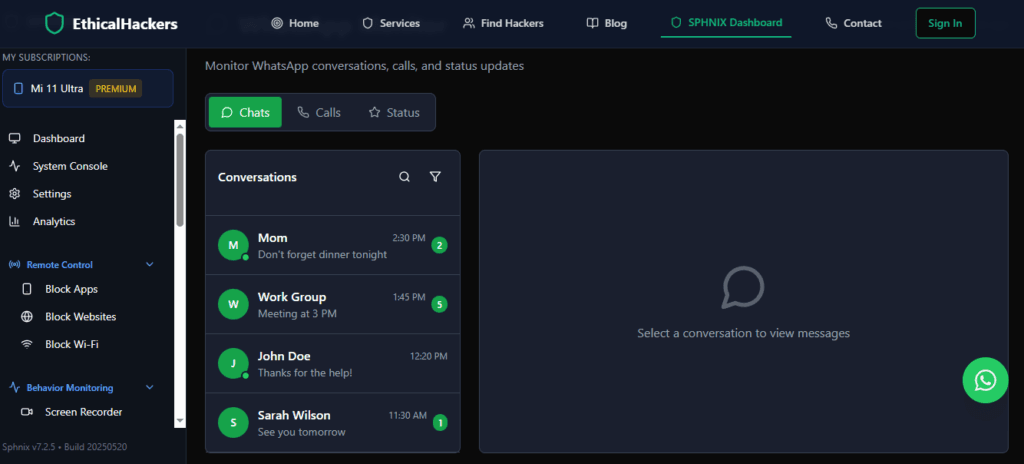
- Key Features: Beyond standard tracking, it often promotes capabilities like remotely activating the phone’s microphone to listen to surroundings or accessing the camera.
- Professional Assessment: This level of surveillance is profoundly violating and is a hallmark of severe controlling behavior and abuse.
2. mSpy: The Established Industry Name
mSpy is one of the most well-known applications in this space, frequently appearing at the top of search results for monitoring software.

- Key Features: It reliably tracks a wide array of social media platforms, records keystrokes to capture passwords and searches, and provides detailed location reports.
- Professional Assessment: Its prevalence normalizes the idea of surveillance. Security researchers consistently find mSpy installed in cases of intimate partner surveillance.
3. Parentaler: Simplified Monitoring Interface
Parentaler is typically marketed with a focus on child safety and simpler oversight.

- Key Features: It focuses on core functions like location history, call and text message logs (not content from social apps), and basic app management.
- Professional Assessment: Its family-friendly branding can be misleading. Using it to monitor a partner without consent is equally illegal and harmful.
The Unseen Consequences: Erosion of Trust and Mental Health
The technical success of spying on your partner’s phone guarantees relational failure. The damage extends far beyond the legal risk.
- It Permanently Erodes Trust: Trust is the foundation of a relationship. Surveillance replaces it with a dynamic of warden and prisoner. Even if you find nothing, you have poisoned the relationship with your betrayal. The relationship cannot heal because the secret surveillance itself is the new, deeper wound.
- It Harms Your Mental Health: The cycle of obsessive checking is addictive and corrosive. It fuels anxiety rather than alleviating it. You become a prisoner of the dashboard, interpreting neutral data as proof of guilt.
- It Is a Form of Abuse: Domestic violence organizations uniformly classify the use of stalkerware by a partner as a tactic of digital abuse. It is a tool for control, intimidation, and isolation, creating a climate of fear and violating a person’s fundamental right to privacy.
Ethical and Legal Paths Forward
If your concerns are serious enough to consider illegal spying, they are serious enough to address through ethical means.
- Direct, Courageous Communication: Initiate a conversation using “I feel” statements. Say, “I’ve been feeling insecure and disconnected. I miss our closeness. Can we talk about what’s happening with us?” This is harder than spying but is the only path to genuine resolution.
- Seek Professional Counseling: A licensed couples therapist is trained to facilitate conversations about betrayal, distrust, and communication breakdowns. They provide a neutral space to safely address these painful issues.
- Practice Transparent Accountability: If trust needs rebuilding, some couples mutually agree to share locations or passwords for a limited time as a gesture of goodwill. The critical difference is full, voluntary consent from both parties, using standard apps like Find My Friends.
- Consult a Legal Professional: If you believe the relationship is ending and are concerned about hidden assets or misconduct, speak to a lawyer. They can use legal discovery processes to obtain information, which is both ethical and admissible in court.
Conclusion: Choose the Harder Path of Integrity
The technology for spying on your partner’s phone is powerful, accessible, and deeply damaging. While apps like Sphnix, mSpy, and Parentaler demonstrate what is technically possible, using them against a partner is an act that will likely end the relationship and may bring the law crashing down upon you.
True security in a relationship cannot be downloaded or installed. It is built through vulnerable conversations, consistent honesty, and mutual respect. Choosing to spy is ultimately a choice to end the partnership as you know it. Have the courage to choose the harder path: face the issue directly through communication or professional help, or make the clean, legal decision to part ways. Your integrity and future self will thank you.
If you are struggling with suspicion, remember that illegal surveillance creates more problems than it solves. For confidential guidance on navigating relationship challenges ethically, consider seeking professional advice.
Frequently Asked Questions (FAQs)
Q1: Can my partner find out if I install spyware on their phone?
Yes. While these apps are designed to be hidden, signs can give them away: the phone battery may drain unusually fast, it might run hotter, perform slower, or show unexpected data usage. Tech-savvy users might find the hidden app in settings or detect it with a security scan.
Q2: What should I do if I discover spyware on my phone?
First, consider your safety. If you are in a controlling or abusive relationship, contact a domestic violence hotline for a safety plan. Technically, you can run a malware scan with a reputable security app or perform a factory reset (back up your own data first). Do not confront the installer if you feel unsafe.
Q3: Is it spying if we have an open phone policy?
No. An open phone policy is a mutual, consensual agreement between partners. The cornerstone is consent and transparency. Spying is defined by the secrecy and lack of consent. What matters is the agreement you have both willingly made.