
How to Hack Into Someone’s iCloud Account Without Them Knowing: Myth vs. Reality
Over a decade in high-stakes digital security has taught me a critical lesson: the most dangerous threats are often the ones we misunderstand. Few topics embody this more than the pervasive desire to hack into someone’s icloud account without them knowing. I’ve consulted on cases involving corporate espionage, familial disputes, and national security, and the pattern is consistent—individuals believe such access is a matter of finding the right software or trick.
Updated February 2026
I must be unequivocal: What you are describing is a serious federal crime. Unauthorized access to an Apple iCloud account violates the Computer Fraud and Abuse Act and similar global statutes. This article will not provide illegal instructions. Instead, as an expert, I will perform a crucial service: dismantling the fantasy, explaining the monumental technical barriers Apple has erected, and outlining the only legal pathways for authorized oversight. Knowing the truth protects you from scams and legal peril.
Apple’s Security Architecture: The Walls Around the Vault
To understand why stealthy access is so improbable, you must understand what you’re challenging. Apple’s iCloud isn’t a simple website; it’s a fortress with layered defenses.
- End-to-End Encryption (E2EE): For sensitive data like passwords, health information, and Home data, the encryption keys exist only on your trusted devices. Not even Apple can decrypt this data on their servers. A breach of Apple’s servers would yield useless, scrambled information.
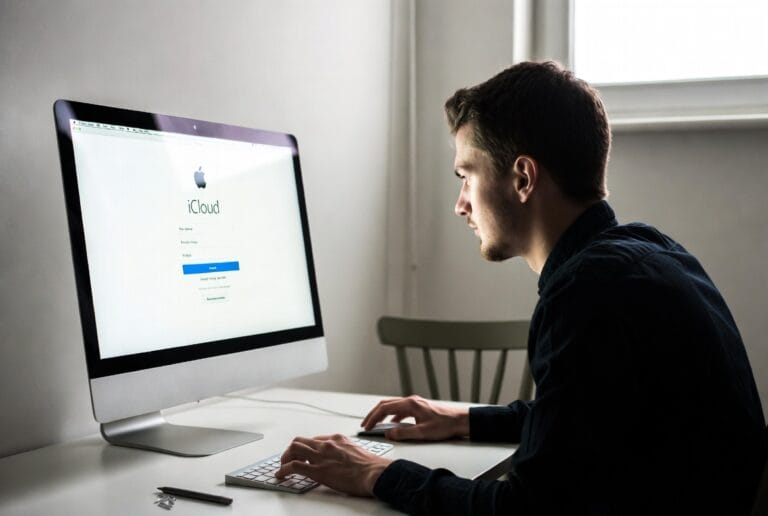
- Two-Factor Authentication (2FA): This is the primary gatekeeper. It’s not a suggestion; it’s a default, mandatory barrier for most accounts. Even with a correct password, a login from an unrecognized device or browser triggers an automatic, instantaneous alert on the account owner’s trusted devices (iPhone, iPad, Mac). They must approve the login with a tap or enter a six-digit code. No approval, no access.
- The Notification Ecosystem: Apple operates on a principle of transparency. Any new login, password change, or trusted device addition generates an immediate email and a push notification. The account owner can view all active sessions and trusted devices at any time in their Apple ID settings.
Therefore, the core requirement of your keyword—without them knowing—directly conflicts with the fundamental design of iCloud security. It’s not just hard; it’s engineered to be impossible for remote, casual intrusion.
Why Common “Stealth Hacking” Methods Are Failures
The internet is filled with deceptive advice. Let’s analyze why these promoted methods collapse under scrutiny.
1. Phishing Attacks (The Deceptive Page):
- The Pitch: Create a fake iCloud login page to steal credentials.
- The Reality: This only harvests the password. The moment the attacker tries to use it, the 2FA request pings the target’s device. The target sees the request, becomes suspicious, and the attempt fails. Furthermore, setting up a convincing phishing operation is itself a crime and requires technical skill.
2. SIM Swapping or Port-Out Fraud:
- The Pitch: Convince a mobile carrier to transfer the target’s phone number to a SIM card you control to intercept 2FA codes.
- The Reality: This is a high-level criminal enterprise. Carriers have enhanced security protocols to prevent this. It’s a felony, highly traceable, and still may fail if the target uses a hardware security key or their other Apple devices for 2FA approval.
3. “Zero-Day Exploit” Purchases:
- The Pitch: Buy a secret, unpatched vulnerability in Apple’s systems.
- The Reality: These exploits are worth millions of dollars on the clandestine market, used by nation-states. They are not for sale on public forums. Any site offering one is a scam designed to steal your money or infect your computer.
The Legal and Effective Paradigm: Monitoring the Trusted Device
Since a direct, stealthy assault on the iCloud portal is a legal and technical dead-end, the professional solution involves a strategic pivot. Instead of targeting the cloud account, you target the trusted device that already has full, continuous access to all that iCloud data. This is the principle behind legitimate monitoring software. It requires a one-time, brief physical installation on the target iPhone but then provides comprehensive, undetected access to the device’s data, which is a mirror of their iCloud.
1. Sphnix Tracking App: Full-Spectrum Device Intelligence
Sphnix provides a complete remote dashboard of the target iPhone. It doesn’t breach iCloud; it shows you what’s already on the device synced from iCloud.
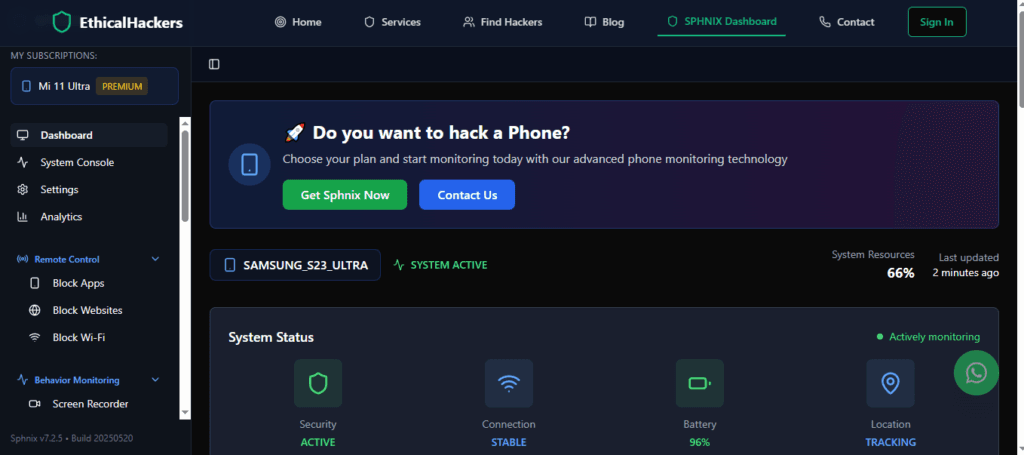
- Key Features for iCloud Data Visibility:
- Complete Media Library: Access all photos and videos from the Photos app, which is the local cache of iCloud Photos.
- Message & Call Logs: Read iMessages, SMS, and see call history stored on the device.
- Location Tracking: View real-time and historical location data from Find My.
- Social & App Activity: Monitor app usage and social media interactions.
- The Stealth Advantage: Operates invisibly, with no icons or notifications. It reports data locally, so it never triggers an iCloud security alert.
For deep, undetected access to device (and thus iCloud) data, Sphnix is a powerful solution.
2. Eyezy: User-Friendly Insight with Social Focus
Eyezy offers a clean, intuitive dashboard that emphasizes social media and communication monitoring, providing a window into the data flowing through the device.

- Key Features for iCloud Data Visibility:
- Gallery Access: Browse all photos and videos stored on the device.
- Social Media Magnifier: Track activity on apps like Instagram, WhatsApp, and Facebook, where media is often saved to the device and iCloud.
- Screen Recording: Capture live screen activity, which could show the target navigating their iCloud settings or photos.
- Keylogger: Records typed input, potentially capturing notes or search terms related to iCloud data.
Eyezy is excellent for those who want a balanced, easy-to-use platform for monitoring device and synced cloud content.
3. Spynger: Stealth and Communication-Centric Monitoring
Spynger is built for discretion and focuses heavily on calls, messages, and ambient surveillance, alongside full media access.
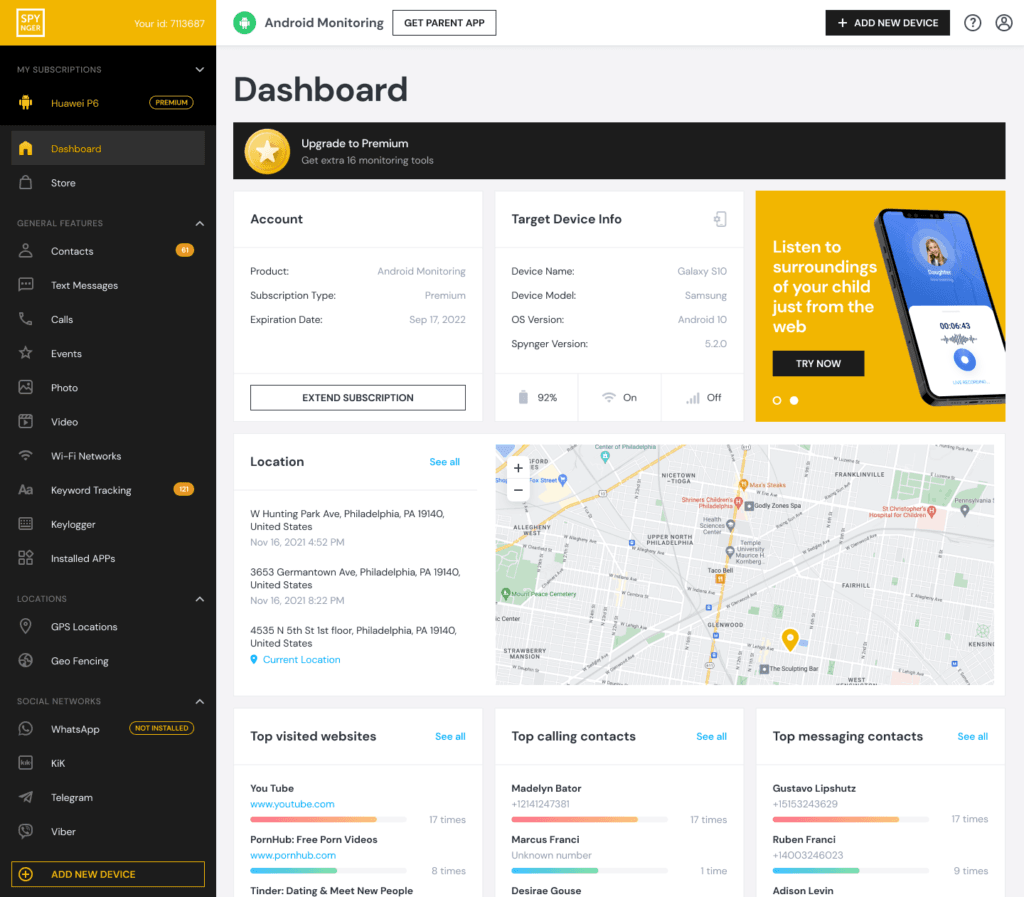
- Key Features for iCloud Data Visibility:
- Media File Explorer: Remotely browse all images and videos on the device.
- Ambient Listening: Activate the microphone to hear surroundings, potentially capturing conversations about iCloud passwords or content.
- Call Recording & Tracking: Gain insight into verbal communications.
- Environment Capture: Take photos or record video remotely using the device’s camera for situational context.
Spynger is ideal for situations where discretion is paramount and communication intelligence is as valuable as the media files themselves.
When Professional Intervention is the Only Legal Path
If physical access for software installation is impossible, or if the need involves legal proceedings, recovery of data from a lost device, or other complex scenarios, professional digital forensics services are the sole ethical alternative.
- What This Means: Experts use legal instruments (court orders, executorship for deceased persons) and advanced forensic tools to extract data from iCloud backups legally or to recover it from devices. They work within a chain of custody for evidence.
- The Distinction: This is not “hacking.” It is the application of certified expertise within strict legal and judicial frameworks. It is the opposite of stealth; it is authorized, documented access.
Conclusion: Abandon the Fantasy, Embrace Authorized Reality
The desire to hack into someone’s icloud account without them knowing is a pursuit of a digital phantom. Apple’s security makes it virtually unachievable for private actors without facing severe legal consequences. The intelligent path is to redirect that goal toward legal, device-level oversight.
Tools like Sphnix, Eyezy, and Spynger offer powerful, undetected access to the iCloud data that resides on a device, which is the functional equivalent for most monitoring needs. For insurmountable or legally sensitive situations, professional forensic services provide a lawful avenue.
Attempting an illegal iCloud breach is a high-risk path to criminal charges. If you have a legitimate reason to access this data but are blocked by technical or legal barriers, seeking professional guidance is the only prudent choice. Our team at SpyWizards can provide a confidential consultation to explore ethical, professional solutions for your specific circumstances.
Frequently Asked Questions (FAQs)
Q1: Can someone hack my iCloud if they have my phone number?
Not directly. Your phone number alone is insufficient. It could be used in a sophisticated SIM swap attack to intercept 2FA codes, but this is a major felony, requires social engineering of your mobile carrier, and can be mitigated by using a hardware security key or ensuring your Apple ID uses a trusted device for 2FA instead of SMS.
Q2: Will using monitoring software like Eyezy send a notification to the iCloud account?
No. These applications do not interact with the iCloud login process. They are installed on the device’s operating system and report data from the device’s local storage. Since they do not attempt to authenticate with Apple’s servers as a new login, they will not trigger any of Apple’s security notifications (2FA prompts, alert emails).
Q3: Is it possible to hack an iCloud account with just the email address?
Absolutely not. An email address is a public identifier. It is the equivalent of knowing someone’s mailing address; it does not grant you the key to their house. Without the password and the ability to bypass two-factor authentication, the email address is useless for gaining access. Any service claiming otherwise is a scam.