
The Truth About Spying on Your Partner’s Phone: A Professional’s Guide
The question of how can i spy on my partners phone doesn’t usually emerge from a place of idle curiosity. It surfaces during moments of deep anxiety—a nagging suspicion, a sudden change in behavior, or the painful aftermath of broken trust. Over a decade of consulting in digital ethics and relationship dynamics has shown me that this search is a symptom, not a solution. It points to a fundamental crisis of trust and communication.
Updated February 2026

This guide will not provide you with a simple, secret trick. Instead, it will offer a professional, clear-eyed look at the reality of partner surveillance. We will explore the significant legal and ethical boundaries, examine the psychological drivers behind the urge to spy, detail the actual technology that exists (and its intended, legal uses), and, most importantly, outline the healthier paths forward for a relationship in crisis. My goal is to provide you with understanding, not just instructions, and to emphasize that trust is built through transparency, not secrecy.
The Legal and Ethical Imperative: A Critical First Step
Before examining any method, you must understand the non-negotiable framework governing personal privacy. Installing monitoring software on another adult’s personal device without their explicit, informed consent is illegal in most jurisdictions. It violates laws such as the Computer Fraud and Abuse Act (a federal crime in the U.S.) and various state-level wiretapping and privacy statutes.
Beyond legality, there is a profound ethical and relational cost. As therapists note, checking a partner’s phone “erodes the trust and the natural leap of faith you took when entering into the relationship”. It is an invasion of privacy that treats your partner as someone to be managed, not a partner to be communicated with. Evidence gathered this way is also typically inadmissible in any legal proceeding and can seriously backfire.
Understanding the “Why”: Motives Behind the Urge to Spy
The compulsion to monitor a partner’s phone usually stems from one of several core issues:
- Broken Trust: Following infidelity or repeated lies, the desire for proof or preemptive detection can become overwhelming.
- Anxiety and Insecurity: Sometimes, the urge is less about a partner’s actions and more about internal anxiety. This can be a sign of Relationship OCD (ROCD), where individuals are consumed by intrusive doubts and perform “checks” like phone snooping for temporary relief.
- Control: In unhealthy dynamics, surveillance can be a tool for coercion and isolation, not investigation.
- Genuine Suspicion: Unexplained absences, extreme phone secrecy, and emotional distance can understandably lead to concerns.
Recognizing your primary motive is the first step toward choosing a constructive response rather than a destructive one.
What “Spy” Technology Actually Exists (And Its Legal Purpose)
The term “spy app” is often a misnomer for commercial monitoring software. These tools are legally designed and marketed for parental control—to help parents protect their minor children online—or for organizations to manage company-owned devices with employee consent. Reputable reviews and testing of these apps focus on this family safety context.
When adapted for use on a partner without consent, these same tools cross into unethical and illegal territory. They generally require one-time physical access to the target device for installation and then relay data to a private online dashboard.
For educational purposes regarding their legitimate function, here is an analysis of such tools:
1. Sphnix Tracking App: Comprehensive Device Surveillance
Sphnix is built to provide a deep, wide-ranging view of device activity, offering features that go far beyond simple location sharing.
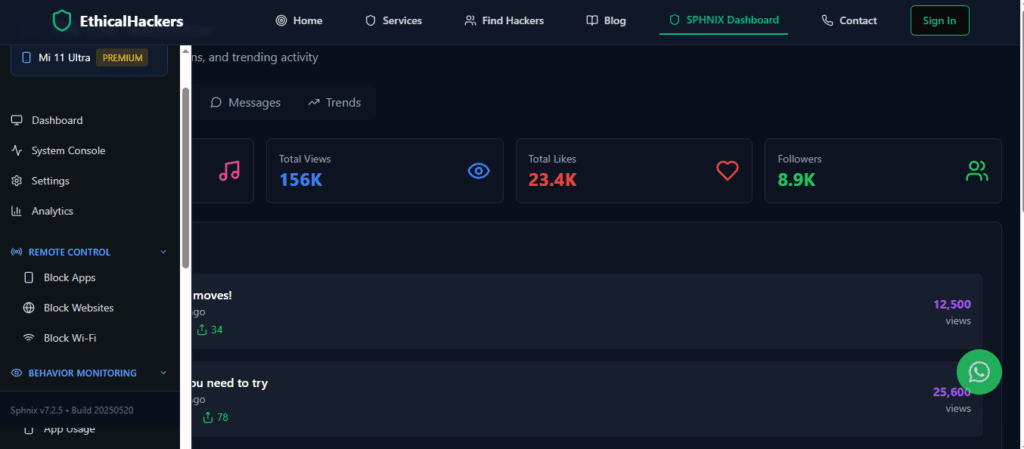
- Key Features: Tracks SMS, iMessage, and social media chats (WhatsApp, Snapchat, Instagram, etc.), records call logs and can record calls, provides real-time GPS location with history, and can access photos and browsing history.
- The Professional Note: Its comprehensiveness makes it a powerful parental control tool but also a profound invasion of privacy if used on a partner. It represents the extreme end of surveillance capability.
2. Scannero: Location and Number Intelligence
Scannero takes a different approach, focusing less on content and more on location and verification data, which can be used for circumstantial evidence.

- Key Features: Provides cell phone number location tracking, allows sending of SMS messages to a target number, and offers phone number lookup services for carrier information.
- The Professional Note: This tool is less about reading conversations and more about answering “where are they?” or verifying a story. It can feel less invasive initially but still involves tracking someone without their knowledge.
3. Moniterro: All-in-One Monitoring and Control
Moniterro combines extensive tracking features with remote device control options, positioning itself as a full-spectrum monitoring solution.

- Key Features: Includes social media and call monitoring, ambient listening through the device’s microphone, remote camera access, and features to lock the device or wipe data.
- The Professional Note: The remote control features elevate this from passive monitoring to active intervention, which carries even greater legal and ethical weight.
The Healthier Alternative: Building Trust, Not a Case
If your relationship concerns are significant enough to consider spying, they are significant enough to address directly. The path of secret surveillance almost guarantees greater damage. Here are professional, constructive alternatives:
- Practice Direct, Compassionate Communication: Instead of investigating in secret, initiate a calm conversation. Use “I feel” statements: “I’ve been feeling anxious and disconnected lately, and I miss our closeness. Can we talk about what’s going on with us?” This is more productive than accusatory “you” statements.
- Establish Mutual Boundaries and Transparency: Have an open discussion about digital privacy expectations. Some couples agree to share passwords; others find that excessive. Find a mutual agreement that respects both individuals. Therapists emphasize establishing clear boundaries about what is acceptable for both partners.
- Seek Professional Help: A couples therapist or counselor provides a neutral, safe space to navigate trust issues. If your anxiety feels obsessive or uncontrollable, an individual therapist can help determine if issues like ROCD are a factor and provide strategies like Exposure and Response Prevention (ERP) therapy.
- Focus on Your Own Well-being: Often, the urge to control a partner’s space stems from personal insecurity. Investing in your own hobbies, friendships, and mental health can reduce anxious attachment and improve the relationship dynamic.
Conclusion: Choosing Between Surveillance and the Relationship
The technical knowledge of how can i spy on my partners phone exists, as demonstrated by apps like Sphnix, Scannero, and Moniterro. However, employing this knowledge against a partner without consent is an act that typically ends one of two ways: you discover nothing and have poisoned the relationship with your betrayal, or you discover something and are left with proof but a broken partnership.
The harder but ultimately more rewarding path is to turn toward the issue, not away from it. This means mustering the courage for honest communication, seeking professional mediation, and deciding whether to rebuild trust together or part ways with integrity. As mental health experts stress, “The only way to eliminate all risk of being cheated on is to not be in a relationship. So I urge you to accept the natural uncertainty and take a leap of faith”.
If you are at a point where trust seems irreparable, consulting with a legal professional or a licensed private investigator (who operates within the law) is a far safer course than taking illegal surveillance into your own hands. Choose a path that protects your future, whatever that may hold.
Living with suspicion is corrosive, and illegal surveillance often compounds the damage. If you are facing a profound breach of trust and need confidential, ethical guidance on your next steps, professional consultation can provide clarity and a safe path forward.
Frequently Asked Questions (FAQs)
Q1: Is it ever okay to check my partner’s phone if I have a gut feeling they’re cheating?
A gut feeling is worth exploring, but secretly checking their phone is not the ethical or effective method. A “gut feeling” is often your subconscious picking up on real inconsistencies. The appropriate response is to communicate your concerns directly and honestly with your partner, or to seek couples counseling. Secretly spying preemptively destroys trust and makes constructive resolution far more difficult.
Q2: What’s the difference between using a monitoring app and just looking through their phone when they leave it open?
Legally and ethically, the difference is one of scale and intent, not kind. Both are violations of privacy without consent. Using monitoring software is a premeditated, continuous invasion, while a one-time glance might be a spontaneous breach. Both damage trust, but the former is more likely to have serious legal consequences and is indicative of a more sustained pattern of distrust.
Q3: If we share a phone plan or I paid for the device, don’t I have the right to see what’s on it?
No, in most cases, you do not. Ownership of a device or service plan does not override an individual’s reasonable expectation of privacy in their personal communications. The legal standard focuses on the user’s privacy interest, not who purchased the hardware. Assuming you have a “right” to spy based on payment is a common and legally risky misconception.