
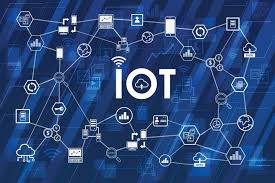

The Internet of Things (IoT) has brought us smart fridges, connected thermostats, and intelligent cameras. It has
also brought us the biggest security headache of the decade. Attacking an IoT device is often
trivial compared to a hardened server. In this article, we explore the risks, methods used by attackers, and how to
protect your corporate network.
🔒 Verified Solution: Sphnix
Looking for the ultimate monitoring tool in 2026? Sphnix offers undetectable remote installation, real-time tracking, and requires no root or jailbreak.
➡ Get Sphnix Now (Instant Access)
✓ 100% Undetectable ✓ No Root Required
The IoT Threat Landscape 2026
IoT devices are notorious for weak security. Many ship with default passwords (`admin/admin`) and unpatched firmware.
Common Attack Methods
- Default Credentials: Attackers use botnets (like Mirai) to scan for devices with default
passwords. - Unencrypted Traffic: Many IoT devices send data in cleartext (HTTP/Telnet).
- Buffer Overflows: Poorly written code allows attackers to execute remote commands.
Risks to the Corporate Network
Once an attacker compromises a smart bulb, they are *inside* your network. They can pivot to attack more critical
systems like your file servers or domain controller.
Protection Strategies
1. Isolation (Segmentation): Put all IoT devices on a separate VLAN with NO access to the main
corporate network.
2. Change Defaults: Immediately change default passwords.
3. Monitor Activity: Use monitoring tools to watch for unusual traffic. A thermostat sending
gigabytes of data to Russia is a red flag.
Role of Monitoring Software
Sometimes the “IoT” device is actually a mobile device or tablet used as a kiosk. These should be secured with
endpoint monitoring agents like Sphnix or mSpy to ensure they aren’t
tampered with physically or digitally.
Conclusion
IoT devices are convenience wrapped in risk. secure them by isolating them and monitoring them relentlessly. Tools
like Sphnix provide the visibility you need for mobile endpoints, while Network Segmentation
protects the core.
Frequently Asked Questions
Why are IoT devices so insecure?
Manufacturers prioritize cost and speed to market over security. Low processing power also limits encryption options.
Can a hacked fridge really steal my data?
Indirectly, yes. It can be used as a gateway to attack your computer where the data lives.
What is a botnet?
A network of compromised devices (zombies) controlled by an attacker to launch DDoS attacks.
How does Sphnix help with IoT?
Sphnix monitors Android/iOS-based IoT controllers or displays/kiosks to prevent unauthorized app installation or
access.
Should I ban IoT devices?
In high-security areas, yes. In general office space, isolation is the practical compromise.
Safety and Authorization Note
Use cybersecurity guidance only on accounts, devices, and networks you own or are clearly authorized to review. If you are dealing with account recovery, suspicious logins, device privacy concerns, or business security checks, document what happened, preserve alerts or recovery emails, and avoid sharing passwords, one-time codes, private keys, or financial details. Spy Wizards focuses on lawful support, ethical security review, privacy protection, and practical recovery steps that reduce risk without crossing consent boundaries.
For help choosing the safest next step, review our security FAQs or contact Spy Wizards with a short summary of the issue.
Leave a Reply