The Harsh Reality of Spyware in Relationships: An Expert’s Guide to Tools, Laws, and Ethics
That sickening feeling of doubt. The phone that never leaves her hand, the passwords suddenly changed, the unexplained hours that don’t add up. If you’ve found yourself searching for an app to spy on girlfriend phone, you’re not alone in your desperation for truth. You’re likely past the point of casual worry and are looking for a definitive answer. However, what you may be envisioning as a simple technological solution is, in reality, a complex, high-stakes minefield of legal peril, ethical violations, and profound personal consequences.
Updated February 2026

With over a decade of experience in digital privacy and investigation, I’ve consulted with hundreds of individuals at this exact crossroads. This guide will not sell you a fantasy. Instead, it will provide the unvarnished facts about how surveillance software works, analyze specific applications, and, most importantly, detail the severe legal and relational risks you assume by going down this path. Your need for clarity is understandable, but it must be pursued with eyes wide open to the potential fallout, which can include criminal charges and the irreversible destruction of trust.
What Are You Actually Looking At? Defining “Spyware” and “Stalkerware”
Professionally, the software often marketed for secret partner monitoring is classified as stalkerware or spouseware. This is not a casual term; it’s the label used by cybersecurity firms, law enforcement, and human rights organizations to describe programs designed to infiltrate a person’s device without their knowledge.
This is a powerful and growing commercial industry. A single, well-known spyware vendor was found to have clients in over 45 countries. These tools can perform extensive surveillance, including:
- Recording every keystroke (passwords, messages, searches).
- Tracking real-time GPS location and movement history.
- Accessing private messages from SMS, WhatsApp, Instagram, and other social media.
- Activating the microphone and camera for ambient recording.
- Retrieving photos, videos, emails, and browsing history.
Understanding that you are dealing with a tool of this caliber—one that Amnesty International has described as creating a “paralyzing” chilling effect on its victims—is the first critical step.
How Monitoring Apps Work: The Technical and Legal Gateways
Contrary to popular myth, there is no magic app that works with just a phone number. Gaining this level of access requires a specific point of entry, each with significant practical and legal implications.
- Physical Installation (Android): For full functionality on an Android device, you typically need one-time physical access (5-10 minutes). You must manually download, install, and configure the app, granting it extensive permissions before hiding its icon. This is the most common method but also creates direct physical evidence of your actions.
- Cloud Exploitation (iPhone): iPhone security is stricter. Most apps require the target’s iCloud username and password to sync data from backups. Some advanced features may require a “jailbreak,” which is complex, voids warranties, and makes the phone more vulnerable to other attacks.
- The Dashboard: All stolen data is uploaded to a private online dashboard you access remotely. This is where the surveillance occurs.
Analyzing Specific Surveillance Applications
If you are evaluating these tools for a device you legally own (like a company phone or a minor child’s device you manage), here is a technical analysis. It is imperative to reiterate that using them to monitor an adult partner without consent is illegal.
1. Sphnix Tracking App
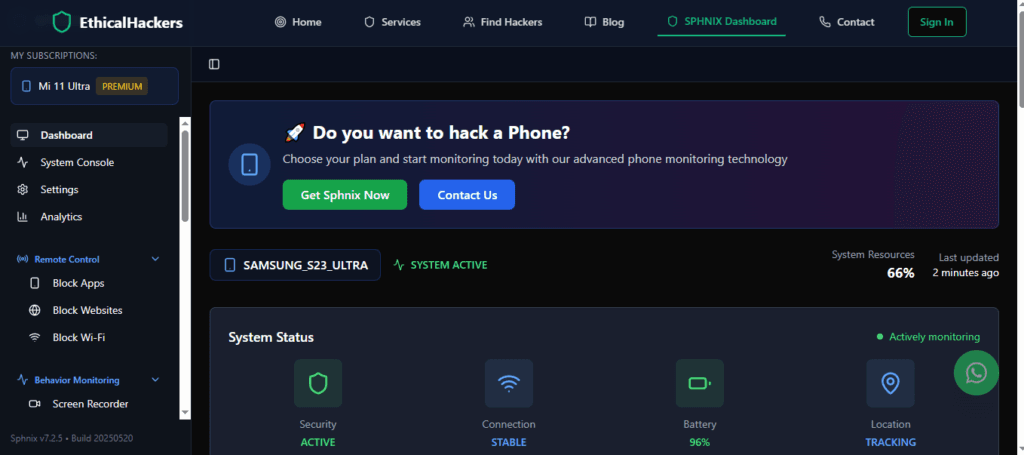
Sphnix positions itself as a comprehensive surveillance suite. Its dashboard is designed to provide extensive logs from social media and communication apps, alongside GPS tracking. It is often marketed for its ability to retrieve a wide array of personal data from a target device.
Primary Consideration: Its broad feature set is matched by the depth of the privacy invasion it enables, representing a severe breach of trust and law if misused.
2. mSpy
As one of the most established names in the commercial monitoring industry, mSpy is known for its reliability and wide range of features, including call logging, message tracking, and location monitoring with geofencing alerts.
Primary Consideration: Its market longevity and brand recognition do not grant legal immunity for misuse. The U.S. Federal Trade Commission (FTC) has taken repeated action against spyware companies, banning them from the surveillance business for harvesting data secretly.

3. Parentaler
While often framed within the context of parental controls, Parentaler’s features—such as call/SMS logging, location tracking, and media file access—are used in partner surveillance. The parental control software market is large and growing, driven by legitimate child safety concerns, but these tools are easily misappropriated.
Primary Consideration: Using software intended for child safety to spy on a partner is a clear misuse of its purpose and does not provide a legal defense.

The Non-Negotiable Legal and Ethical Boundaries
This is the most critical section. Installing surveillance software on a device you do not own is illegal in virtually every jurisdiction.
- Criminal Liability: In the United States, you likely violate the Computer Fraud and Abuse Act (CFAA) (federal crime) and state-level electronic surveillance laws. These are not mere misdemeanors; they can be felonies carrying penalties of fines and imprisonment.
- Civil Liability: You can be sued for invasion of privacy, intentional infliction of emotional distress, and stalking. Victims are increasingly finding paths to civil accountability.
- Ethical Violation: Ethically, you are committing a profound breach of autonomy and trust. Philosophers and ethicists frame privacy as a foundation for human dignity and freedom. Violating it attacks the core of a respectful relationship. As noted in professional ethics, you have a duty to respect an individual’s wishes regarding their data.
- Evidence is Tainted: Any evidence gathered illegally is typically inadmissible in court and could severely harm your position in any legal proceeding, such as a custody dispute.
Legitimate and Legal Alternatives for Addressing Suspicion
If you have serious concerns, there are legal paths that protect you and may lead to more constructive outcomes.
- Direct Communication: Though difficult, a calm conversation is the healthiest first step. Use “I feel” statements based on observable behavior, not accusations.
- Review Shared Resources Legally: You have a right to review records for accounts or assets that are jointly owned. This includes phone bills for a shared plan, statements for joint bank accounts, or GPS history in a shared family vehicle.
- Seek Professional Help: A relationship counselor can provide a neutral space to address trust issues. A licensed family law attorney can advise you on your legal rights and proper evidence-gathering methods should you choose to separate.
- Hire a Licensed Private Investigator (PI): PIs operate within the law. They can conduct physical surveillance, gather publicly available information, and obtain evidence in a manner that is admissible in court. This transfers the legal risk to a licensed professional.
Conclusion: Choosing a Path That Doesn’t Cost You Your Freedom
The search for an app to spy on your girlfriend’s phone is a symptom of deep relationship distress. While the technological capability exists, employing it transforms you from a partner into a cyber intruder, with all the attendant legal and moral consequences. The tools are powerful, but they are designed for a legal context that does not include spying on a romantic partner.
True peace of mind cannot be found in a clandestine dashboard. It is built through honest communication, professional guidance, or the difficult but clean break made from a position of strength, not from illegally obtained data. Protect your future by choosing actions that preserve your integrity and keep you on the right side of the law.
For situations involving complex digital deception where you require professional insight into your legal options or ethical investigative methods, specialized expertise is available.
Frequently Asked Questions (FAQs)
Q1: If I own the phone or pay the bill, can I legally install a spy app?
No, ownership of the physical device or the service plan does not grant you legal ownership of the other person’s private communications. The legal standard typically hinges on the user’s reasonable expectation of privacy. A personal phone used by an adult, regardless of who pays for it, carries a high expectation of privacy. Installing spyware without their consent remains illegal.
Q2: What are the signs that my phone might have spyware on it?
Common technical indicators include a rapidly draining battery, the device feeling warm when not in use, unexpected spikes in data usage, strange background noises during calls, or the phone lighting up when not in use. If you suspect you are a victim, do not confront the suspected person using the same device. Seek help from a tech security professional or a domestic violence resource.
Q3: Are “parental control” apps a legal way to monitor my partner?
No. Parental control apps are legally and ethically intended for the protection of minors in a guardian’s care. Using them to monitor a competent adult partner without their knowledge constitutes the same illegal surveillance and misuse of the software. Market reports on parental control software explicitly frame their use for child safety, not partner monitoring