
The search to track a cell phone location by number is incredibly common. Advertisements flood the internet, promising to reveal How Can You Trackanyone’s real-time GPS coordinates with just a few digits. After ten years in telecommunications security and digital forensics, I need to address a fundamental truth: You cannot accurately track a modern smartphone’s location using only its phone number. This promise is a pervasive myth, but it doesn’t mean you’re out of options.
Updated February 2026
This guide will explain the technical reasons why simple number tracking fails, introduce the legitimate and legal methods that actually work, and review tools designed for authorized location sharing.
Why a Phone Number Alone is Not a Tracking Tool
A cell phone number is not a GPS beacon. It is an identifier for a SIM card on a carrier’s network. While your mobile provider can approximate a general area through cell tower triangulation for emergency services, this data is private, protected by law, and inaccessible to the public.
Real-time, precise location data comes from the phone’s own hardware: its How to Track Someone GPS antenna, Wi-Fi positioning, and mobile data. To access this data, you need either:
- Explicit Consent: Using built-in features where the user shares their location with you. How to Track a
- Software on the Device: Installing a legitimate monitoring or family safety app.
Any website or service claiming to provide live GPS coordinates using only a phone number is a scam. These sites exist to steal your money, harvest your personal data, or infect your device with malware.
Legitimate Ways to Share and Track Location
Since a number alone is useless, here are the actual methods that work, all of which require consent or proper authority.
1. Built-in, Consensual Operating System Features
These are the best options for transparent location sharing among family and friends.
- Apple Find My: For iPhone users, this is the gold standard. It allows location sharing with contacts and uses a secure, anonymous network of Apple devices to help locate items. It requires knowing the person’s Apple ID or being in their “Family Sharing” group.
- Google Maps Location Sharing: The best cross-platform solution. A user can share their real-time location for a set period with anyone via a Google Maps link, viewable on Android or iPhone.
2. Family Safety and Parental Control Applications
For parents needing to oversee their children’s whereabouts, dedicated apps provide robust features like geofencing and location history, going beyond simple sharing. These require installation and configuration on the child’s device.
Review of Location-Focused Applications and Services
The tools often associated with location tracking serve different purposes. It is critical to distinguish between family safety apps and professional services.
Eyezy: The Digital Activity and Location Monitor
Eyezy is a comprehensive monitoring application that includes location tracking as part of a broader suite of digital oversight tools, primarily marketed for parental use.

Key Features and Analysis:
- Location Tracking & Geofencing: Provides real-time GPS location on a map and allows you to set up virtual boundaries (geofences). You receive instant alerts if the device enters or leaves a designated area, such as school or home.
- Social Media and Communication Insights: Offers a “Social Spotlight” feature that aggregates activity from platforms like Instagram, WhatsApp, and Snapchat, giving context to location movements.
- Keyword Alerts: You can set alerts for specific words typed in messages or searches, which can be linked to location data for a fuller picture of a child’s safety.
- Legal Access Requirement: Like all such apps, Eyezy requires installation on the target device (Android) or iCloud credentials (iPhone), which necessitates initial access and is intended for use on devices you own for your children.
For comprehensive parental oversight including detailed location tracking, explore Eyezy.
Spynger: The Direct Monitoring and Tracking Tool
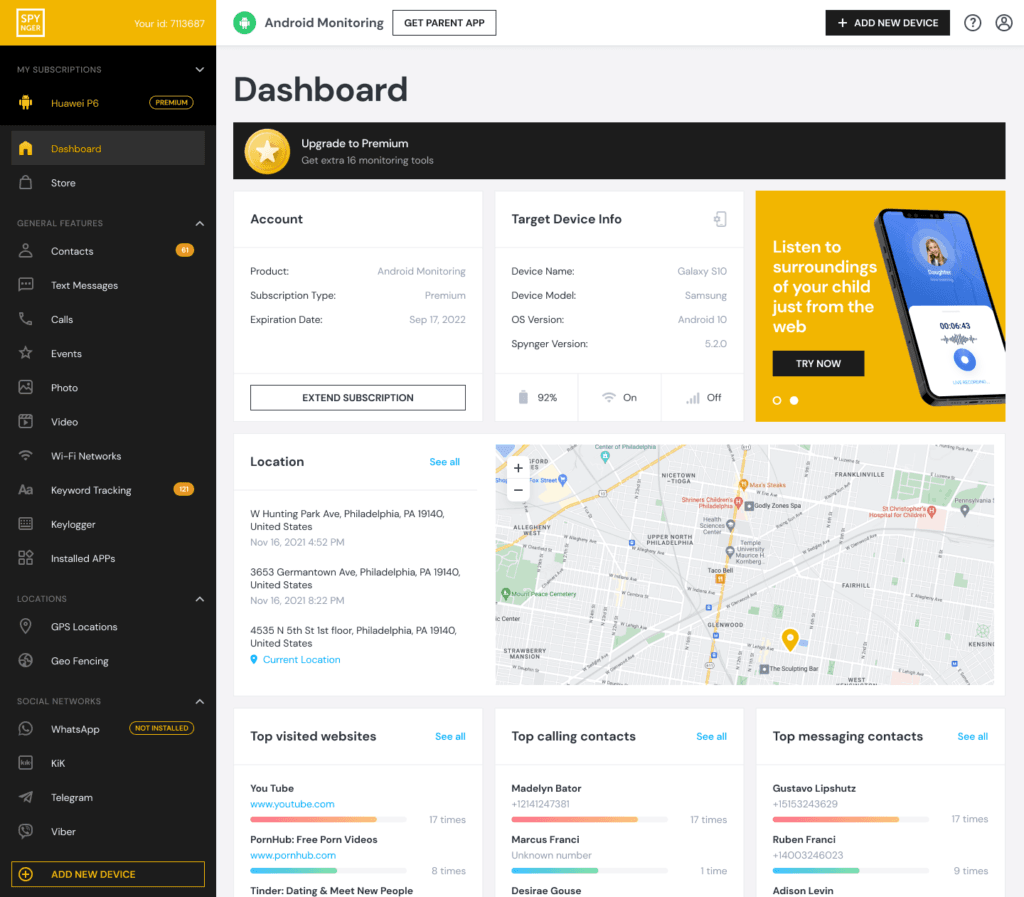
Spynger presents itself as a focused monitoring solution, with location tracking as a core component of its feature set.
Key Features and Analysis:
- GPS Location Tracking: Promises real-time location monitoring with detailed history logs to see where the device has been over time.
- Call and SMS Monitoring: Tracks traditional phone activity alongside location data.
- Social Media Activity Tracking: Monitors interactions on various social platforms.
- User Consideration: Independent user reviews for apps in this category are essential. Effectiveness can vary, and promises of tracking with “just a number” should be viewed with extreme skepticism. Always verify recent, unbiased feedback.
Professional Services: Understanding “Sphnix” and Hire-a-Hacker
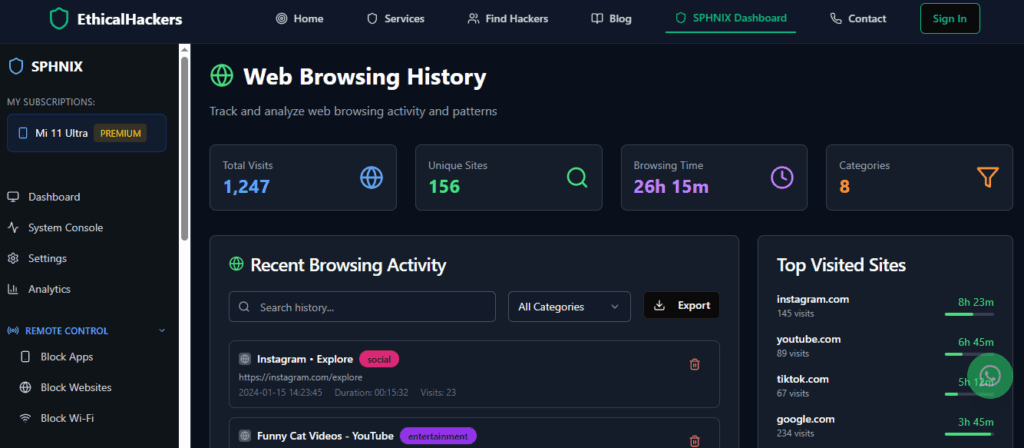
The “Sphnix” link directs to a professional cybersecurity marketplace (Hire-a-Hacker Service). This is not a consumer location-tracking app.
Critical Clarification:
- Enterprise Platform: It connects businesses with vetted ethical hackers and security experts.
- Legitimate Purpose: These professionals perform authorized security testing, like penetration testing, on the company’s own systems to find vulnerabilities.
- Major Warning: Reputable cybersecurity firms do not accept private contracts to track personal phones. Any service offering this is a scam. Engaging with them risks financial fraud and legal trouble.
Comparison: Legitimate Methods vs. Myths
| Method / Service | How It Actually Works | Legal & Ethical Use Case | Reality Check |
|---|---|---|---|
| “Track by Number” Website | Takes payment, provides fake data; often a scam. | None. The service is fraudulent. | A complete myth and financial risk. |
| Eyezy / Spynger-type Apps | App installed on target device reports GPS data to a private dashboard. | Parental control of minors on devices you own. | Requires physical/credential access. Powerful for its legal purpose. |
| Apple Find My / Google Maps | User consensually shares their own location via OS-level services. | Transparent location sharing among friends & family. | The most reliable, free, and ethical method. |
| Professional Cybersecurity | Contracted security audits on client-owned business infrastructure. | Improving organizational security. | Not a personal phone tracking service. |
The Legal and Ethical Framework: A Non-Negotiable Priority
Installing tracking software on a device you do not own or without the explicit consent of the owner is illegal in most jurisdictions. It violates computer fraud, stalking, and electronic communications privacy laws.
Legitimate use is confined to:
- Parents monitoring their minor children’s devices for safety.
- Businesses monitoring company-owned assets with a clear, consented employee policy.
Using tools like Eyezy or Spynger to secretly track a spouse, partner, or any other adult is a crime that can result in severe penalties, including imprisonment and civil lawsuits.
How to Proceed Responsibly with Location Knowledge
If your goal is lawful, here is the responsible path:
- For Family Safety: Have an open conversation with your child about safety and the reasons for using a location-sharing tool. Choose a suitable app and install it transparently on the device you provide.
- For Personal Peace of Mind: Use consensual tools like Find My or Google Maps Location Sharing. Trust is built on transparency.
- If Driven by Suspicion: Seeking to secretly track a cell phone location by number due to relationship doubts is a sign of a deeper issue. Secret surveillance is illegal and destroys trust. Consider relationship counseling as a healthy alternative.
Conclusion: Dismiss the Myth, Embrace Ethical Methods
The fantasy of using a magic website to track a cell phone location by number is just that—a fantasy exploited by scammers. Real location sharing is built on consent and facilitated by operating system features or dedicated family safety apps used within their legal boundaries.
Empower yourself with accurate knowledge. Choose methods that respect privacy and the law. Whether for protecting your child or coordinating with family, ethical and transparent tools provide real peace of mind without the risks of scams or criminal liability.
For professional, legal cybersecurity services to protect your business systems, consult with vetted experts.
hire a hacker
Frequently Asked Questions (FAQs)
1. Can the phone company give me someone’s location if I call them?
No. Telecommunications carriers are bound by strict privacy laws. They will only release customer location data in response to a valid subpoena or court order as part of an active law enforcement investigation. They cannot provide this information to private individuals.
2. What about apps that say they can find a phone if it’s lost?
This is different. Services like “Find My iPhone” or “Find My Device” for Android are designed to locate your own lost devices. They work because you are logged into the device with your own Apple ID or Google account. They do not work by entering just any phone number; they require the account credentials for the specific lost device.
3. Is there any accurate way to get a general idea of a location from a number?
Some paid people-search or data aggregation websites may link a phone number to a registered city or area code, which is static billing information, not a real-time location. This outdated data is often inaccurate and useless for finding someone’s current whereabouts. It is not “tracking” in any meaningful sense.