

The term Snapchat hack conjures images of shadowy figures breaching servers to recover vanished photos. In my ten years of digital forensics, I’ve seen the damage caused by this myth. Desperate searches for a quick hack lead parents and partners to fraudulent websites peddling fake password crackers and malware, leaving them vulnerable instead of informed. The technical reality is different: directly hacking Snapchat’s infrastructure is virtually impossible for outsiders and is always illegal. However, for legitimate protective purposes, there is a highly effective, authorized method to monitor Snapchat activity. This method doesn’t recover data from the cloud; it captures it at the source—the device itself. This guide will dismantle the dangerous fiction and provide a clear, professional roadmap to understanding Snapchat activity through lawful means.
Updated February 2026

I will explain the precise technology that enables this oversight, analyze the specialized applications that perform it, and establish the critical legal framework that separates ethical protection from criminal intrusion. By the end, you will understand what a true Snapchat hack looks like in the professional world of authorized monitoring.
The Technical Foundation: Why Server Hacking Is a Dead End
Snapchat’s architecture is designed around ephemerality. Messages and stories are deleted from the company’s servers shortly after they are viewed. This means there is often no long-term log to “hack” on their end. The platform also employs strong encryption and security measures to protect user data in transit.
Therefore, any service claiming to “hack” Snapchat accounts remotely by extracting historical data from servers is fundamentally lying. These scams work by stealing your payment information, installing spyware on your device, or tricking you into providing your own Snapchat credentials through phishing. The professional approach sidesteps this entirely. Authorized monitoring software is installed on the target smartphone. It operates locally, capturing data—keystrokes, screen activity, network packets—as it is generated on the device, before it disappears. This device-focused strategy is the only reliable answer to the Snapchat hack question for lawful oversight.
Critical Capabilities of a Snapchat Monitoring Solution
To effectively monitor an app built for disappearing content, standard parental controls are insufficient. The software must be proactive, capturing data in real-time. Key features include:
- Snapchat Message & Media Capture: Logging text chats, shared photos (Snaps), and videos, including those sent in private conversations and groups.
- Keylogger (Keystroke Recorder): This is the most important feature. It records every character typed on the device, capturing messages as they are written, even if they are later unsent or disappear.
- Screen Recording or Screenshot Functionality: Some advanced tools can periodically capture the screen or record sessions, providing visual proof of activity.
- Metadata & Contact Tracking: Monitoring friend lists, usernames added/deleted, and timestamps of all interactions.
- Ambient Data Collection: Integration with other device sensors (like location services) to correlate Snapchat use with physical location.
Analysis of Specialized Monitoring Applications
The following applications are engineered for comprehensive device oversight. Their legitimate use is restricted to scenarios with clear legal authority, such as parental control of minors. Unauthorized use is a serious crime.
Sphnix Tracking App
Sphnix is a broad-spectrum monitoring suite designed for gathering extensive digital intelligence from a device. It provides a wide array of tracking functions in one package.
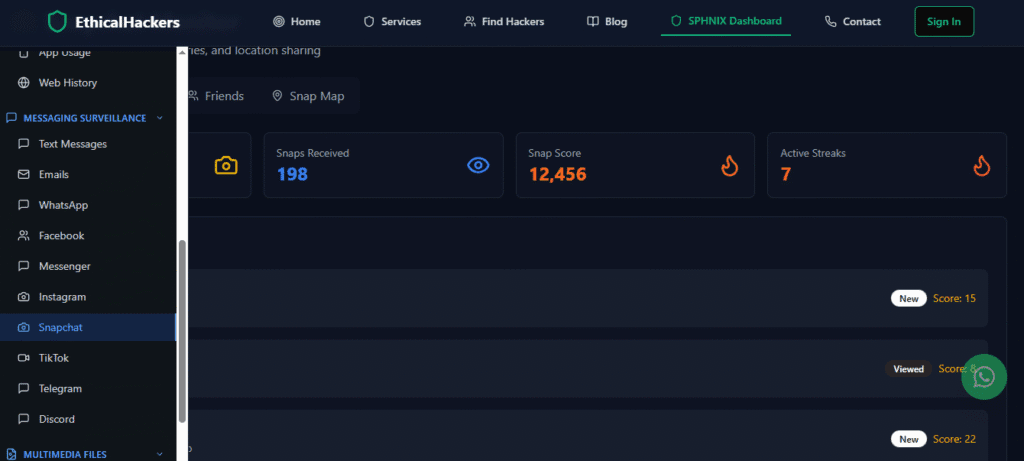
For Snapchat and general surveillance, Sphnix offers:
- Monitoring of app usage and social media interactions, including Snapchat.
- A robust keylogger to capture all typed input.
- GPS location tracking, call and SMS logging, and browser history monitoring.
- A consolidated dashboard that presents all collected data for analysis.
Sphnix is suited for situations requiring a detailed audit trail of all device activity, providing a macro view of digital behavior.
Eyezy
Eyezy is a modern monitoring solution that emphasizes user-friendliness and powerful insight into social media. It markets itself as an “all-in-one” dashboard for parental peace of mind.

Eyezy’s feature set for Snapchat monitoring includes:
- Social Spotlight Feature: Specifically designed to track interactions on social apps like Snapchat, Instagram, and Facebook, capturing messages and shared content.
- Keystroke Capture: Logs typed messages across all apps, which is critical for Snapchat.
- Location Tracking & Geofencing: Monitors device movement and allows setting up safe/restricted zones with alerts.
- Phone Analyzer: Provides insights into installed apps, contacts, and calendar events.
- Clean, Intuitive Interface: Presents data in an easily digestible format for non-technical users.
Eyezy is a strong choice for parents who want a focused, accessible tool specifically for understanding their child’s social media world.
Spynger
Spynger positions itself as a discreet and powerful monitoring tool with advanced capabilities. It is built for users who require deeper, more granular surveillance options.
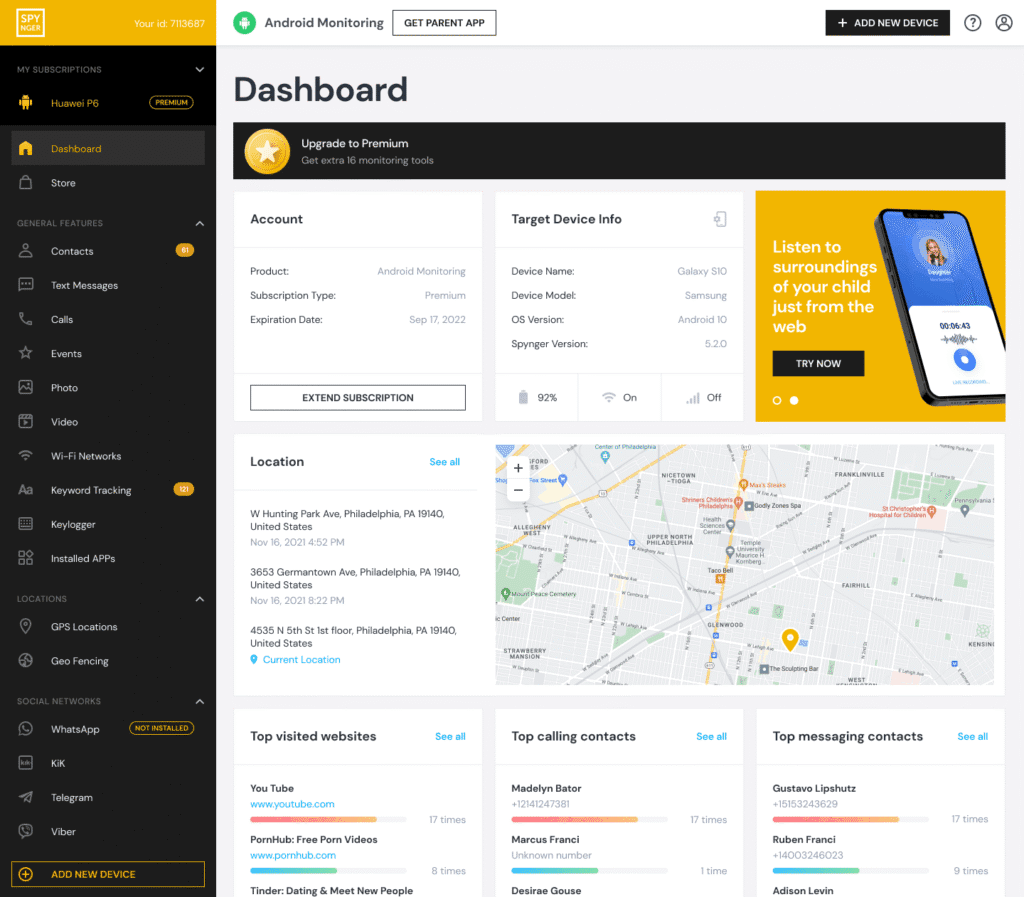
Spynger provides advanced monitoring features such as:
- Snapchat & Social Media Tracking: Detailed logging of messages, media, and timestamps.
- Ambient Recording & Surround Listen: Can remotely activate the device’s microphone to capture ambient sounds.
- Call Recording & Remote Camera Access: Advanced features that allow recording of calls and accessing the device’s camera.
- Stealth Operation: Designed to be completely invisible on the target device with no icon or notification.
- Comprehensive Dashboard: Offers detailed reports and real-time updates on device activity.
Spynger is geared towards situations where a higher level of surveillance is deemed necessary, offering some of the most extensive features on the market.
The Legal and Ethical Framework: Non-Negotiable Boundaries
This point is paramount. Installing monitoring software on a device you do not own or without the explicit, informed consent of the adult user is illegal in most countries. It violates computer fraud, privacy, and wiretapping statutes, carrying severe criminal and civil penalties.
Legal authority is typically confined to two scenarios:
- Parental Rights: Monitoring the device of your minor child to protect them from online dangers.
- Ownership and Consent: Monitoring a device you own (e.g., a company phone) with prior disclosure to the user (e.g., an employee) as part of a formal policy.
Using tools like Eyezy or Spynger to monitor a spouse, partner, or another adult without their knowledge is not a Snapchat hack—it is a crime and a profound violation of privacy. The purpose must be protective, not invasive.
Implementation Realities and Operational Security
If you have legal standing, implementation requires brief physical access to the target Android device. For iOS, the process is more restrictive, often requiring iCloud credentials and facing limitations due to Apple’s security.
Professional-grade apps are designed for stealth, with no icon and minimal performance impact. However, they are not undetectable. Security updates, antivirus scans, or a technically skilled user inspecting running processes or data usage may reveal their presence. Additionally, the industry itself carries inherent risk; service providers can be hacked, potentially exposing the personal data of their customers.
The Responsible Objective: From Surveillance to Safety
The ethical application of this technology is not about clandestine spying. It is about using data to foster safety and open communication. The goal is to move from monitoring to mentoring.
Use the insights not as “gotcha” evidence, but as conversation starters. Seeing concerning Snapchat messages can lead to a discussion about digital footprints and respect. Location data can open a talk about trust and responsibility. The software provides an objective record; your role is to provide context, guidance, and support, aiming to build the child’s own judgment so that constant monitoring becomes less necessary over time.
Frequently Asked Questions
1. Are online Snapchat hacking tools or websites real?
No. Every website offering a “free Snapchat hack” by entering a username is a scam. Their business model is based on stealing your information, infecting your device, or generating ad revenue through endless surveys. They have zero capability to access private accounts.
2. Can Snapchat notify the user that their account is being monitored?
Snapchat itself will not send a notification if you are using device monitoring software. The monitoring occurs locally on the phone, not through Snapchat’s servers. However, if the monitoring app uses screen recording, some phone models may show a brief indicator in the status bar.
3. What is the most important step before attempting any monitoring?
Establish legal right. You must be certain you have the legal authority to monitor the device. When in doubt, assume you do not have it and consult a legal professional. The consequences of illegal surveillance are far more severe than not knowing what is on a Snapchat account.
Conclusion
A true Snapchat hack in the professional sense is not a magical breach but an authorized, device-based monitoring operation using tools like Sphnix, Eyezy, or Spynger. It is a powerful technology bound by even more powerful laws. While it offers a legitimate path for parents to protect children in a digital world of disappearing messages, it is a path that must be walked with clear ethical intent and legal justification. The shortcuts offered by online fraudsters lead only to loss and liability.
If navigating the technical and legal complexities of digital oversight for protective purposes seems daunting, seeking expert guidance can ensure your actions are both effective and lawful.
Leave a Reply