How to See Everything My Wife Does on Her Phone: Understanding Complete Phone Monitoring
In my decade of experience in digital forensics and relationship investigation, I’ve encountered countless individuals who want to achieve total digital transparency in their marriages. The desire to see everything my wife does on her phone often stems from deep-seated suspicion, previous betrayals, or an overwhelming need for reassurance. As someone who has worked with couples, attorneys, and private investigators, I understand the profound anxiety that drives this search for absolute knowledge.
Updated February 2026

However, I must begin with a crucial disclaimer: Monitoring another adult’s personal device without their explicit, informed consent is illegal in most jurisdictions. It violates federal laws like the Computer Fraud and Abuse Act and state-level wiretapping statutes. This article does not condone illegal activity. Instead, it provides a professional examination of what “seeing everything” technically entails, the limitations of current technology, the severe legal boundaries, and the ethical frameworks for addressing marital distrust. Sometimes, the quest for total visibility reveals more about relationship breakdowns than digital activity.
What “Seeing Everything” Actually Means Technically
Complete phone surveillance involves capturing multiple data streams simultaneously. When clients say they want to see everything my wife does on her phone, they’re typically referring to:
- Communication Content: Text messages (SMS/iMessage), emails, and all social media/chats (WhatsApp, Facebook Messenger, Instagram, Snapchat, Tinder).
- Call Information: Full call logs, contact details, and ideally, call recordings.
- Location Data: Real-time GPS tracking, location history, and geofencing alerts.
- Media Access: Photos, videos, and files stored on or shared through the device.
- Browsing Activity: Complete web history, search queries, and bookmark tracking.
- App Usage: Which applications are used, when, and for how long.
- Real-Time Ambient Monitoring: The ability to remotely activate microphone or camera.
Achieving this level of access requires sophisticated tools and presents significant technical and legal challenges.
The Legal Reality: Why Consent Matters More Than Technology
Before exploring any technical method, you must understand the legal landscape:
- Federal Law: The Computer Fraud and Abuse Act (CFAA) prohibits unauthorized access to computer systems, including smartphones.
- State Laws: Most states have two-party consent laws for electronic communications, requiring both parties’ consent for monitoring.
- Marital Exceptions: Few states have marital exceptions to these laws, and even where they exist, they’re narrowly interpreted and risky to rely upon.
- Ownership Fallacy: Paying for the phone or service plan does not grant legal monitoring rights over another adult’s private communications.
- Divorce Consequences: Illegally obtained evidence is typically inadmissible in family court and may result in counter-charges or unfavorable rulings.
The legal risks often outweigh the potential benefits, making professional consultation essential before any action.
Common Methods and Their Limitations
Several approaches promise comprehensive access, but each has significant drawbacks:
iCloud/Google Sync Monitoring:
- Method: Using shared or compromised Apple ID/Google credentials to access synced data
- Limitations: Only shows cloud-synced information, triggers security alerts, misses real-time communication, and accessing credentials without permission is illegal
- Effectiveness: Partial at best, highly detectable
Network Traffic Analysis:
- Method: Monitoring data packets on a shared Wi-Fi network
- Limitations: Most apps use end-to-end encryption, requires advanced technical knowledge, captures only metadata in most cases, and may violate wiretapping laws
- Effectiveness: Low for content, moderate for activity patterns
Physical Device Access:
- Method: Periodic manual checking when the phone is unlocked
- Limitations: Provides only snapshots, high discovery risk, misses deleted content
- Effectiveness: Unreliable and relationship-damaging if discovered
Commercial Monitoring Software: The Comprehensive Approach
Professional monitoring applications offer the closest approximation to “seeing everything” by installing directly on the target device. These require one-time physical access for installation but thereafter provide remote, comprehensive monitoring through secure dashboards.
1. Sphnix Tracking App: Maximum Coverage Surveillance
Sphnix represents the high end of monitoring capability, designed to leave no digital activity unreported.
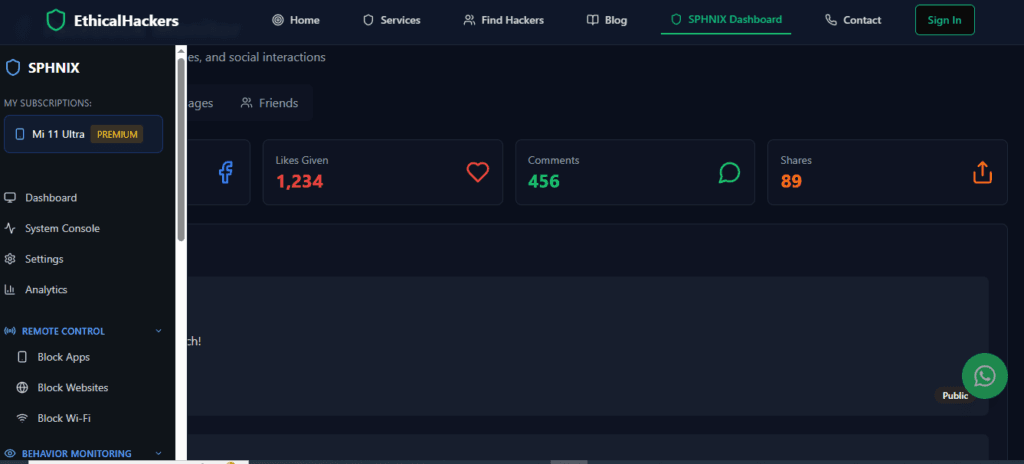
Comprehensive Monitoring Features:
- Total Social Media Capture: Monitors over 30 social and dating apps including hidden or disguised applications
- Complete Call Management: Records both sides of telephone conversations and logs all call details
- Environmental Surveillance: Remotely activates microphone for ambient listening and camera for photos
- Real-Time Location Tracking: Provides live GPS with historical path replay and customizable geofencing
- Keylogging Functionality: Captures every keystroke, including passwords and deleted messages
- Application Activity Reports: Shows exact usage times for all installed applications
- Stealth Operation: Runs invisibly with no icon, notifications, or significant battery impact
2. Eyezy: User-Friendly Total Visibility
Eyezy focuses on presenting comprehensive data in an accessible, organized dashboard suitable for non-technical users.

Comprehensive Monitoring Features:
- Unified Social Media Hub: Aggregates data from all social platforms into single conversation threads
- Screen Recording Capability: Captures video of phone screen activity for visual verification
- Complete Message Archives: Stores all messages even after they’re deleted from the device
- Location Timeline: Creates visual maps of daily movements and frequent locations
- Wi-Fi Connection Logging: Tracks all network connections and login times
- Contact Relationship Mapping: Shows connections between contacts across different platforms
- Data Export Functionality: Allows saving of reports for documentation purposes
3. Spynger: Stealth-Focused Complete Monitoring
Spynger emphasizes undetectable operation while capturing extensive device data, particularly strong in communication interception.
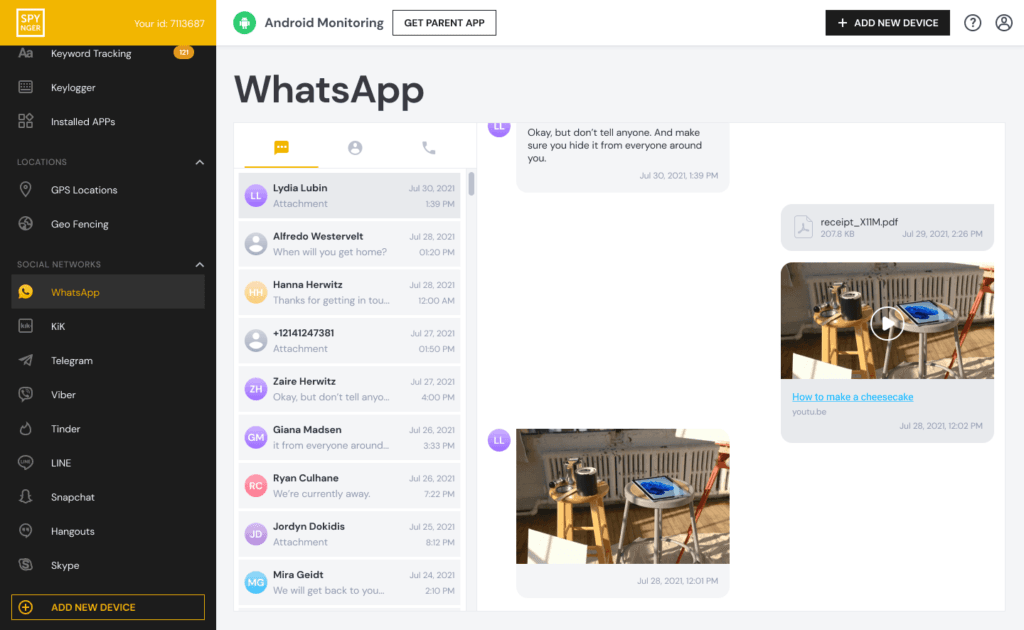
Comprehensive Monitoring Features:
- Cross-Platform Message Aggregation: Combines messages from all apps into chronological streams
- Advanced Call Features: Records calls and captures voicemail messages
- Environmental Intelligence: Can capture surroundings through microphone and camera remotely
- Complete Media Access: Browses all photos, videos, and downloaded files
- Behavioral Pattern Analysis: Identifies usage patterns and routine deviations
- Stealth Technology: Multiple layers of concealment to avoid detection
- Remote Control Options: Can lock device or trigger alarms if needed
The Psychological Impact of Total Surveillance
Before pursuing complete monitoring, consider these psychological factors:
- Information Overload: “Seeing everything” generates massive data that requires hours to review daily, potentially becoming obsessive.
- Context Interpretation: Raw data often lacks context, leading to misunderstandings and false conclusions.
- Trust Erosion: Even if you find nothing concerning, the act of spying destroys relationship trust permanently.
- Emotional Toll: Constant monitoring creates anxiety and hypervigilance that affects mental health.
- Discovery Consequences: If discovered, the relationship damage is typically irreversible and often worsens the original concerns.
Professional Alternatives to DIY Monitoring
For serious marital concerns, consider these professional approaches:
Licensed Private Investigators:
- Operate within legal boundaries
- Provide admissible evidence for court proceedings
- Offer objective analysis of findings
- Employ multiple investigation methods beyond digital monitoring
- Maintain professional detachment
Marital Counseling with Technology Agreements:
- Addresses root relationship issues
- Can establish mutually agreed-upon transparency
- Builds trust through communication rather than surveillance
- Provides professional guidance for interpreting concerns
Legal Consultation:
- Clarifies your rights and potential liabilities
- Advises on admissible evidence collection
- Helps understand divorce implications
- Provides protection against counter-allegations
Technical Realities and Limitations
Even with sophisticated software, technical limitations exist:
- Encryption Barriers: Some apps implement advanced encryption that prevents content monitoring
- Update Challenges: Operating system updates sometimes break monitoring capabilities temporarily
- Battery Considerations: Extensive monitoring can increase battery usage slightly
- Storage Limitations: Devices with limited storage may delete older monitored data
- Security Updates: Regular security patches may close monitoring vulnerabilities
Ethical Framework for Decision Making
Consider these questions before pursuing monitoring:
- Is my safety at risk? (This changes the ethical calculation significantly)
- Have I attempted open communication about my concerns?
- Am I prepared for the potential legal consequences?
- Can I handle the emotional impact of what I might discover?
- Is this about protection or control?
- What will I do with the information once obtained?
- Have I considered professional counseling first?
Conclusion: Knowledge Versus Wisdom in Relationships
The technical capability to see everything my wife does on her phone exists through applications like Sphnix, Eyezy, and Spynger. However, the legal, ethical, and relational consequences of using such capabilities without consent are substantial and often destructive.
Complete transparency through surveillance rarely repairs broken trust. More often, it provides information without the wisdom to use it constructively. Before pursuing technological solutions, consider whether addressing relationship issues directly—through communication, counseling, or professional mediation—might yield better outcomes for all involved.
If serious concerns persist and legal evidence is necessary, working with professionals who operate within legal boundaries protects you while obtaining the clarity you seek.
The desire for complete transparency in a relationship is understandable, but illegal monitoring creates additional problems. If you face serious marital concerns and need professional, ethical assistance in navigating this difficult situation, our team can provide confidential guidance on legal approaches to investigation and evidence gathering.
Frequently Asked Questions (FAQs)
Q1: Can monitoring software really see everything, including passwords and banking apps?
Advanced software like Sphnix can capture keystrokes, potentially including passwords typed manually. However, many banking apps use secure input methods that bypass keyloggers, and biometric authentication (fingerprint/face ID) cannot be captured. While monitoring software provides extensive access, “everything” has technical limitations, especially with increasingly secure financial and messaging applications.
Q2: Will my wife know if I install monitoring software on her phone?
High-quality applications like Spynger or Sphnix are designed to operate in complete stealth mode. They don’t appear in app lists, don’t send notifications, and minimize battery impact. However, tech-savvy users who regularly check running processes or use security scanning apps might detect sophisticated monitoring software. There’s always some risk of discovery, particularly during installation.
Q3: If we share an iCloud account, can’t I just see everything through that?
Shared iCloud accounts provide limited visibility—mainly photos, notes, and location if Find My iPhone is enabled. They don’t show text messages, most app data, call information, or real-time social media activity. Additionally, using shared credentials to access information without explicit permission may still violate privacy expectations and legal boundaries. The visibility is partial at best.