
For ten years in digital forensics, I’ve faced one impossible request more than any other. A client slides into my office, voice low, and asks the question they’ve desperately searched online: “Is there a way on how to hack someone’s iPhone without having their phone?” They envision a scenario with just a phone number or email, bypassing Apple’s famed security from miles away. The brutal, honest truth is that what they’re imagining—a pure, undetectable remote takeover—doesn’t exist for public use. This article will cut through the dangerous fiction. I will explain the severe technical and legal realities, detail the only quasi-remote method that works under strict conditions, expose the scams that prey on this desire, and show you how to bulletproof your own device. If you need factual clarity, you are in the right place.
Updated February 2026
The Core Myth: “Remote” Means “No Access Whatsoever”
The phrase “how to hack someone’s iphone without having their phone” is most often interpreted as needing zero initial information or access. People want a magic tool where they input a number and gain control. This is a Hollywood myth. Apple’s iOS security, with its Secure Enclave chip and sandboxed apps, is designed explicitly to prevent this. Any service claiming to offer this is categorically a scam. They are selling a fantasy, and you will pay with your money and your own data. Realistic discussions about remote access must start with a fundamental shift in understanding what “remote” practically means in the world of iOS.
The Only Legal Quasi-Remote Method: iCloud Credential Access
The single legitimate method that aligns somewhat with the idea of how to hack someones iphone without having their phone involves one critical piece of information: the target’s Apple ID username and password. This is not “hacking” in the criminal sense; it’s credential-based access. Monitoring software uses these credentials to sync with the data the iPhone sends to iCloud: location, contacts, photos, notes, and possibly message backups. The process is “remote” only after the credentials are entered; it still requires you to have those credentials legally, such as a parent knowing their child’s login on a family plan.
Legitimate Platforms for iCloud-Based Monitoring
Several services operate within this iCloud framework. Their effectiveness is entirely dependent on the target phone having iCloud Backup and relevant syncing enabled. Without the correct credentials, they are useless.
1. Sphnix Tracking App
Sphnix functions as a data aggregation dashboard. By integrating iCloud credentials, it compiles synced information into a single interface, offering a broad overview of device activity from calls to location, without ongoing physical access.
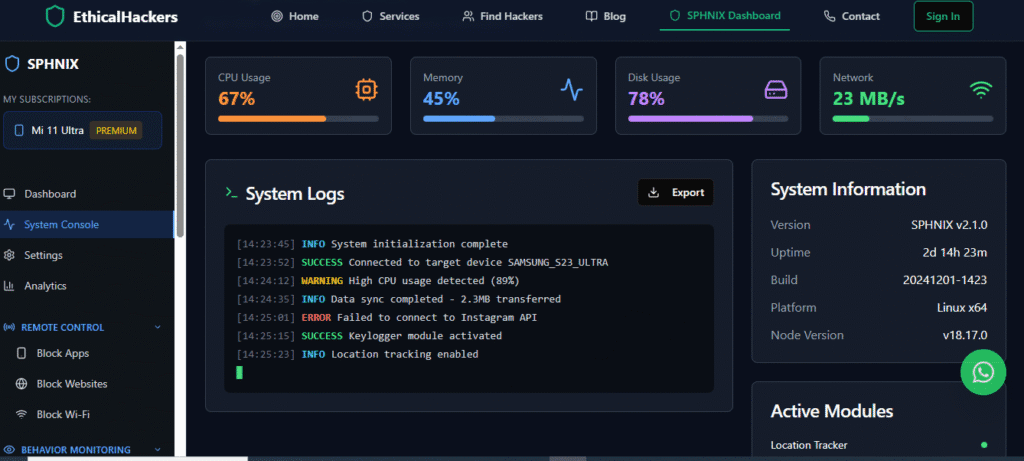
Key Features:
- Access to iCloud-synced photos, contacts, and calendars.
- Location tracking via Find My iPhone data.
- Review of app data and backup information.
- Monitoring of key device metrics and logs.
2. Spynger
Spynger positions itself as a modern monitoring solution with a strong focus on iCloud extraction. It is designed for users who need to access a wide array of synced data points, from messages to social media activity, through a streamlined online portal.
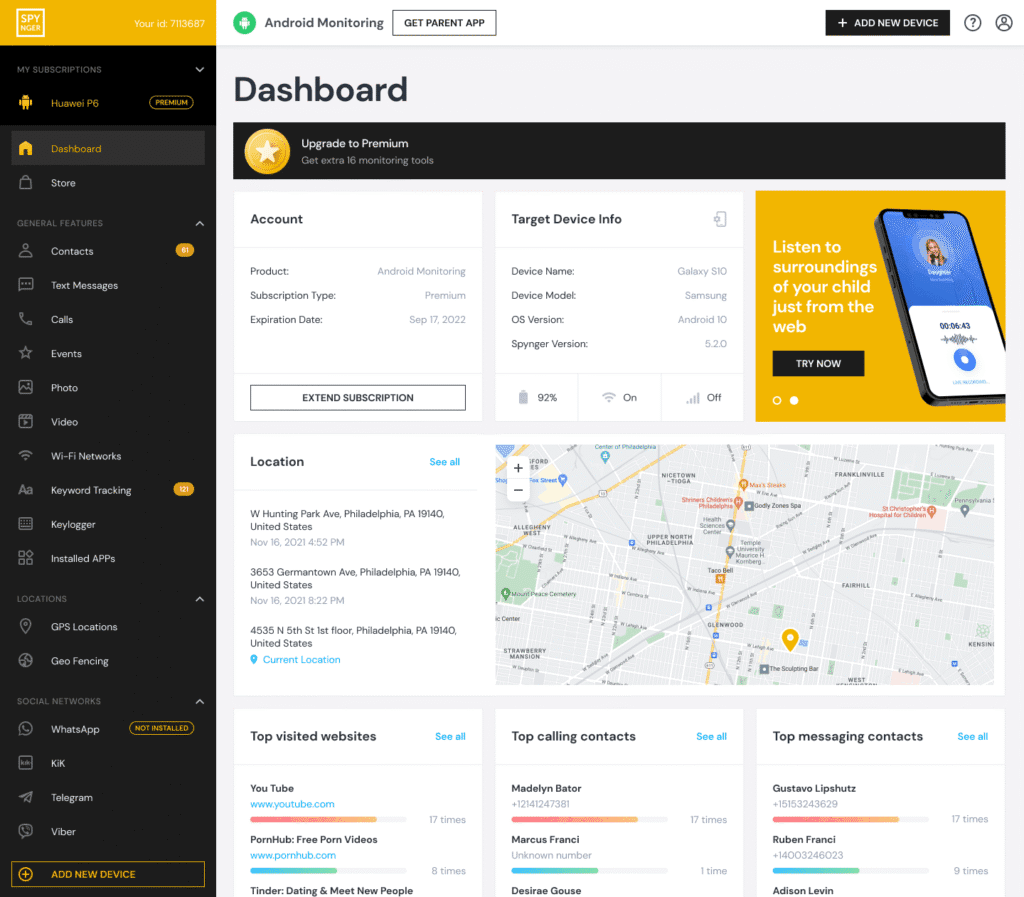
Key Features:
- Comprehensive iCloud backup extraction for messages and call history.
- Social media monitoring (Snapchat, WhatsApp, etc.) via synced notifications and data.
- Real-time GPS and Wi-Fi location tracking.
- Keylogging for captured keystrokes from synced data.
3. Scannero
Scannero takes a different approach. It is not a full-device monitor but a targeted investigation tool based on phone numbers. It can be effective for specific goals like location pinpointing or identity verification when full iCloud access is not available.
Key Features:
- Phone number lookup and carrier identification.
- Real-time location tracking (requires sending a link to the target).
- Social media profile discovery linked to a number.
The Criminal and Financial Risks of Pursuing True Remote Hacks
Attempting to find a tool that truly fits the illicit version of how to hack someones iphone without having their phone carries profound consequences.
- Federal Crime: Unauthorized access to a computer system, including an iPhone, violates the Computer Fraud and Abuse Act (CFAA), carrying potential fines and imprisonment.
- State Prosecution: Nearly every U.S. state has complementary cybercrime laws with severe penalties.
- Civil Catastrophe: You can be sued for invasion of privacy, emotional distress, and more, leading to life-altering financial judgments.
- You Become the Victim: As emphasized next, you will almost certainly be defrauded.
The Inevitable Scam: How Fraudsters Operate
Let’s walk through the guaranteed process of a “remote iPhone hack” scam:
- The Enticing Offer: A website or forum user claims a “100% working method” to hack any iPhone with just the number.
- The Initial Payment: You pay a fee, often in Bitcoin or gift cards, for the “software” or “service.”
- The Delaying Tactics: You are told the hack is “processing” or requires an additional “fee” to “unlock the full access” or “bypass iCloud security.”
- The Disappearance or Malware: After further payments, communication ceases. Alternatively, the downloaded “tool” infects your computer with ransomware or spyware, turning you from a would-be hacker into a primary victim.
How to Absolutely Secure Your iPhone from Any Remote Access
Since the threat is credential theft or sophisticated phishing, your defense is straightforward and powerful.
- Enable Two-Factor Authentication (2FA): This is your digital fortress wall. Go to Settings > [Your Name] > Password & Security. With 2FA, your password alone is useless to an attacker. They would need your physical trusted device or number.
- Create an Unbreakable Apple ID Password: Use a long, random passphrase managed by a password manager. Never reuse it.
- Audit Your Trusted Devices: Regularly check the list of devices linked to your Apple ID and remove any you don’t own or recognize.
- Be Phishing-Aware: Never click “Sign In” links in emails or texts about your Apple ID. Always navigate to apple.com directly. Apple will never ask for your verification code.
- Manage iCloud Settings: Know what you’re backing up. In Settings > [Your Name] > iCloud, you can choose what data to sync. Limiting sensitive data can reduce exposure, though 2FA is the primary guard.
Conclusion: Shifting from Intrusion to Informed Security
The search for a method to execute how to hack someones iphone without having their phone is, in the illegal sense, a pursuit of a non-existent solution that leads solely to victimhood. The operational reality is confined to iCloud monitoring, which itself requires specific credentials and legal authority. True expertise in this field is not about breaking systems but about understanding their profound limitations, respecting legal boundaries, and using knowledge for protection and ethical investigation.
For situations requiring professional investigation that go beyond standard monitoring—such as confirmed cyberstalking, complex corporate disputes, or forensic data recovery—the correct path is to engage licensed professionals who operate within strict legal and ethical parameters.
<a href=”https://spywizards.com” class=”cta-button” style=”display: block; width: fit-content; margin: 30px auto; padding: 15px 30px; background-color: #dc3545; color: white; text-decoration: none; border-radius: 5px; font-weight: bold; text-align: center; font-size: 1.1em;”>Hire a Hacker for Professional, Ethical Assistance</a>
Frequently Asked Questions (FAQs)
Q1: Can someone hack my iPhone with just my phone number or email address?
A: No, they cannot gain access with just that information. However, they can use your number or email to launch phishing attacks—sending deceptive messages designed to trick you into voluntarily revealing your Apple ID password and 2FA codes. The number is the starting point for social engineering, not the technical hack itself.
Q2: If I use an iCloud monitoring app as a parent, can it be detected on the bill or phone?
A: Typically, no. These apps do not install software on the phone, so there’s no app to detect. They access data from Apple’s servers. The data usage would be negligible and not itemized on a bill. However, if the target checks their Apple ID account security page, they might see a login from a new location or service.
Q3: What is the absolute first thing I should do if I think my Apple ID has been compromised?
A: Immediately go to appleid.apple.com from a trusted computer and change your password. Then, review your trusted devices and phone numbers, removing any you don’t recognize. Finally, enable Two-Factor Authentication if it is not already on. Contact Apple Support directly to report the issue.