
The Unsettling Question: Navigating Suspicions of Infidelity
In my ten years as a private investigator specializing in relationship and infidelity cases, I’ve sat across from hundreds of individuals wrestling with the same painful, gut-wrenching question: how to know if your wife is cheating. This suspicion isn’t just casual doubt; it’s a profound disruption of trust that affects sleep, concentration, and emotional well-being. As someone who has guided clients through this distressing journey from suspicion to certainty, I understand the complex mix of fear, hope, and desperation that accompanies these concerns.
Updated February 2026

This article will not jump to conclusions or feed paranoia. Instead, I will provide a professional, structured framework based on observable patterns I’ve documented over hundreds of investigations. We’ll examine behavioral changes, digital evidence patterns, and the ethical considerations of seeking proof. My goal is to offer clarity, not to encourage distrust, and to emphasize that while technology can provide answers, the healthiest path forward often involves communication and professional guidance.
Behavioral and Emotional Signs: The Human Patterns
Infidelity typically creates noticeable shifts in behavior and emotional patterns. These signs should be considered in clusters, not isolation. One sign alone means little; multiple patterns create a concerning picture.
1. Changes in Communication Patterns:
- Increased Secrecy: She’s suddenly protective of her phone, taking it everywhere, including the bathroom. She angles the screen away from you or quickly switches apps when you approach.
- Defensiveness: Simple questions about her day or whereabouts trigger disproportionate irritation or accusations of you being “controlling” or “paranoid.”
- Emotional Distance: Conversations feel superficial. She shares less about her inner life, work, or feelings. There’s a sense she’s physically present but emotionally elsewhere.
- New Vocabulary or In-Jokes: She references people, places, or phrases you don’t recognize and offers vague or dismissive explanations.
2. Shifts in Routine and Appearance:
- Unexplained Schedule Changes: “Working late” suddenly becomes frequent, with details that don’t add up upon gentle inquiry. Errands take unusually long.
- Heightened Focus on Appearance: A sudden, significant investment in new clothing, lingerie, gym membership, or hairstyles without a clear reason tied to your relationship.
- Changes in Intimacy: This can swing two ways: a noticeable decline in physical affection and sexual intimacy, or an unexpected increase that feels performative or guilt-driven.
- Unexplained Expenses: Credit card statements show charges for restaurants, hotels, or gifts you didn’t receive. Cash withdrawals increase.
3. Gut Feeling and Intuition:
Do not dismiss this. The subconscious mind is excellent at detecting subtle inconsistencies. That persistent feeling that “something is off”—even when you can’t pinpoint why—is often your brain alerting you to broken trust patterns it has recognized.
Digital Evidence: The Modern Footprint
In today’s world, infidelity leaves a digital trail. Here are common patterns I look for during investigations.
Phone and Computer Behavior:
- Password Changes: She suddenly changes passwords on her phone, email, or social media accounts that you previously knew.
- Excessive Cleaning: She regularly deletes text threads, call logs, or browser history. The phone is mysteriously “cleaned.”
- Notification Anxiety: She jumps to check every notification immediately, especially at odd hours.
- New Apps: Look for dating apps (Tinder, Bumble, Hinge) or “discreet” messaging apps (Telegram, Signal, Snapchat—if not previously used) hidden in folders.
Social Media and Online Activity:
- Changed Privacy Settings: Her social media profiles become private, or she blocks you from seeing certain posts.
- New, Vague Connections: She has new online “friends” with no clear connection to her work or social circle. Interactions with specific individuals are frequent but vague.
- Location Tagging Discrepancies: Her posts or location tags don’t match the whereabouts she gave you.
A Framework for Assessment, Not Accusation
Before confronting or investigating, use this framework:
- Document Observations: Note specific incidents with dates/times. This separates emotion from fact.
- Look for Patterns: Is it one change or a cluster across behavioral, emotional, and digital categories?
- Check Your Motivations: Are you projecting your own insecurities, or are the signs objectively concerning?
- Consider Context: Could stress from work, family, or mental health explain these changes?
The Role of Technology in Finding Answers
When behavioral signs point strongly toward infidelity, some turn to technology for confirmation. It is critical to state that installing monitoring software on another adult’s device without their consent is illegal in most jurisdictions. The following information is for educational purposes regarding tools that exist, often used in legal contexts by parents of minors or with mutual consent in relationships.
If you are considering this path, you must first consult with a legal professional in your area. With that paramount disclaimer, here are tools used in the field.
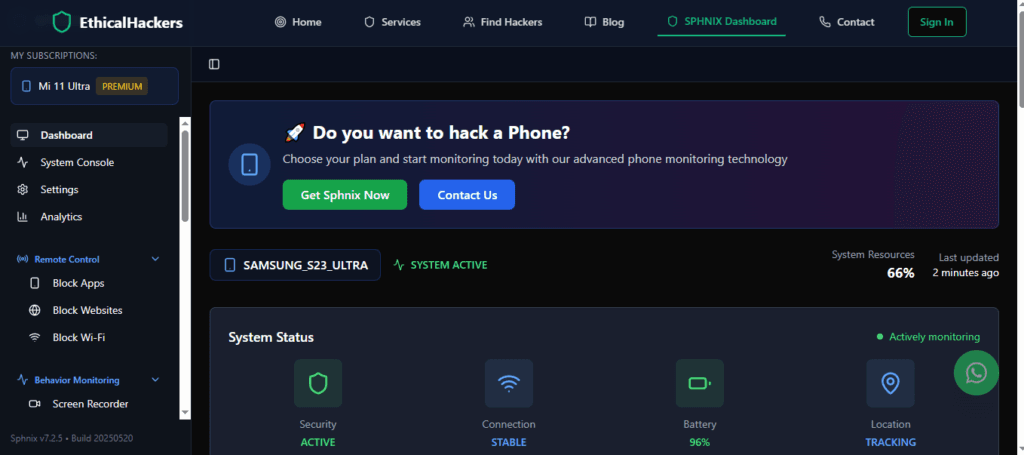
1. Sphnix Tracking App: Comprehensive Digital Surveillance
Sphnix provides a complete picture of device activity, which is where most infidelity evidence is found today.
- Key Features for Infidelity Detection:
- Full Message Logs: Access to SMS, iMessage, and messages from WhatsApp, Snapchat, Instagram, Tinder, and Facebook.
- Social Media Monitoring: Tracks interactions and direct messages across all major platforms.
- Real-Time GPS Location: Provides live tracking and location history, revealing unexplained trips.
- Call Recording & Logs: Details all phone calls, including duration and frequency with specific contacts.
- Ambient Listening: Can remotely activate the microphone to hear surroundings, useful for confirming meetups.
Sphnix leaves little to the imagination, providing overwhelming data that can confirm or disprove suspicions.
2. Eyezy: User-Friendly Behavior Analysis
Eyezy excels at presenting data clearly, helping to identify patterns of secrecy and communication with specific individuals.
- Key Features for Infidelity Detection:
- Unified Social Media Hub: Aggregates messages from all apps into one timeline, making secret conversations easy to spot.
- Screen Recording: Captures actual screen activity, showing app usage and messages in real-time.
- Keyword Alerts: Get notified if specific names, hotel brands, or intimate phrases are typed.
- Gallery Access: Views all photos and videos, including those received via message or taken and saved.
Eyezy helps connect the dots by organizing digital behavior into a clear, actionable narrative.
3. Spynger: Covert Intelligence Gathering
Spynger focuses on stealth and capturing evidence beyond simple text logs, which can be crucial for context.

- Key Features for Infidelity Detection:
- Environment Recording: Can secretly capture photos, videos, and audio from the device’s surroundings.
- Call Recording: Provides verbatim evidence of telephone conversations.
- Complete Message Tracking: Monitors all communication channels in one dashboard.
- Stealth Operation: Designed to be virtually undetectable on the target device.
Spynger is for gathering concrete, multi-sensory evidence that leaves no room for denial.
Ethical and Effective Next Steps
Before using technology, consider these more ethical and legally sound approaches:
- Self-Reflection: Examine your own feelings and the relationship’s health before the suspicion began.
- Open Communication: Have a calm, non-accusatory conversation using “I feel” statements. (“I’ve been feeling disconnected and noticed X, which worries me. Can we talk about it?”)
- Relationship Counseling: A therapist can facilitate a safe space to address distance and rebuild trust, whether infidelity occurred or not.
- Consult a Lawyer: Understand your rights and options before taking any investigative action, especially if considering separation.
- Hire a Licensed Professional: If you must know, a private investigator can gather legal, admissible evidence without you breaking the law or confronting your spouse prematurely.
Conclusion: From Suspicion to Resolution
The question of how to know if your wife is cheating is a painful crossroad. While technology like Sphnix, Eyezy, and Spynger can provide definitive digital proof, using it without consent is legally perilous and will likely destroy any chance of reconciliation.
The most prudent path is often the hardest: direct, honest communication, possibly mediated by a professional. If evidence is necessary for legal reasons, obtaining it through legal means (like a licensed PI) protects your future. Remember, discovering the truth is only the first step. Having a plan for emotional support and legal advice before you know is the mark of wisdom.
Living with suspicion is corrosive. If you have observed multiple concerning signs and need to move from doubt to certainty, professional, ethical investigation can provide the answers you need while keeping you on solid legal ground. A confidential consultation can outline your options.
Frequently Asked Questions (FAQs)
Q1: What is the most common, undeniable sign of cheating you see in your investigations?
The single most common digital sign is a sudden, drastic increase in device secrecy—specifically, guarding the phone obsessively, deleting message history daily, and having unexplained periods where the phone is completely off or in “Do Not Disturb” mode during unusual hours. Behaviorally, it’s a sustained emotional withdrawal combined with unexplained irritability toward the partner.
Q2: Is it better to confront her with suspicions or gather evidence first?
As an investigator, I almost always advise gathering concrete evidence before a confrontation. Confronting without proof typically leads to denial, better-hidden behavior, and increased conflict. Evidence allows you to make informed decisions about your next steps, whether that’s seeking counseling or legal advice. However, the “evidence” should ideally be gathered ethically and legally, such as through your own observations or a professional.
Q3: Can a marriage recover from infidelity if it’s proven?
Yes, many marriages can and do recover, but it requires significant work from both partners. Recovery is predicated on the cheating partner taking full responsibility, demonstrating genuine remorse, committing to complete transparency, and both partners engaging in long-term therapy. The trust that is rebuilt is different from the original trust, but it can still form a strong foundation for a renewed relationship. The decision to attempt recovery is deeply personal.