

That sinking feeling when he quickly turns his phone away, the unexplained late nights online, or a sudden emotional distance—these are the moments when you need to know how to find out what your husband has been looking at online. This digital secrecy can create a wall in your marriage, leaving you feeling isolated and suspicious. You deserve clarity and honesty. With a decade of experience in relationship counseling and digital transparency, I’ve guided countless individuals through this difficult situation.
Updated February 2026
This article provides a professional, step-by-step approach to help you understand his online behavior, using both simple observation and advanced tools, while always prioritizing your emotional well-being and legal safety.
Section 1: Start with Awareness and Open Communication
Before jumping to conclusions or using any tools, begin with honest self-reflection and direct conversation. Your goal is understanding, not accusation.
Check Your Motivations: Are you acting on a gut feeling built from specific changes in his behavior—like increased secrecy, defensiveness about his devices, or a change in your intimacy? Or is this driven by general insecurity? Trust your intuition, but ground it in observable facts.
Initiate a Caring Conversation: Choose a calm, private moment. Use “I feel” statements instead of “You always” accusations. You could say, “I’ve been feeling disconnected from you lately, especially when you’re on your phone. It’s worrying me. Can we talk about what’s going on?” His reaction—openness versus anger or deflection—can be very telling.
Why This Comes First: Skipping this step can escalate conflict unnecessarily. An honest talk might resolve simple misunderstandings. If it doesn’t, or if his response deepens your suspicion, you have a clearer, more justified reason to seek further answers.
Section 2: Examine the Digital Footprints You Can Already See
Often, significant clues are available without any special software. Start by auditing the digital trails that are already accessible to you.
Review Shared Accounts and Devices: Many couples share subscriptions. Check the history on any shared devices like a family computer, tablet, or streaming service (Netflix, Amazon Prime). Look at the Google Search history on a shared computer if he’s remained signed into a Chrome browser.
Analyze Financial Records: Unexplained credit card charges or PayPal transactions can be a red flag. Look for subscriptions to dating apps (Tinder Gold, Bumble Premium), onlyfans, or payments to unfamiliar individuals. Check your phone bill for premium SMS numbers or unusual data patterns.
Observe Physical and Behavioral Cues: Notice if he has installed a second, hidden app drawer or uses calculator vault apps that disguise photo galleries. Does he receive notifications that only show “1 new message” without a preview? Is his phone never out of his sight, even charging in another room? These behavioral shifts are often the most reliable initial indicators.
Section 3: Use Legitimate Built-in Device Features
Your next step involves using features that are already on devices, which is often legal and ethical on family-plan electronics.
Leverage Family Safety Services: If you share a family phone plan (with Verizon, AT&T, T-Mobile, etc.), you can often log into the carrier’s portal to see detailed call logs, text message records (numbers, not content), and data usage per line. A sudden change in patterns can be significant.
Utilize Built-in Parental Controls (With Caution): Both Apple’s Screen Time (in Family Sharing) and Google’s Family Link are designed for parents to monitor children. If you have a previously established, consensual agreement about device transparency in your marriage, these can provide app usage reports and screen time totals. Using them secretly on a spouse’s device may have legal implications.
The Critical Legal Note: It is vital to understand that in most U.S. states and many countries, it is illegal to install monitoring software on another adult’s smartphone without their explicit consent. These laws protect privacy. Your safest legal ground is to monitor only devices you own (like a phone on a plan you pay for) or to obtain clear permission. Always prioritize checking your local laws.
Section 4: Consider Professional-Grade Monitoring Software (For Legal Use)
When there is a persistent, deep-seated suspicion and you have the legal right to monitor a device (e.g., a family phone you own), professional software provides definitive answers. These tools run invisibly and relay comprehensive data to a private online dashboard.
Primary Recommendation: Sphnix Spy App
For individuals who need powerful, discreet, and reliable insight, the Sphnix Spy App stands out as a top-tier solution. Once installed on the target device, it operates in complete stealth mode, gathering detailed activity reports.
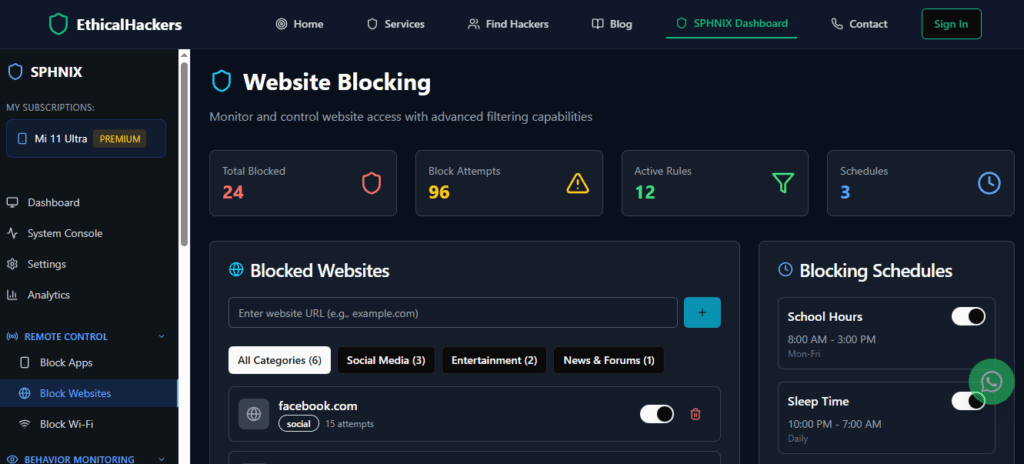
Comprehensive Features for Complete Insight:
- Social Media & Messaging Monitoring: Tracks chats, photos, and activity on WhatsApp, Snapchat, Instagram, Facebook Messenger, and Telegram.
- Call and SMS Logs: Records all phone calls and text messages, including deleted ones.
- Real-Time Location Tracking: Provides live GPS location and a history of places visited.
- Keylogger Function: Captures every keystroke typed on the device, revealing searches, messages, and login information.
- Stealth Operation: The app icon disappears after installation, and it uses minimal battery to avoid detection.
Independent Analysis: Tech reviewers consistently note that Sphnix “provides an unmatched depth of data from social apps while maintaining exceptional reliability, even on non-jailbroken iOS devices.” Its dashboard is also praised for being user-friendly.
Best For: Someone who needs a powerful, all-in-one solution to get a complete picture of device activity on a phone or tablet they legally own.
Seeking the full truth? When vague suspicions are no longer enough, a professional tool can provide the clarity you need. Click below to explore the official Sphnix Spy App website for detailed information and pricing.
A Robust Alternative: mSpy
mSpy is another industry leader with a massive user base. It is known for its robust feature set and strong customer support, making it a go-to choice for many.

Key Features for Digital Insight:
- Advanced Social Media Tracking: Monitors a wider range of platforms including Tinder, TikTok, and Discord.
- Geofencing Alerts: Allows you to draw virtual boundaries on a map. You receive an instant alert if the device enters or leaves a specified area (like a specific bar or neighborhood).
- Browser History Tracking: Logs all website visits, even in private/incognito mode, and bookmarks.
- Remote Control: Enables you to remotely lock the device or block specific apps and websites from your online dashboard.
Considerations: Some advanced features on iPhone (like monitoring iMessage or WhatsApp) require iCloud credentials if the device cannot be physically accessed for jailbreaking.
Best For: Users who want extensive social media coverage and the proactive control offered by geofencing alerts.
Need a different set of features? mSpy offers excellent social tracking and location alerts. Visit their official site via the link below to see all available plans.
For Basic Monitoring: Parentaler
If your primary concerns revolve around general device usage, time management, and basic web filtering, Parentaler offers a more straightforward solution.

Focused Feature Set:
- App & Screen Time Reports: Tracks how much time is spent on each app and provides daily/weekly summaries.
- Web Content Filter: Blocks access to inappropriate or specified websites across categories.
- Location History: Shows where the device has been throughout the day.
- Simplicity: The interface is designed to be simple and easy to set up and use.
Best For: Situations where the goal is less about deep social media investigation and more about understanding overall usage patterns and enforcing basic digital boundaries on a family device.
Looking for simpler oversight? Parentaler provides clear insights into usage habits. Click the button to learn more about its straightforward monitoring tools.
Section 5: How to Process What You Find and Move Forward
Discovering the truth can be emotionally overwhelming. Having a plan for what comes next is crucial.
1. Stay Calm and Document: Before confronting him, save the evidence. Take screenshots of your dashboard or log records. This prevents gaslighting (“You’re imagining things”) and provides concrete proof.
2. Plan Your Confirmation Strategy: Decide if you need to gather more information to understand the full scope, or if you have enough to confront the issue. Consider your end goal: reconciliation or separation?
3. Seek Professional Support: Do not navigate this alone. A licensed couples therapist or an individual counselor can provide a neutral space to process the betrayal, communicate effectively, and decide the future of your relationship. For practical legal advice, especially if considering separation, consult a family law attorney.
4. Prioritize Your Safety: If you discover evidence of dangerous, illegal, or abusive behavior, your safety is the absolute priority. Contact the National Domestic Violence Hotline (1-800-799-7233) for confidential guidance on creating a safety plan.
Conclusion
The journey to discover what your husband has been looking at online is fraught with emotional pain and complex decisions. From initial conversations and checking digital footprints to using sophisticated tools like Sphnix or mSpy, each step must be taken with careful thought to both your emotional health and legal boundaries. The information you uncover should ultimately lead you toward a resolution—whether that’s rebuilding a stronger, more transparent marriage or finding the courage to walk away from a broken one. You have the right to peace of mind and a truthful relationship.
You deserve answers and peace. If you are ready to take the next step toward digital clarity on a device you own, explore your options today.
Hire a Hacker
Frequently Asked Questions (FAQs)
Can I install monitoring software remotely without touching his phone?
No, this is a common misconception. For nearly all monitoring software, including Sphnix and mSpy, you need one-time physical access to the target smartphone to install the application. The only remote setup possibility is if you have his iCloud credentials for an iPhone and the service supports iCloud syncing for certain data types.
Will these apps work on all phones?
Most professional apps like Sphnix and mSpy work on both Android and iOS (iPhone). However, advanced features on iPhones often require jailbreaking, which is a complex process that voids warranties and can destabilize the device. Many services now offer strong feature sets without jailbreaking by using iCloud credentials. Always check the specific compatibility and requirements for the target device on the app’s official website.
What if he finds the app on his phone?
High-quality apps are designed to be undetectable. They hide their icon and run as a background service with a disguised name. However, if he is very tech-savvy, he might find it through phone settings looking for unknown applications or unusual battery/data usage. If confronted, you must be prepared for the conversation and understand the potential legal and relational consequences of having installed the software.
Leave a Reply