Who Is My Boyfriend Texting? An Expert Look at Apps and the Right Way to Find Answers
That moment of doubt is all too familiar. His phone buzzes, he glances at it quickly and puts it away, and a quiet question forms in your mind: The Truth About Seeingtrong>who is my boyfriend texting app could give me the answers? If you’re searching for this, you’re likely caught between a need for honesty and a fear of what you might find. As someone with over a decade of experience in digital security and ethics, I’ve seen how this search often ends—not with clarity, but with legal trouble and broken trust.
Updated February 2026
This article will walk you through the reality of these apps, explain the significant risks involved, and guide you toward healthier ways to address the doubts in your relationship.
The Legal and Ethical Reality You Cannot Ignore
Before we examine any app, you must understand the critical boundary. In most countries, including under laws like the Computer Fraud and Abuse Act in the United States, installing monitoring software on another adult’s phone without their explicit consent is a crime.
This isn’t a minor issue. It can be prosecuted as computer fraud, stalking, or invasion of privacy. Legal experts consistently warn that How to See Whothese actions can result in criminal charges or civil lawsuits, regardless of your relationship to the person. The short answer to “is it legal?” is a clear no when it involves a partner.
Beyond the law, it’s an ethical breach that destroys the foundation of a relationship: trust. Using a who is my boyfriend texting How to Tell Ifapp without his knowledge replaces partnership with surveillance, creating a dynamic of suspicion and control that is nearly impossible to repair.
How Phone Monitoring Apps Actually Work
To make an informed choice, it’s important to separate marketing claims from technical reality. Legitimate monitoring software is designed for parental control of minors or employer monitoring of company-owned devices with employee prior consent.
For these apps to function, they require an initial point of access. This is a key detail that dispels the myth of easy, secret spying:
- For iPhones: Most apps require the target’s iCloud username and password to sync data from backups.
- For Android Phones: Most require one-time physical access to the device to install the software.
True “remote installation” with just a phone number is a common scam. These apps are data reporters; they can only show information from the device or account they are physically or digitally connected to.
A Detailed Analysis of Monitoring Apps
Let’s examine the three apps you’ve asked about. It is vital to state that using any of these to monitor an adult partner without their consent is illegal and considered a form of digital abuse, often called stalkerware.
1. Sphnix Tracking App
Sphnix is marketed as a discreet surveillance tool, often discussed in online forums focused on digital monitoring.

- Reported Core Features: According to its promotional material, Sphnix can track call logs, monitor SMS text messages, access social media activity, and provide real-time GPS location. It is designed to operate in a hidden mode.
- How It Works: It requires installation on the target device (for Android) or iCloud credentials (for iPhone).
- Primary Legal Use & Risk: Its marketing leans towards covert surveillance, which is a significant red flag. Using it on a partner is a clear legal violation.
2. Eyezy
Eyezy is explicitly marketed as a parental control application, focusing on monitoring a child’s digital activity.
- Reported Core Features: Eyezy specializes in monitoring messages across SMS and a wide array of social media and chat apps like WhatsApp, Snapchat, and Instagram. It also includes GPS location tracking, geofencing alerts, and a screen recording feature.
- How It Works: It typically requires iCloud credentials for iPhones or physical installation for Android devices to function fully.
- Primary Legal Use & Risk: Its intended purpose is for parents to protect underage children. Using it to spy on a boyfriend is a fundamental misuse, violating its terms of service and the law.
3. Spynger
Spynger is presented as a comprehensive monitoring suite, though detailed independent reviews are less common.
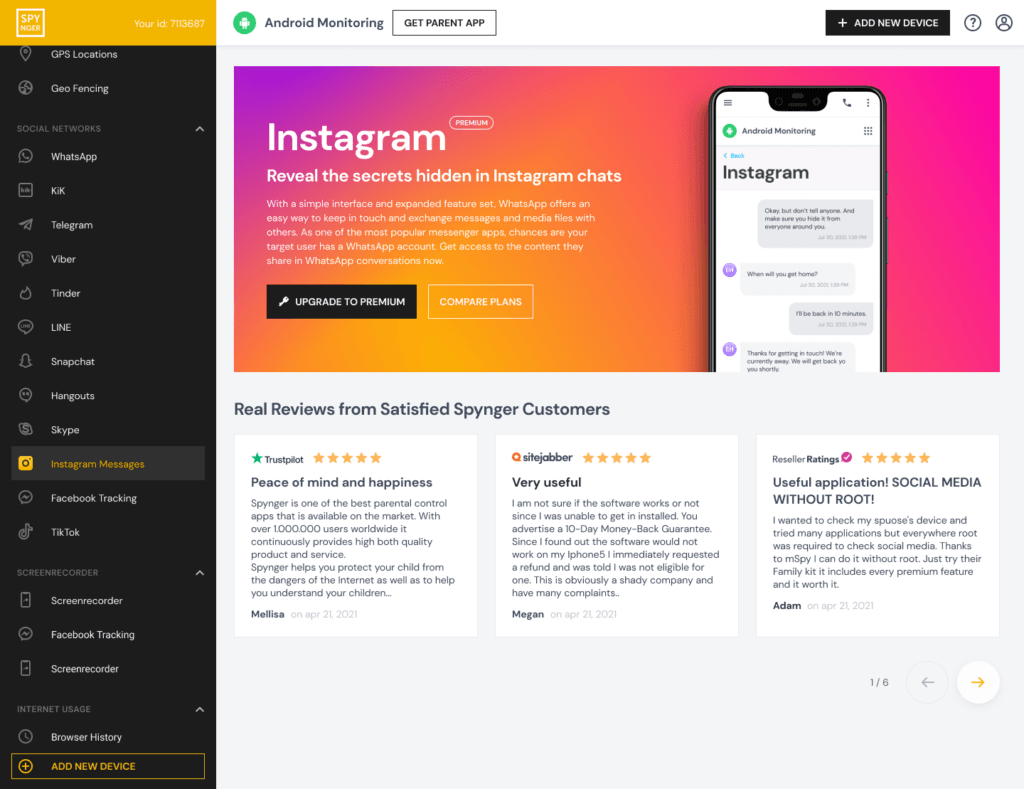
- Reported Feature Set: It advertises monitoring for text messages, social media apps, call logs, and GPS location. It may also include features like ambient recording or access to media files.
- How It Works: Like the others, it would require initial access via physical installation or iCloud credentials.
- Key Consideration: Apps in this category are frequently misused in relationships. User reviews for similar apps often report that some features can be unreliable or require more technical steps than advertised.
Understanding Your Options: A Quick Comparison
The table below summarizes the general focus and key considerations for each app to help clarify their intended purposes.
| App Name | Primary Marketed Purpose | Key Consideration for Partner Monitoring |
|---|---|---|
| Sphnix | General covert surveillance | High legal risk; associated with unauthorized spying. |
| Eyezy | Parental control of children | Clear misuse of a child safety tool; illegal on an adult. |
| Spynger | Comprehensive device monitoring | Requires significant access; frequently misused. |
The Severe Consequences of Secret Surveillance
Choosing to spy invites consequences that can permanently alter your life.
- Legal Repercussions: You risk criminal charges, a permanent record, and civil lawsuits for invasion of privacy.
- Total Relationship Collapse: If discovered, this betrayal often destroys any remaining trust and ends the relationship in the most painful way.
- Financial and Personal Risk: The spyware market is filled with scams. You could pay for software that doesn’t work or download malware that steals your own data.
- Emotional Harm: Living with this secret creates constant anxiety and can damage your self-respect, trapping you in a cycle of paranoia.
The Healthy Path: From Suspicion to Resolution
If your doubts are powerful enough to make you consider illegal surveillance, the core issue is a crisis of trust. Technology cannot fix this. Here is a more constructive path:
- Self-Reflection: Honestly ask yourself the source of your suspicion. Is it based on specific changes in his behavior, or is it fueled by your own past experiences?
- Direct Communication: Have a calm, private conversation. Use “I feel” statements: “I’ve been feeling insecure and distant lately, and it’s worrying me. Can we talk about what’s going on?”
- Seek Professional Help: A relationship counselor can provide a neutral space to facilitate honest discussion and address underlying issues.
- Evaluate the Foundation: If trust is so broken that spying seems like the only option, it may be a sign the relationship itself is unsustainable.
When Professional Cybersecurity Services Are Actually Appropriate
You may wonder about firms like SpyWizards. As a professional ethical hacking service, we operate in a completely different, legal realm. We provide authorized services such as:
- Digital Forensics: Legally recovering data from devices you own.
- Security Audits & Defense: Helping individuals and businesses secure their devices against unauthorized spyware.
- Incident Response: Assisting victims of cyberstalking.
We defend privacy and security; we do not violate it for personal suspicions. If you believe you are being monitored, those are the services that can lawfully help.
Conclusion: Choose Honesty, Not an App
The search for a who is my boyfriend texting app is a search for a technological shortcut around a human problem. The shortcuts are illegal, unethical, and dangerous. Apps like Sphnix, Eyezy, and Spynger have specific, legal purposes, and twisting them into instruments for partner surveillance is an abuse that often backfires catastrophically.
True peace of mind comes from clarity, not covert access. That clarity is achieved through honest communication, professional help, or the difficult decision to leave a situation that forces you to choose between your integrity and your anxiety. Invest your energy in the path that allows you to look at yourself with respect. That is the only foundation for a secure future.
Frequently Asked Questions (FAQs)
Q1: What if I’m just worried about his safety?
Genuine safety concerns are addressed through partnership, not surveillance. Have an open conversation from a place of care: “I care about you and want to make sure you’re safe. Is everything okay?” This builds a team dynamic.
Q2: Can’t I just use his iCloud password if I know it?
Knowing a password is different from having consent to use it for surveillance. Using credentials that were shared for convenience to secretly monitor someone’s private life is a violation of trust and is legally considered unauthorized access.
Q3: What are signs that my own phone might have spyware?
Be alert to sudden changes: very rapid battery drain, the device feeling warm when idle, unusual lag, unexpected spikes in mobile data usage, or strange background noises during calls. If you suspect you are a victim, consult a cybersecurity professional.