The Silent Pursuit of Truth in a Digital Age
The modern phone is a vault of secrets. When trust in a marriage begins to fracture, that device often becomes the focal point of fear, suspicion, and a desperate need for answers. The search to track my wife’s phone without her knowledge is one of the most common, and most fraught, dilemmas I’ve encountered in my ten years as a specialist in digital relationship dynamics. It’s a step born not from malice, but from a profound crisis of certainty.
Updated February 2026

If you’re considering this path, you are likely past the point of simple questioning and are seeking definitive, factual clarity. This guide will serve as your clear-eyed roadmap. I will outline the realistic methods, emphasize the non-negotiable legal and ethical boundaries, and provide an expert analysis of the tools that claim to offer discreet tracking. My aim is to ensure you move forward informed, not just impulsive.
The Weight of the Decision: Motives and Mandatory Legal Caveats
Before exploring a single method, a hard conversation with yourself is necessary. Why is this the chosen path?
- Common Motivations: The drive usually stems from concrete, unsettling patterns: consistent unexplained absences, a drastic increase in secretive phone behavior, or receiving information that contradicts her stories. It’s the move from a feeling to a need for evidence.
- The Paramount Legal Warning: You must understand this clearly. In most jurisdictions, including the United States under laws like the Computer Fraud and Abuse Act, it is illegal to install tracking software on a device you do not own, or to electronically monitor an individual without their consent. Violations can result in serious civil lawsuits and criminal charges. This information is presented for educational purposes regarding devices you own or with explicit permission. You are responsible for understanding and complying with the laws in your region.
Method 1: Legitimate Shared Services (The “With Knowledge” Options)
These are the legal, above-board methods. They require some degree of access or mutual agreement.
- Find My Network (Apple) & Find My Device (Google): These native tools are powerful if you have her Apple ID/iCloud or Google account credentials. They can show a real-time location. However, be aware that using them may trigger security alerts (like “Your Apple ID was used to sign in on a new device”) on her phone, revealing your activity.
- Family Safety Apps (Life360, Google Family Link): Designed for mutual location sharing among family members. Adding someone to these services typically sends a notification or invitation to their phone that they must approve. Using them covertly is not their intended function.
Method 2: Manual Observations and Indirect Clues
Before technical tracking, ground your suspicions in physical observation.
- Billing Statements: Check your shared phone carrier account online. Many carriers offer basic location history or family locator services that might be included in your plan. Accessing this as the account holder is typically legal, but may be visible on statements.
- Behavioral Correlation: Note the times she claims to be somewhere. Does her phone go straight to voicemail during those periods? Are her text responses unusually delayed? This circumstantial evidence can justify the need for more concrete data.
Method 3: Professional Monitoring Applications
When other avenues are closed, professional-grade apps are engineered for the specific purpose of discreet monitoring. They are installed once on the target device and then report data silently to a private online dashboard you control.
1. Sphnix Tracking App
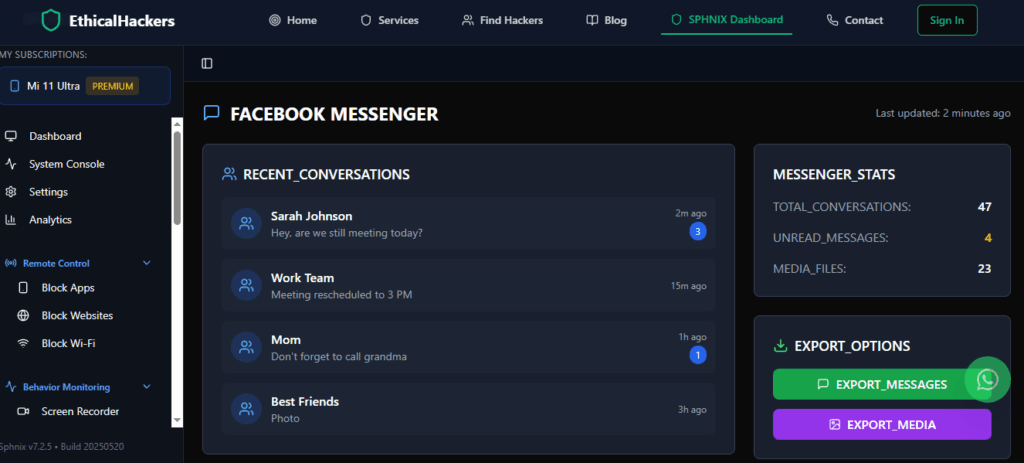
Sphnix is a comprehensive surveillance suite. Its location tracking is continuous and detailed, providing real-time GPS coordinates, a full history of locations with timestamps, and interactive geofencing alerts. It operates in complete stealth mode, making it invisible on the target phone. Beyond location, it monitors social media, calls, and messages, giving crucial context to her movements.
2. Scannero
Scannero offers a unique approach that can be useful in specific scenarios. Its standout feature is a cell phone location tracker that can sometimes provide location data using just a phone number, which can be helpful for initial checks. It also includes tools to generate fake calls or messages to the target phone, which can be used to create situations that reveal her location or reactions indirectly.

3. Moniterro
Moniterro provides robust, all-in-one monitoring with a strong emphasis on location intelligence. It offers frequent location updates and a meticulously logged location history. Its advantage is correlating this location data with device usage—you can see not just where the phone is, but what apps are being used at that time and who she is communicating with, building a powerful behavioral picture.

What Effective Tracking Actually Provides
A quality tool does more than show a dot on a map. It provides analytical evidence:
- Pattern Recognition: It reveals routines—does every “late work meeting” end with the phone at the same residential address?
- Geofencing Proof: You can set a virtual boundary around a questionable location and receive an instant alert the moment the phone enters or leaves, providing timely, actionable information.
- Movement History: A timeline of locations, speeds, and dwell times creates an indisputable record that can contradict verbal accounts.
The Inescapable Consequences: Trust, Law, and Self
Proceeding down this path irrevocably changes the relationship dynamic.
- The Trust Breach: If discovered, it will be viewed as a profound violation. Recovery from this, regardless of what you find, is exceptionally difficult.
- Legal Risk: As emphasized, unauthorized tracking is a legal offense. The evidence gathered may even be inadmissible in court and used against you.
- Emotional Toll: The act of constant surveillance can consume you, fostering obsession and anxiety. You must prepare for what you might learn and the actions you will then be forced to take.
Conclusion: Navigating the Crossroads of Doubt and Action
The technical process to track my wife’s phone without her knowledge involves understanding the limitations of shared services and the capabilities of specialized software. However, the true journey is ethical and personal. It is a last-resort option for obtaining clarity when faced with debilitating suspicion and stonewalling. It should be undertaken with full awareness of the potential fallout: the possible end of the relationship, legal repercussions, and significant personal strain. Your need for truth is valid, but it must be pursued with eyes wide open to all possible outcomes. The goal is not just to gather data, but to reach a resolution that allows you to move forward, one way or another.
For situations requiring extreme discretion beyond commercial software, or if you need professional, expert-level digital forensic analysis to interpret complex data, specialized services are available.
Frequently Asked Questions (FAQs)
Q1: Can I track a phone if location services are turned off?
Professional monitoring apps like Sphnix and Moniterro often have persistence mechanisms. If the high-accuracy GPS is off, they can typically still approximate location using WiFi network data or cell tower triangulation, though with less precision. If all location services are completely disabled, real-time tracking becomes very difficult.
Q2: Do these apps work on both iPhone and Android?
Yes, leading apps support both platforms, but the installation process and feature set differ. Android typically allows more extensive monitoring with a one-time physical installation. For iPhones, many features rely on having the iCloud credentials for the target device, and some advanced functions may require the phone to be jailbroken, which is complex and can void warranties.
Q3: Will installing the app be obvious?
The best apps are designed for stealth. Reputable ones like those listed hide their icon from the app drawer, do not appear in the recent apps list, and use minimal system resources to avoid battery drain notifications. The installation process itself, however, requires temporary physical access to the phone, which is the most critical moment for detection.