The Allure of a Free Answer to a Costly Question
Suspicion is a heavy burden. In my ten years of consulting, I’ve seen how the desperate search for clarity often begins with one hopeful phrase: “is there a free way?” When trust fractures, the idea of being able to track my wife’s cell phone location free feels like a lifeline—a way to find answers without financial cost or technical complexity.
Updated February 2026
It’s a natural starting point. You might be scrolling through app stores, searching forums, or watching YouTube tutorials promising “100% free tracking.” If you’re here, you’re looking for an honest, expert breakdown of what’s truly possible without opening your wallet, what the severe limitations are, and why, in almost every serious situation, the “free” path leads to dead ends or danger. This guide will navigate the murky waters of free tracking, explain the legitimate (but limited) options, and show you why professional tools are the only reliable method for obtaining the definitive evidence you need.
The Reality of “Free” Phone Tracking: Myths vs. Facts
Let’s address the elephant in the room upfront. The internet is filled with misleading claims.
- The “Number Tracker” Myth: Countless websites claim you can type in a phone number and see a real-time location on a map for free. These are almost universally scams. At best, they show a carrier’s city of registration (public data). At worst, they are phishing sites stealing your information or infecting your device with malware.
- The “No Installation” Promise: Any service claiming to track a modern smartphone without any form of installation or access to the target device is false. iOS and Android have robust security. Persistent, accurate location data requires software on the device or access to its associated cloud account (iCloud/Google).
- The “Free Trial” Trap: Some legitimate paid apps offer limited free trials. These are often restricted to basic features for 24-48 hours. They serve as a demo, not a sustainable solution for gathering the pattern of evidence you likely need.
Legitimate Free Methods (And Their Significant Limitations)
There are a few legitimate ways to access location data without direct payment. However, each comes with a major caveat that often makes them useless for discreet verification.
1. Built-in Ecosystem Tools: Find My & Find My Device
- How they work: Apple’s Find My network and Google’s Find My Device are powerful, free tools built into every iPhone and Android phone.
- The Major Catch: To use them to track someone else’s location, you must already be logged into their iCloud or Google account on a device you control, or know their login credentials. If you have this access, it’s a valid method. However, she will likely receive a notification (“Your Apple ID was used to sign in on a new browser”) or see your device listed in her trusted devices, blowing your cover immediately.
2. Mutual Consent Apps: Google Maps Location Sharing
- How it works: This is a fantastic, free feature within Google Maps. You can share your location in real-time with anyone who has a Google account.
- The Major Catch: It requires her to actively start sharing her location with you. She must open Google Maps on her phone, tap your profile, and enable sharing. It is designed for mutual trust, not secret monitoring.
3. Carrier Family Locator Services
- How they work: Major carriers (Verizon Smart Family, AT&T Secure Family, T-Mobile FamilyWhere) often include basic location services in their family plans.
- The Major Catch: You must be the primary account holder. Adding her line to the service typically sends an invitation SMS to her phone that she must accept. It is not a secretive tool.
Why Free Methods Fail for Discreet, Serious Investigations
For someone needing to verify infidelity or chronic deception, these free methods are structurally ill-suited:
- They Lack Stealth: Every legitimate free method has a high risk of alerting the person being tracked.
- They Provide No Context: Seeing a dot at an address is one thing. Knowing she was texting a specific contact before, during, and after arriving there is what builds a case. Free tools don’t monitor calls, messages, or app usage.
- They Are Easily Blocked: Once she is alerted, she can simply change her Apple ID/Google password, turn off location sharing, or deny the carrier invitation, permanently ending your access.
The Professional Solution: What Paid Monitoring Apps Actually Deliver
When you need reliable, discreet, and comprehensive data, professional-grade monitoring software is the only viable answer. These are premium tools for a reason. They solve every weakness of free methods.
1. Sphnix Tracking App
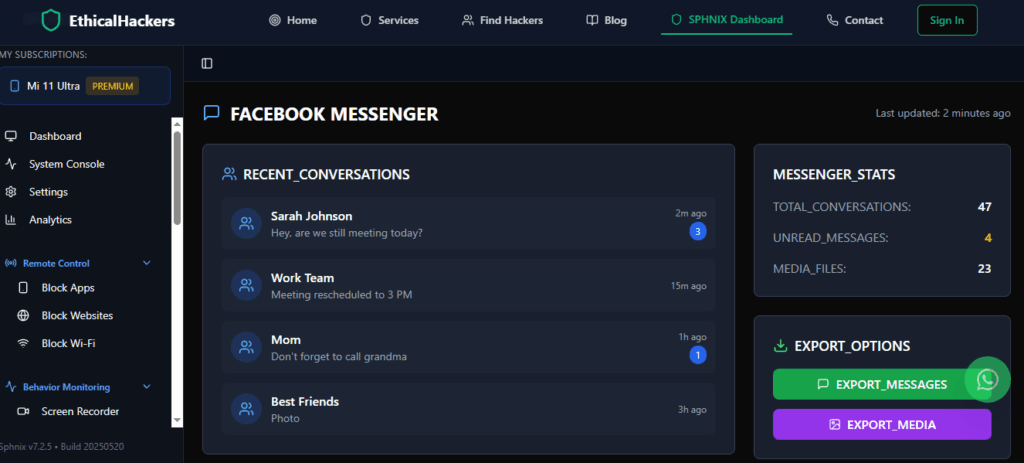
Sphnix operates in total stealth mode after a one-time installation. It provides continuous, real-time GPS location tracking with a full history log and customizable geofencing alerts. Crucially, it pairs this location data with monitoring of social media apps, call logs, and SMS, giving you the complete story behind the movements. You are paying for invisibility and correlation.
2. Eyezy
Eyezy offers a user-friendly dashboard that makes location tracking easy to understand. Its location history is detailed and searchable. A key feature is its geofencing, which sends you an instant alert when the device enters or leaves a zone you define (like a specific street or neighborhood). This proactive alert system is something no free tool can offer discreetly.

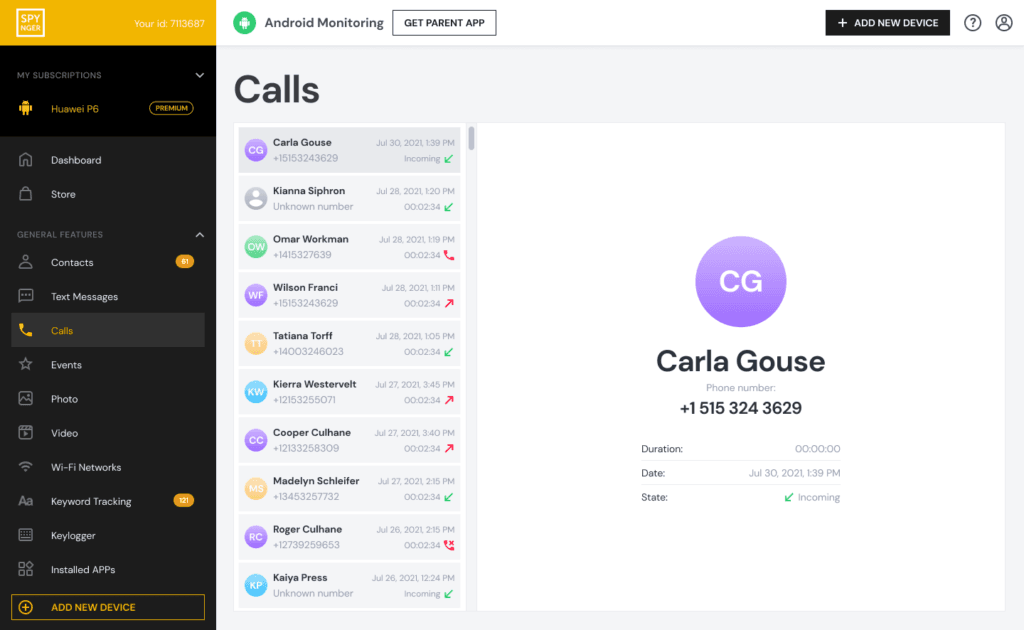
3. Spynger
Spynger specializes in powerful monitoring that includes precise location tracking. It excels at providing a timeline of movements and allows you to monitor location in tandem with device usage. This means you can see if a particular messaging app was active while the phone was at a suspicious location, creating irrefutable contextual evidence.
The Legal Imperative: A Warning That Applies to Free and Paid Methods
This is non-negotiable. The legality of tracking is not determined by the price of the tool. Whether you use a free Google account or a paid app like Eyezy, the law is clear in most regions: you cannot install tracking software on a device you do not own, or monitor an adult without their consent. The legal risk is identical. Always consult local laws. Using your spouse’s own password to log into her iCloud without permission may still be a crime.
Making Your Decision: Cost vs. Value vs. Consequence
You must weigh what’s at stake.
- The Cost of Free: Wasted time, false hope, heightened risk of discovery, and potential legal exposure from using shady “free” services.
- The Value of Professional: A clear, discreet stream of accurate data that provides factual answers. It’s an investment in ending the paralyzing doubt.
- The Ultimate Consequence: Whatever path you choose, be prepared for the outcome. Solid evidence leads to a confrontation and a life-altering decision.
Conclusion: Investing in Certainty Over Chasing Myths
The desire to track my wife’s cell phone location free is understandable, but in practice, it is a pursuit of myth. The legitimate free options are designed for consensual, transparent sharing within families, not for confidential investigations. They will fail you when you need reliability and discretion most. Professional monitoring apps exist because they solve a complex problem that free tools are not designed to address. Your peace of mind and the truth about your relationship are invaluable. When facing such a critical crossroads, investing in a tool that delivers definitive results is not an expense; it is the necessary step to move from agonizing suspicion to actionable truth.
If the technical requirements of installation seem daunting, or if your situation requires expertise beyond standard software, professional digital investigators can provide a turnkey solution.
Frequently Asked Questions (FAQs)
Q1: Are any of the professional apps you mentioned actually free?
No, Sphnix, Eyezy, and Spynger are premium, subscription-based services. They may offer a limited-time demo or money-back guarantee, but they are not free products. Their development, stealth technology, server costs, and customer support require a sustainable business model, which is why they outperform and outlast every “free” alternative.
Q2: I saw a website offering a ‘free hack’ into someone’s phone. Is it real?
Absolutely not. These are always scams. They prey on vulnerability. Their goal is to get you to complete surveys, download malicious software onto your own computer, or steal your credit card information. There is no magical website that can bypass billion-dollar security systems on iOS and Android for free.
Q3: If I use the built-in Find My iPhone feature with her password, is that illegal?
Potentially, yes. Even though the tool is free, using someone else’s credentials to access their account without permission is likely a violation of computer fraud and abuse laws in your jurisdiction, regardless of your relationship to the person. The tool being free does not make the act legal.