A Professional’s Guide to Phone Monitoring Apps: Capabilities and Consequences
The question of how to spy on my partner phone often surfaces during moments of profound relationship anxiety—a sudden emotional distance, unexplained behavior, or a fracture in trust. The immediate urge is to seek certainty, and technology appears to offer a direct path. Over a decade of experience in digital security and relationship consulting has shown me that this path, while technically possible, is fraught with far more danger than most people anticipate.
Updated February 2026

This article will provide a clear-eyed, professional examination of a charged subject. We will explore the powerful technology behind modern monitoring apps, the severe legal and criminal consequences of their unauthorized use, and the psychological impact that secret surveillance has on relationships. My goal is not to facilitate spying but to inform you of the realities, risks, and more constructive paths forward when trust is broken.
The Legal Reality: It’s Not Just Unethical, It’s a Crime
Before examining a single feature or app, you must understand the legal landscape. In most jurisdictions, including the United States and the European Union, installing monitoring software on another adult’s personal device without their explicit, informed consent is illegal.
This action violates multiple laws:
- Computer Fraud and Abuse Act (CFAA): A U.S. federal statute that makes unauthorized access to a computer system—including a smartphone—a felony.
- Wiretapping and Electronic Surveillance Laws: Most states require two-party consent to record or intercept private communications.
- General Data Protection Regulation (GDPR) and Privacy Laws: These protect an individual’s personal data and privacy, which covert surveillance grossly violates.
The legal exceptions are narrow and specific: parental monitoring of minor children and employers tracking company-owned devices with clear, written employee consent. Using a “parental control” app to monitor a partner redefines it as “stalkerware,” which is a prosecutable offense. Evidence obtained illegally is also inadmissible in court and could result in you facing criminal charges or a civil lawsuit.
Understanding Modern Monitoring Technology
The tools often sought to spy on my partner phone are commercially known as monitoring or parental control apps. When used legally, they are sophisticated suites of software that, once installed on a target device, relay a vast array of data to a secure online dashboard.
The table below summarizes the core features available across leading applications, illustrating the depth of surveillance possible.
An Analysis of Featured Monitoring Applications
For educational purposes—and to understand what you are dealing with—here is an analysis of apps frequently discussed in this context. Remember, their legal use is strictly for parental control with consent.
1. Spynger: Maximum Stealth and Depth
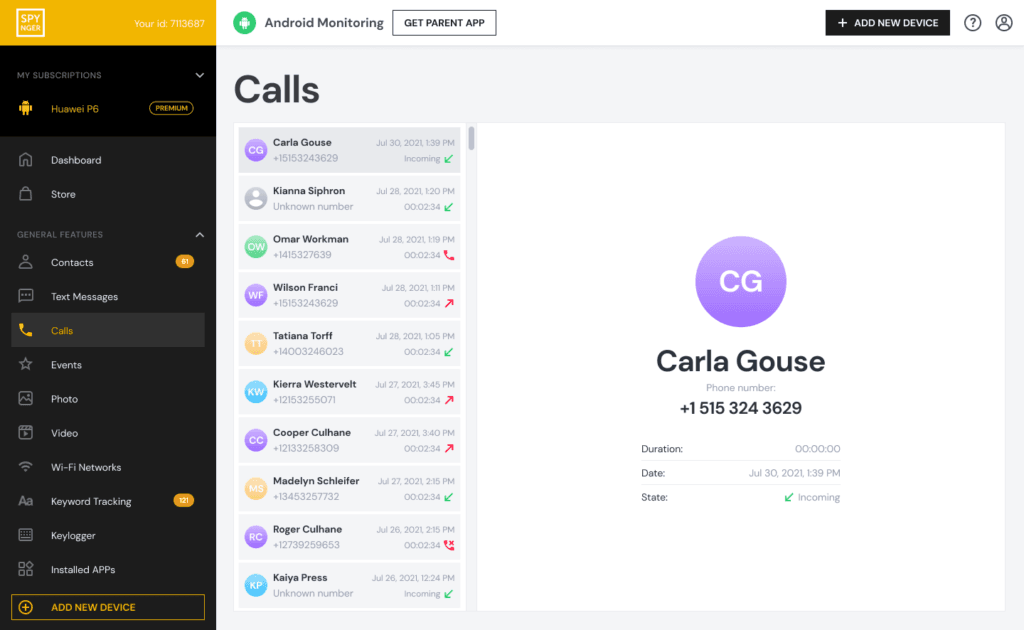
Spynger is designed as a serious surveillance tool. It prioritizes being undetectable on the target device, with no icon and minimal resource usage.

- Core Features: It provides comprehensive logging of GPS location, all forms of messages (including deleted ones), call logs, photos, and keystrokes. It monitors over 16 social and messaging apps.
- Professional Verdict: As one review states, “Spynger isn’t for casual check-ins. It’s for when you need the full picture and no one can know you’re looking”. This makes its potential for misuse in relationships particularly high and dangerous.
2. Eyezy: User-Friendly Interface with Smart Alerts
Eyezy offers a sleek, modern dashboard and a feature set focused on accessibility. It includes “Magic Alerts” that flag specific keywords or activities of concern.

- Core Features: Tracks calls, texts, photos, and social apps. Its “Eyezy Ultra” tier offers deep access without needing to root (Android) or jailbreak (iPhone) the target device. It also offers a Family Kit for monitoring multiple devices.
- Professional Verdict: Eyezy’s polished design makes monitoring data easy to digest. However, its “smart” features can create a false sense of security, as no algorithm can perfectly interpret human relationship context.
3. Sphnix Tracking App: Comprehensive Remote Control
Sphnix (also referenced in reviews under similar apps like uMobix or Xnspy) is built for extensive oversight and remote device interaction.
- Core Features: Beyond standard tracking, it often includes remote commands to lock the phone, wipe data, or capture screenshots. Some versions offer ambient listening capabilities.
- Professional Verdict: The addition of remote control moves beyond passive spying into active device interference, which compounds the legal severity and interpersonal violation.
The Unseen Costs: Eroding Trust and Mental Well-Being
The technical capability to spy on my partner phone comes with a devastating relational price tag. Security experts and ethicists warn that “installing invasive software to spy on kids can be counterproductive”; this is exponentially true for adult partners.
- It Destroys the Foundation of Trust: A relationship cannot survive as a healthy partnership if it is predicated on surveillance. You become a warden, not a partner.
- It Creates False Narratives: Data without context is misleading. An odd message or location ping can be innocently explained, but you will have already tried and convicted your partner in your mind, based on secret evidence you cannot openly discuss.
- It Damages Your Mental Health: The cycle of obsessive checking is corrosive. As one individual in an online forum painfully shared, tracking a loved one’s device “gave me a false sense of security… I regret how obsessive I became”.
Ethical and Legal Alternatives for Addressing Suspicion
If your concerns are serious enough to consider illegal spying, they are serious enough to address through healthier, more courageous channels.
- Direct Communication: This is the most difficult but only constructive first step. Frame the conversation around your feelings using “I” statements: “I have been feeling insecure and disconnected lately. I miss our closeness. Can we talk about what’s going on with us?”
- Seek Professional Counseling: A couples therapist provides a neutral, mediated space to address breaches of trust, improve communication, and decide whether to rebuild or separate.
- Consider a Consensual, Transparent Approach: Some couples rebuild trust through mutual, agreed-upon transparency for a limited time. This is a negotiated agreement, not a secret operation. Standard tools like Apple’s Find My or Life360 can be used for this with full consent.
- Hire a Licensed Professional: If you must have evidence for legal proceedings (like a divorce), a licensed private investigator can gather information through legal means, providing evidence that is admissible in court.
Conclusion: Choosing Between Surveillance and the Relationship
The technology to spy on my partner phone is powerful and accessible. Applications like Spynger, Eyezy, and Sphnix demonstrate that it is technically feasible to monitor nearly every aspect of a device. However, choosing to use this technology on a partner without consent is not a step toward saving a relationship; it is the step that almost certainly ends it, while simultaneously exposing you to legal prosecution.
True security in a relationship comes from vulnerability, communication, and rebuilt trust—not from control, secrecy, and fear. If the trust is gone, have the courage to address that reality directly, either through repair or respectful separation. The path of secret surveillance leads only to more profound isolation and consequence.
Living with suspicion is painful, but illegal surveillance creates irreversible legal and personal damage. If you are facing a serious breach of trust and need confidential guidance on ethical next steps, seeking professional consultation is the safest path forward.
Frequently Asked Questions (FAQs)
Q1: Can these apps really work without being detected on the phone?
Yes, high-end apps like Spynger and mSpy are explicitly engineered for stealth mode. They hide their icon, run silently in the background, and minimize battery usage to avoid detection. However, sophisticated users may still find traces, and the moral and legal detection—by your partner and the law—is guaranteed.
Q2: What if I own the phone or pay the bill? Does that give me the right?
No, it does not. Ownership of the hardware or service plan does not override the user’s legal expectation of privacy. This is a common misconception. The legal right to monitor is based on consent and relationship (e.g., parent-minor child), not on financial contribution.
Q3: Isn’t it just like looking through their diary if I have a good reason to be suspicious?
Legally and ethically, it is far more invasive. A modern smartphone is not a diary; it is a portal to a person’s entire digital life—their conversations with friends, family, and colleagues, their financial transactions, and their location history. Secret access is considered a comprehensive privacy violation, not a minor breach.