
The Truth About Free Spousal Spy Apps: A Professional’s Guide to What Actually Works
The search for a method to spy on spouse cell phone for free is a desperate and modern impulse. It’s driven by sleepless nights, gnawing suspicion, and the painful hope that a simple piece of software can confirm or finally put to rest your deepest fears. As someone with over a decade of experience in digital investigations and security, I’ve seen the aftermath of this search countless times. While the promise of free, easy answers is powerful, the reality is far more complex and fraught with danger.
Updated February 2026
Let’s be unequivocally clear from the start: installing monitoring software on another adult’s personal phone without their explicit knowledge and consent is illegal in most jurisdictions. It’s classified as stalkerware or spouseware, a form of digital abuse that can carry felony charges, fines, and severely damage your standing in divorce proceedings. This article will not guide you to break the law. Instead, it will provide a professional’s unvarnished look at the technical landscape: what “free” tools actually exist, their severe limitations, the high probability of scams, and the legal, ethical alternatives for addressing relationship turmoil.
Why Truly “Free” Spouse Spying is Mostly a Myth
The adage “if you’re not paying for the product, you are the product” is critically true in the world of surveillance. When you search for free apps to spy on spouse cell phone, you typically encounter three problematic categories:
- Bait-and-Switch “Trials”: Many reputable-sounding services offer a free trial, but to access any meaningful features—like reading social media messages or viewing detailed location history—you must quickly upgrade to a paid subscription. The free version often only monitors a single device with very basic controls.
- Outright Scams and Malware: Fake “hacking” apps and websites are designed to steal your money, harvest your personal data, or install malicious software on your own device. They promise instant access with just a phone number but deliver nothing but risk.
- Legitimate Parental Controls Misapplied: Some actual, functioning apps are free but designed strictly for parental monitoring. Apps like Google Family Link or Qustodio’s free version fall into this category. Using them to spy on a spouse is a clear violation of their terms of service and the law, as they require the informed consent of the device user (or, for minors, their guardian).
A Technical Look at How Spouse Monitoring (Legally) Works
To understand the limitations of free tools, it helps to know how legitimate monitoring software functions. These apps generally require one-time physical access to the target phone for installation. Once set up, they run in stealth mode and transmit data like call logs, text messages (SMS and from apps like WhatsApp), GPS location, and browsing history to a private online dashboard.
The depth of data access depends heavily on the phone’s operating system:
- Android Devices: Offer more flexibility for monitoring apps, potentially allowing access to social media content, keyloggers, and real-time location.
- iOS Devices (iPhone): Apple’s strict security makes deep monitoring extremely difficult without jailbreaking the phone—a complex process that voids warranties and exposes the device to security risks. Many services instead rely on extracting data from iCloud backups, which is not real-time and can be blocked by two-factor authentication.
Featured Applications: Capabilities and Critical Context
The user has specified three applications. The following table compares their general capabilities, which are legally intended for purposes like parental control with a child’s knowledge.
1. Sphnix Tracking App: The Covert Surveillance Suite
Sphnix represents the high end of intrusive monitoring, designed to be completely hidden.
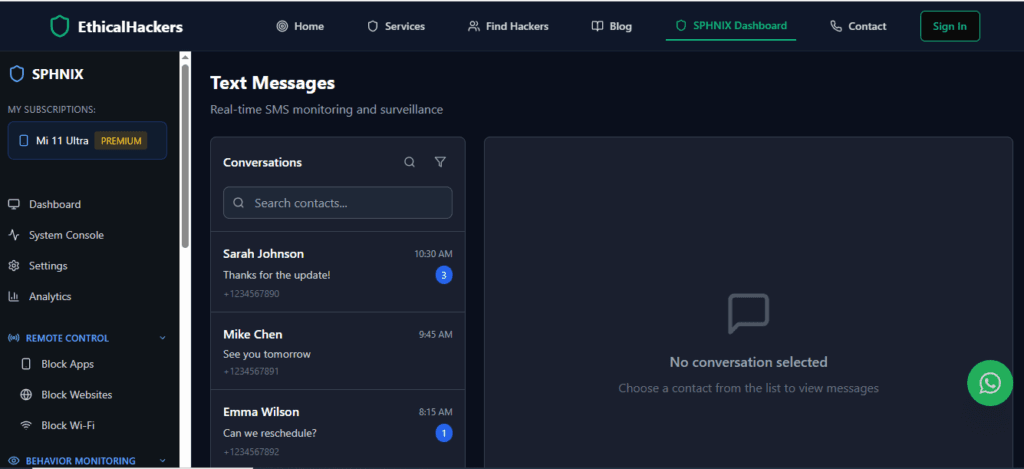
- Key Features: Promotes comprehensive tracking, potentially including messages, calls, location, and social media activity.
- Professional Assessment: This level of secret surveillance is a hallmark of abusive control. Any service offering it “for free” is almost certainly a scam.
2. Scannero: Location via Deception
Scannero uses a different method, relying on sending a tracking link to the target phone number.
- Key Features: Provides location tracking without installing software on the target device.
- Professional Assessment: This method depends on deception (the target clicking the link). It is not a reliable or ongoing spy tool and raises immediate ethical and legal red flags.
3. Moniterro: The All-in-One Monitor
Apps in this category, like the well-known mSpy, are built for extensive oversight.

- Key Features: Social media monitoring, keylogging, GPS tracking, and access to call logs and messages.
- Professional Assessment: mSpy is a paid subscription service. The business model of professional-grade monitoring is built on recurring revenue; a robust, free version does not exist.
The Severe Consequences of Illegal Spying
Choosing to secretly spy on spouse cell phone for free can backfire catastrophically, with consequences far beyond the relationship.
- Legal Repercussions: You could face charges under federal laws like the Computer Fraud and Abuse Act or state-level electronic surveillance laws. In North Carolina, for example, such acts can be a felony. You may also be sued for invasion of privacy.
- Destruction in Divorce Court: Evidence gathered illegally is typically inadmissible in court. Worse, a judge may view your actions as malicious, negatively impacting decisions on alimony, asset division, and child custody.
- Total Erosion of Trust: Even if you discover nothing, the act of spying is a profound betrayal. It ends any possibility of reconciliation through honest communication.
Ethical and Legal Paths Forward
If your suspicions are strong enough to consider illegal spying, they are strong enough to address through these more difficult but constructive channels:
- Direct, Courageous Communication: Initiate a calm conversation using “I feel” statements. For example, “I’ve been feeling insecure and distant. Can we talk about what’s happening with us?”
- Seek Professional Counseling: A licensed couples therapist provides a neutral space to navigate trust issues with guidance.
- Consult a Family Law Attorney: If you believe the relationship is ending, a lawyer can advise on legal methods for investigation, such as hiring a licensed private investigator or using formal discovery processes in divorce. This protects your rights and ensures any evidence is usable.
- Mutual Transparency Agreements: Some couples rebuilding trust mutually agree to share locations using consensual apps like Life360 or Find My Friends. The critical difference is full, voluntary consent from both parties.
Conclusion: The High Price of “Free” Surveillance
The technological capability to monitor a partner’s phone exists, but a safe, effective, and truly free method to spy on spouse cell phone does not. The pursuit of such a tool leads to scams, legal jeopardy, and the guaranteed destruction of your relationship’s foundation.
True resolution comes not from secret surveillance but from facing the issue directly. Have the courage to choose the path of open communication, professional help, or legal counsel. These choices, while harder, are the only ones that protect your future, your integrity, and your peace of mind.
Living with suspicion is painful, but illegal surveillance creates more problems than it solves. If you are facing a serious breach of trust and need confidential guidance, seeking professional advice is the only safe path forward.
Frequently Asked Questions (FAQs)
Q1: Can my spouse find out if I use a spy app on their phone?
Yes. While stealth is a selling point, signs can include rapid battery drain, unusual data usage, the phone heating up, or sluggish performance. Tech-savvy users can find hidden apps in settings or detect them with security scans. Furthermore, apps sometimes require permissions that can appear in the phone’s security logs.
Q2: What is the difference between a parental control app and a spouse spy app?
The difference is consent and intent. Parental control apps (like Qustodio or Norton Family) are designed for parents to protect their minor children, ideally with age-appropriate transparency. Using the same app to secretly monitor a competent adult spouse is illegal stalkerware.
Q3: If we are married and share a phone plan, don’t I have the right to see the data?
No, you do not. Ownership of a shared plan or even the physical device does not override an individual’s reasonable expectation of privacy in their personal communications. Legal rights are based on personhood and consent, not on financial contribution.