
The idea of secretly deploying a keylogger to someone’s phone has become a common, yet deeply flawed, digital fantasy. Popular media often p Undetectable Keylogger Remote Installortrays it as a simple act of sending a mysterious link, instantly granting access to every typed word. If you’re searching for information on how to send a keylogger to someone’s phone, it’s vital to understand that this specific method—remotely installing surveillance software with just a message or email—is largely a myth for consumer-grade tools and is unequivocally illegal when done without consent.
Updated February 2026
As a cybersecurity professional with over a decade of experience, my goal is to demystify this process, explain the technical and legal truths, and clarify the legitimate uses of monitoring technology within strict ethical boundaries.
The Technical Truth: You Cannot Simply “Send” a Keylogger
The concept of “sending” a keylogger via a text message or email link is a significant misunderstanding of how this software works. A keylogger is not a virus that self-installs from a link in the classic sense. Modern mobile operating systems, especially iOS and Android, have robust security architectures called “sandboxing” that prevent apps from installing themselves without explicit user permission.
For a keylogger to function, it must be installed as an applicat Understanding Android Keylogger Appsion on the target device. This almost always requires one of two things:
- Direct Physical Access: The most common method for consumer monitoring apps. You need to physically handle the target phone to download, install, and configure the software.
- Exploitation of a Critical Vulnerability: This involves using an undiscovered flaw (“zero-day exploit”) in the phone’s operating system or an app to force an installation. These exploits are highly valuable, closely guarded by nation-states and security researchers, and are not for sale on public websites. Any service claiming to offer this is a scam.
Therefore, the idea of clicking a link to instantly infect a phone is, for all practical private purposes, a technical fiction exploited by fraudsters.
The Legal Consequences: A Federal Crime
Beyond technical impossibility, attempting to install a keylogger or any surveillance software on a device you do not own or without the owner’s explicit consent is a serious crime. In the United States, this violates multiple laws:
- The Computer Fraud and Abuse Act (CFAA): This is the primary federal anti-hacking law. Unauthorized access to someone else’s device is a felony.
- The Electronic Communications Privacy Act (ECPA): Known as the Wiretap Act, it criminalizes the intentional interception of electronic communications, which includes capturing keystrokes of messages and emails.
- State-Level Cyberstalking and Computer Intrusion Laws: Many states have additional statutes with severe penalties.
The only legal defenses are having explicit ownership or guardianship rights. Legitimate use is confined to:
- Parents monitoring the devices of their minor children.
- Businesses monitoring company-owned devices with a clear, consented employee policy.
Using this technology to spy on a spouse, partner, or any other adult is illegal and can result in imprisonment, hefty fines, and a permanent criminal record.
How Legitimate Monitoring Software is Actually Installed
Since “sending” a keylogger remotely isn’t viable, legitimate parental control apps work through direct, authorized installation. These apps are transparently marketed for child safety, not covert spying.
The standard process for an app like mSpy or Parentaler involves:
- Purchase and Account Setup: You buy a subscription and create an online account with the monitoring service.
- Physical Access: You obtain the target Android phone. For iPhones, you typically need the Apple ID and password.
- Installation and Configuration: On Android, you temporarily disable security settings to allow installation from “Unknown Sources,” download the app’s installer file, and set it up. You then hide the app icon.
- Remote Monitoring: Once installed, the app (which includes keylogging features) begins sending data to your private online dashboard. No further physical access is needed.
This process highlights the fundamental requirement: initial physical or credentialed access. It is a supervised setup, not a remote hack.
Analysis of Monitoring Tools and Professional Services
Let’s examine the tools mentioned, understanding their designed purpose is for oversight, not covert attacks.
mSpy: The Comprehensive Monitoring Suite
mSpy is one of the most full-featured monitoring applications available, often used as a parental control solution.

Key Features and Reality:
- Keylogging Function: mSpy includes a robust keylogger that captures keystrokes across SMS, emails, social media apps, and browsers. This is a powerful feature for understanding what a child is typing.
- Social Media Monitoring: Tracks chats on WhatsApp, Snapchat, Facebook Messenger, Instagram, and more.
- GPS Location and Geofencing: Provides real-time location and allows setting safe/restricted zones with alerts.
- Access Method: Requires physical installation on Android or iCloud credentials for iOS. It does not offer “remote send” functionality.
For comprehensive, lawful parental monitoring, explore mSpy’s features.
Parentaler: Focused on Family Safety
Parentaler is positioned as a parental control app with an emphasis on location and communication oversight.

Key Features and Reality:
- Call and SMS Monitoring: Allows review of text messages and call logs.
- Location Tracking and Geofencing: A core feature focused on knowing a child’s whereabouts.
- App and Web Filtering: Includes tools to block inappropriate content.
- Access Method: Requires installation on the target Android device. Its features are geared towards transparent safety rather than covert surveillance.
For family safety and parental controls, investigate Parentaler.
Professional Services: The “Hire-a-Hacker” Misconception
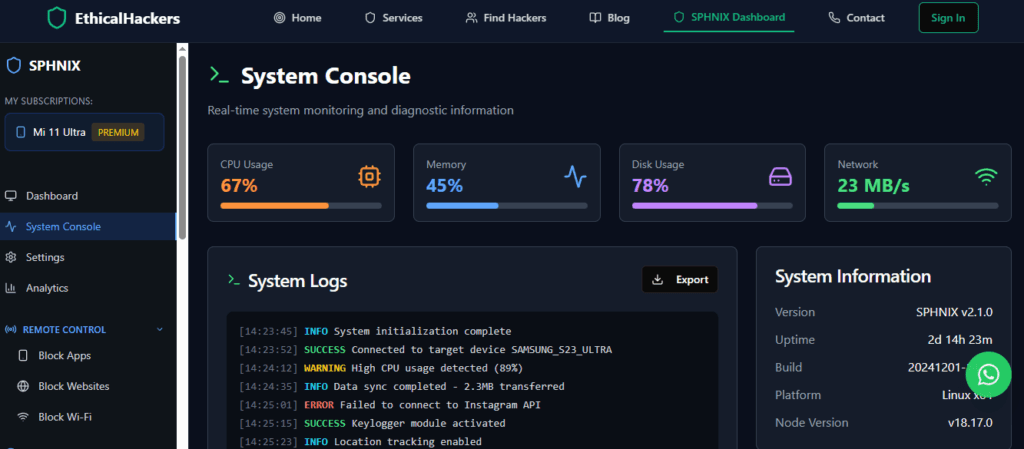
The “Sphnix” link leads to a professional cybersecurity marketplace (Hire-a-Hacker Service). This is not a keylogger delivery service.
Critical Clarification:
- This platform connects businesses with vetted ethical hackers.
- These professionals perform authorized security testing (penetration testing) on the company’s own systems to find vulnerabilities.
- They do not accept contracts to hack personal phones. Any individual offering this service is a scammer.
Comparing Paths: Parental Control vs. Professional Services vs. Scams
| Aspect | Parental Control Apps (mSpy, Parentaler) | Professional Cybersecurity Services | “Remote Keylogger” Scams |
|---|---|---|---|
| Primary Purpose | Lawful monitoring of minors or company devices. | Authorized security testing for businesses. | Fraudulently promise illegal remote spying. |
| Installation Method | Physical access or credential-based setup. | Contracted testing on client-owned assets. | Claim to work via a link or phone number. |
| Legal Use Case | Parental responsibility or asset management. | Improving organizational security. | None. The advertised act is criminal. |
| Outcome | Dashboard for viewing child’s device activity. | Security audit report. | Financial loss, malware on your device, identity theft. |
The Anatomy of a Keylogger Scam
Fraudulent sites exploiting the “remote send” myth follow a predictable pattern:
- The Alluring Promise: “Send a Keylogger via Link! No Touch Required!”
- The Payment: They demand an upfront fee for “software” or a “license.”
- The Delivery: They provide a non-functional file or a fake dashboard. Sometimes, the link actually installs malware on your own computer to steal your data.
- The Upsell and Disappearance: They claim you need to pay more for “activation” or “decryption,” then vanish.
The Ethical Alternative: Choosing Responsibility
If you are considering a keylogger due to suspicion in a relationship, understand that surveillance will destroy trust and create legal liability.
- Choose Honest Communication: Address concerns directly. It is difficult but necessary.
- Use Technology Transparently: For child safety, consider using built-in tools like Google Family Link (Android) or Apple Screen Time (iOS). These require setup with the child’s knowledge, fostering trust and teaching responsible use.
- Seek Professional Guidance: A relationship counselor can help address the root issues of doubt in a healthy, constructive way.
Conclusion: Abandon the Myth, Embrace Reality
The search for a method to send a keylogger to someone’s phone remotely leads to a dead end of scams and criminal liability. The technology that exists—parental control apps like mSpy and Parentaler—requires physical access and is designed for legal, responsible oversight within families.
True security and peace of mind cannot be achieved by violating another person’s privacy and the law. Empower yourself with accurate knowledge, respect legal boundaries, and build relationships on a foundation of trust, not secrecy.
For professional, legal cybersecurity services to protect your business systems, consult with vetted experts.
hire a hacker
Frequently Asked Questions (FAQs)
1. Can a keylogger be hidden inside a normal app or game?
Technically, yes. This is called a “trojanized” app. However, distributing such an app requires bypassing the official Google Play Store security checks or convincing someone to download and install it manually from an untrusted source. This is complex, highly illegal, and a common claim of scams that simply deliver broken or malicious files.
2. What should I do if I think someone has installed a keylogger on my phone?
Look for signs: rapid battery drain, unusual data usage, the device feeling warm when idle, or unfamiliar apps in your settings. On Android, check Settings > Apps and look for anything suspicious. Perform a factory reset (back up important data first) to remove most threats. Consider using reputable mobile security software and, if you feel unsafe, contact law enforcement.
3. Is it legal to test a keylogger on my own phone?
Yes, testing security or monitoring software on a device you own is perfectly legal. This is how security researchers and concerned parents evaluate tools. The illegality stems from installing it on a device you do not own or have explicit permission to monitor. Always ensure you are only ever installing software on devices you have clear authority over.