How to Link My Boyfriend’s Phone to Mine: The Expert Guide to Technology and Trust
The question of how to link my boyfriend’s phone to mine reflects a modern relationship crossroads. It’s where the desire for closeness meets the reality of digital privacy. You might be seeking peace of mind, a deeper sense of connection, or answers to nagging doubts. As someone who has spent ten years navigating the intersection of technology, security, and personal relationships, I understand this impulse.
Updated February 2026
However, the path to linking phones is not a simple technical tutorial. It’s a journey that passes through critical legal checkpoints and the foundational bedrock of any healthy relationship: trust. This guide will provide a clear, professional breakdown of what “linking” phones truly involves. We’ll examine the technology that makes it possible, confront the significant risks of misuse, and explore the healthy, ethical ways to build transparency. My goal is to give you the knowledge to make a choice that protects your relationship and your integrity.
What “Linking Phones” Actually Means Technically
In practical terms, how to link my boyfriend’s phone to mine typically refers to establishing a one-way data stream from his device to a platform you control. This is not a mutual sync like pairing Bluetooth headphones. It involves using monitoring software that, once installed on a target device, collects information and sends it to a private online dashboard.
This process almost always requires brief physical access to the target phone for installation. The types of data collected can range from GPS location and text messages (SMS) to social media activity, call logs, and browsing history. It’s crucial to understand that achieving this level of access without the device owner’s knowledge crosses a serious line.
The Legal and Ethical Imperative: Consent is Non-Negotiable
Before we examine any tools, a definitive legal and ethical boundary must be established. Installing monitoring software on another adult’s personal device without their explicit, informed consent is illegal in most places.
Such software is classified as stalkerware or spyware. Its use in intimate relationships is recognized as a form of digital abuse and can violate laws like the Computer Fraud and Abuse Act. Consequences can include criminal charges, civil lawsuits, and any evidence gathered being thrown out of court in legal proceedings. Beyond the law, it is a profound violation of trust that often irreparably damages relationships.
Analysis of Featured Applications and Services
The tools often searched for in this context vary in their approach. It is vital to assess them within their intended, legal use cases, which are typically parental control or device security with consent.
The following table provides a high-level comparison of the services linked in your request:
| Service / Application | Primary Stated Purpose | Key Capabilities | Critical Context for Partner Monitoring |
|---|---|---|---|
| Sphnix (via Marketplace) | Cybersecurity Marketplace | Connects clients with vetted pros for pen-testing, data recovery, security audits. | Not a consumer spy app. Using these services for secret partner surveillance is illegal and violates ethical codes. |
| Scannero | Location Services | Finds a phone’s location via a link sent by SMS; uses cell tower/Wi-Fi data. | Relies on the target clicking a deceptive link. Not a full monitoring suite; use without knowledge is a privacy violation. |
| Moniterro | Monitoring / Tracking | Typically includes GPS tracking, social media & call monitoring, stealth operation. | Features are designed for comprehensive oversight. Covert use on a partner constitutes illegal stalkerware. |
1. The “Sphnix” Cybersecurity Marketplace
The provided link directs to a professional cybersecurity marketplace, not a direct consumer app. This platform offers access to vetted ethical hackers and security experts for services like penetration testing, vulnerability assessments, and incident response.
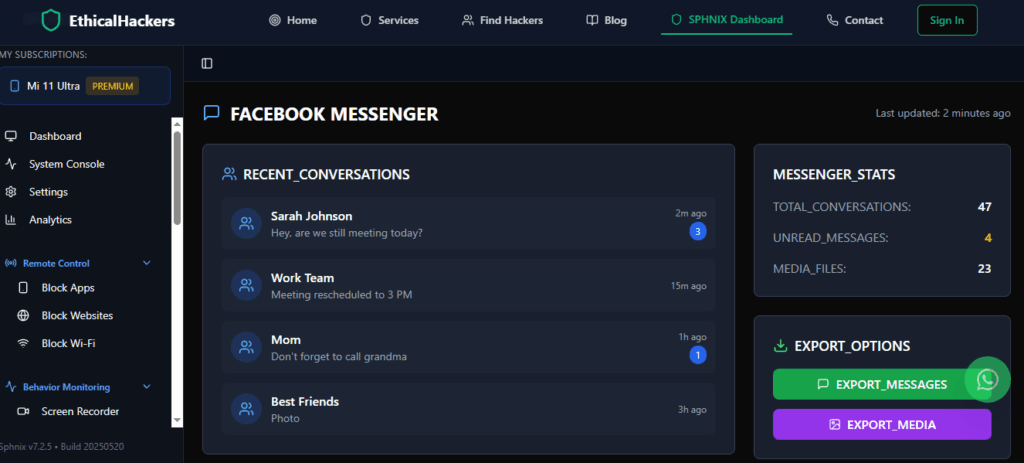
- Professional Assessment: This is a legitimate service for improving digital security with consent. The professionals here operate under strict ethical guidelines. Attempting to hire someone from this platform to secretly hack or monitor your boyfriend’s phone would be a severe misuse of the service, likely illegal, and a direct violation of the platform’s terms. It is not a shortcut for relationship doubts.
2. Scannero: Location-Focused Service
Scannero operates differently from traditional installed spyware. It uses a phone number to send a tracking link; if the recipient clicks it, the service can approximate the device’s location using cell tower and Wi-Fi data.
- Key Features: Provides location tracking without installing software on the target device. It is a more limited tool focused primarily on location.
- Professional Assessment: This method is based on deception (the target clicking the link). While it may seem less invasive, using it to track someone’s location without their knowledge is unethical and, in many contexts, illegal. It does not provide the comprehensive “linking” of data that other apps offer.
3. Moniterro: Monitoring and Tracking Suite
Applications like Moniterro represent the standard model of monitoring software. They are designed to be installed on a device to collect a wide array of data.

- Key Features: These suites often include GPS location tracking, monitoring of social media and messaging apps (like WhatsApp, Facebook, SMS), call log access, and may run in a stealth/hidden mode.
- Professional Assessment: This is the type of application most associated with the term “stalkerware” when misused. Its powerful features make the potential for abuse and harm in a relationship very high. Its use without consent is a serious offense.
The Consequences of Choosing to Spy
Opting for secret surveillance carries devastating potential outcomes:
- Legal Repercussions: You risk criminal prosecution and civil liability.
- Relational Nuclear Option: Discovery typically destroys trust permanently, ending the relationship in the most damaging way possible.
- Psychological Harm: For the victim, it creates lasting trauma and anxiety. For the installer, it fosters a toxic cycle of obsession and control.
The Ethical Path: Building Trust Through Transparency
If your concerns are strong enough to consider illegal monitoring, they are strong enough to address through ethical, constructive methods.
- Direct Communication: Initiate an honest conversation. Use “I feel” statements: “I’ve been feeling insecure lately, and I think we could build more trust if we were more open. Can we talk about that?“
- Seek Mutual, Consensual Solutions: If you both agree on more transparency, use tools designed for shared use.
- Location Sharing: Mutually enable Find My (iPhone) or Google Maps location sharing.
- Shared Digital Spaces: Use shared photo albums, calendars (Google, Apple), or note-taking apps.
- Agreed-Upon Check-Ins: Use apps like Life360 by mutual consent for family or partner location sharing.
- Professional Counseling: A relationship counselor can provide a safe space to address underlying trust issues, communication problems, and insecurities. This is the most effective way to “link” your emotional worlds.
Conclusion: Link Through Trust, Not Through Trojans
The technical methods for how to link my boyfriend’s phone to mine exist, as seen in applications like Moniterro or services like Scannero. However, employing these tools without consent is not an act of love or connection; it is an act of control that carries severe consequences.
A healthy relationship is built on the voluntary linking of two lives, not the covert hacking of one. Have the courage to seek connection through open doors—conversation, mutual agreement, and professional guidance—rather than through digital backdoors. Choosing trust over surveillance is the only way to build a connection that is both strong and true.
If you are facing complex relationship issues or legitimate safety concerns, seeking help from a professional counselor or a legitimate cybersecurity expert for advice is the responsible and effective path forward.
Frequently Asked Questions (FAQs)
Q1: If we share a phone plan, do I have the right to link to his phone?
No, you do not. Paying for a service plan does not grant legal ownership over the data on the device or the right to monitor private communications. The legal right to privacy belongs to the individual using the phone.
Q2: What’s the difference between linking phones and using Find My iPhone with consent?
The difference is consent and mutuality. “Find My iPhone” is a feature designed to be enabled by the device owner for purposes like locating a lost phone. If you both voluntarily enable it for each other, that’s consensual sharing. Secretly installing software to achieve the same result without permission is surveillance and is illegal.
Q3: Can he find out if I use one of these apps?
Yes. While stealth is a common feature, these apps can cause increased battery drain, data usage, or device slowdown. Security updates sometimes detect and alert users to such software. Furthermore, if he becomes suspicious and checks his phone thoroughly or uses security software, he may find it.