
The idea of secretly having every text message from one phone appear on another is a powerful—and for many, an unsettling—thought. Whether driven A Professional Guide toby parental concern, relationship anxiety, or another motive, the technical question of how to forward text messages to another phone without someone knowing is more common than you might imagine. With over a decade in digital communications security, I can state that the technology to accomplish this exists.
Updated February 2026
However, the more pressing questions are how it works, whether it’s reliable, and the serious legal and ethical implications you must consider before proceeding. This guide provides a clear, professional analysis of the methods, tools, and critical context you need.
The Technical Reality: How Secret Forwarding Actually Works
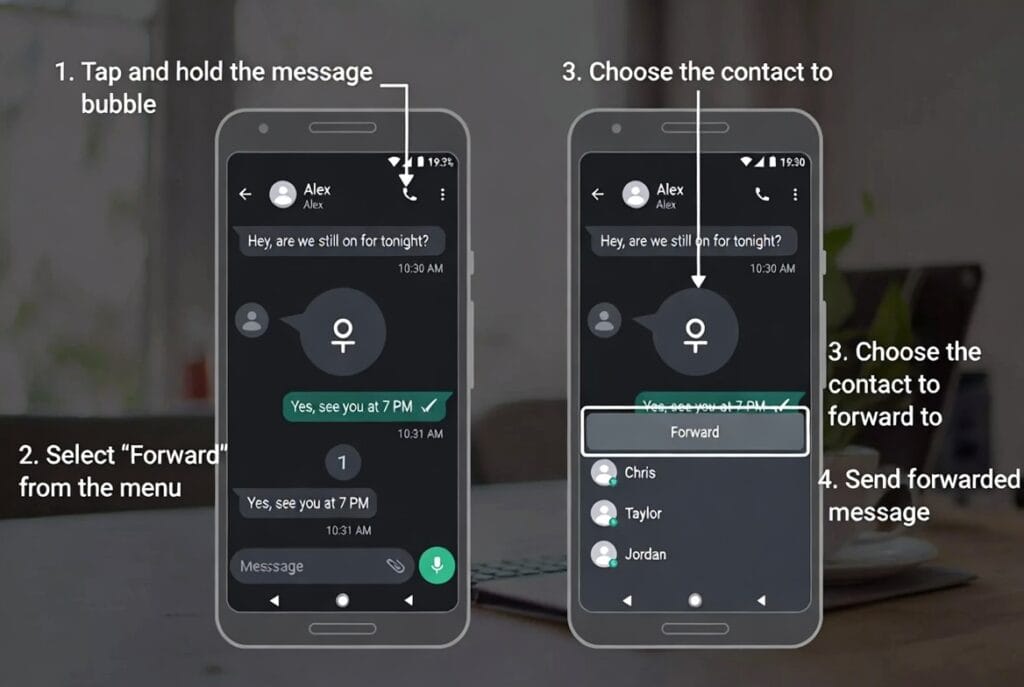
First, let’s clarify a common misconception: there is no built-in “secret forward” button in your phone’s settings. The standard SMS forwarding features on iOS or Android require the phone owner’s explicit setup and knowledge. True secret forwarding is achieved through third-party monitoring software.
These applications function as a background service on the target How to Install adevice. Once installed, they work through a consistent technical process:
- Interception: The app constantly monitors the device’s messaging activity, including SMS and often popular chat apps like WhatsApp or Facebook Messenger.
- Logging: It captures each message’s content, along with metadata like the sender, recipient, and timestamp, storing it in an encrypted log.
- Transmission: Using the device’s internet connection, it silently sends this logged data to a secure remote server.
- Delivery: You, the installer, access these forwarded messages through a private online dashboard (or, in some cases, via email alerts), effectively viewing them on “another phone” or any web browser.
This process requires one-time physical access to the target phone for installation. Any service claiming to set this up remotely with just a phone number is almost certainly a scam.
The Critical Legal and Ethical Fram How to Track Someoneework
Before exploring tools, you must understand the law. In most jurisdictions, including the United States under laws like the Computer Fraud and Abuse Act and the Electronic Communications Privacy Act (ECPA), installing monitoring software on a device you do not own or without the owner’s explicit consent is illegal.
Such actions can be prosecuted as:
- Unauthorized computer access
- Interception of electronic communications (a federal wiretapping offense)
- Invasion of privacy
- In many contexts, stalking or harassment
The potential consequences are severe: criminal charges, substantial fines, civil lawsuits, and restraining orders.
Legally defensible use is very narrow, generally limited to:
- Parents monitoring the devices of their minor children for safety.
- Businesses monitoring company-owned devices with a clear, consented employee policy.
Using this technology to secretly monitor a spouse, partner, or any other adult without their knowledge is illegal and unethical. This guide discusses the technology within these strict legal boundaries.
Analysis of Monitoring Applications
The following tools are often associated with message forwarding capabilities. They are explicitly marketed as parental control solutions for legal oversight.
mSpy: The Comprehensive Monitoring Suite
mSpy is one of the most established applications in this category, known for its extensive feature set and reliability.

Key Features for Message Forwarding & Monitoring:
- SMS & iMessage Tracking: Logs all sent and received traditional text messages and Apple iMessages, displaying full conversations with contact details and timestamps in your dashboard.
- Social Media & Chat App Monitoring: Extends forwarding capabilities to WhatsApp, Snapchat, Facebook Messenger, Instagram, Telegram, and more. This is crucial as most personal communication happens within these apps.
- Keyword Alerts: You can set specific words or phrases. If a monitored message contains them, you can receive an instant email notification, creating a proactive alert system.
- Stealth Operation: Once installed, the app icon can be hidden. It runs silently in the background, making it a tool designed for discreet parental oversight when used lawfully.
- Access Requirement: For Android, physical installation is required. For iOS, it typically uses the target device’s iCloud credentials.
For comprehensive monitoring where you have lawful access, explore mSpy’s features.
Parentaler: The Family Safety and Location Focused App
Parentaler is presented as a parental control app with a strong emphasis on location tracking and family safety.

Key Features for Message Forwarding & Oversight:
- SMS & Call Log Monitoring: Allows you to review text message history and call logs from your secure online dashboard.
- Real-Time GPS Location & Geofencing: Provides live location tracking and the ability to set up safe/restricted zones that trigger alerts—a core feature for many parents.
- App and Web Filtering: Includes tools to block inappropriate apps and websites.
- Usage Reporting: Offers insights into overall device and app usage patterns.
- Best For: Parents whose primary concerns are location safety and basic communication oversight, rather than deep social media surveillance.
For family safety and parental controls, investigate Parentaler.
Professional Services: Understanding “Sphnix” and Hire-a-Hacker
The “Sphnix Tracking App” link directs to a professional cybersecurity marketplace (Hire-a-Hacker Service). This is critically different from consumer monitoring apps.
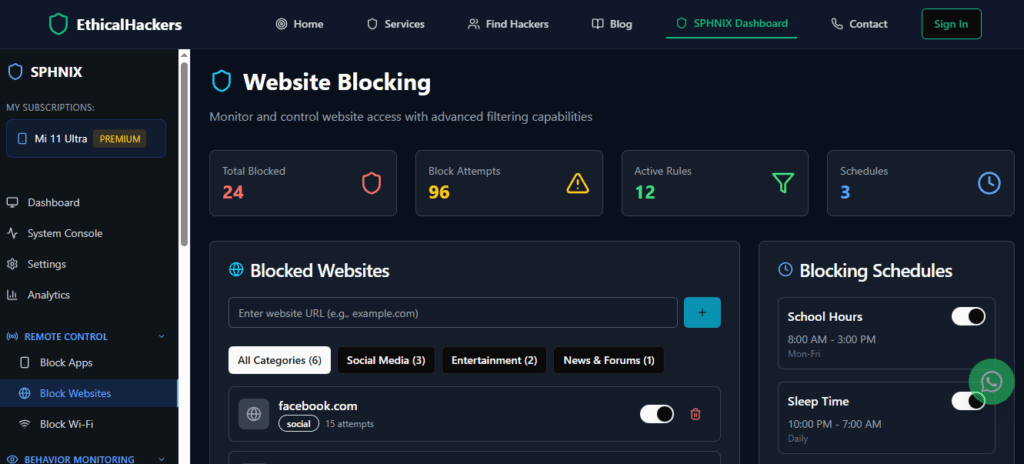
What This Platform Actually Provides:
- It is a marketplace where businesses hire vetted ethical hackers and security experts.
- These professionals perform authorized security testing, like penetration testing and vulnerability assessments, on the company’s own systems.
- They do not accept contracts to hack personal phones or intercept private messages. Any individual or service offering to do this for you is operating a scam and poses serious risks of fraud.
Choosing a Tool: A Comparison for Legal Use Cases
For parents deciding on a tool for lawful monitoring, here is how mSpy and Parentaler generally compare:
| Feature | mSpy | Parentaler |
|---|---|---|
| Primary Design Focus | Comprehensive monitoring & surveillance. | Family safety & location tracking. |
| Message Forwarding Scope | SMS, iMessage, and extensive social/media app chats. | Primarily SMS and call logs. |
| Key Additional Features | Keylogger, geofencing, social media monitoring, app blocking. | Geofencing, app/web filtering, usage reports. |
| Stealth Operation | Yes (icon hiding, background operation). | Yes (designed for discreet use). |
| Best For | Parents needing deep insight into all digital communications. | Parents prioritizing location safety and basic text/call oversight. |
The Inevitable Risks: Detection and Consequences
Even with stealth technology, secret forwarding is not foolproof. The person using the target phone might notice:
- Unusual Battery Drain: Constant data transmission consumes power.
- Increased Data Usage: Uploading message logs uses mobile data.
- Performance Issues: The phone may occasionally lag or behave strangely.
- Security Alerts: Built-in device security (like Google Play Protect on Android) may flag the app.
If discovered, especially in an illegal surveillance scenario, the personal, relational, and legal consequences can be severe and immediate.
The Ethical Alternative: Building Trust Over Surveillance
If you are considering secret monitoring due to suspicion in a personal relationship, understand that surveillance often destroys trust and creates larger problems.
- Choose Open Communication: Address concerns directly and honestly. While difficult, this is the only path that builds or repairs trust.
- Use Consensual Monitoring for Safety: For child safety, consider having an age-appropriate conversation about the dangers online and the reasons for using monitoring tools. Solutions like Google Family Link (for Android) or Apple Screen Time (for iOS) offer transparent oversight.
- Seek Professional Support: A relationship counselor or therapist can provide healthy strategies to address underlying issues of trust and communication.
Conclusion: Empower Yourself with Knowledge and Ethics
The technical knowledge of how to forward text messages to another phone without someone knowing is embedded in parental control applications like mSpy and Parentaler. They are powerful tools with a specific, lawful purpose: protecting children.
However, possessing this knowledge comes with the responsibility to use it legally and ethically. The decision to monitor another adult without their consent is not a technical challenge—it is a legal violation and a breach of fundamental trust.
Let your actions be guided by respect for the law and for personal privacy. Choose to protect with consent and transparency, not to invade with secrecy. True peace of mind is built on honesty, not on hidden monitors.
For professional, legal cybersecurity services to protect your business assets, you can explore enterprise solutions.
hire a hacker
Frequently Asked Questions (FAQs)
1. Can I set up message forwarding to send texts directly to my phone number or email?
Yes, many monitoring apps like mSpy offer alert features. You can typically configure the dashboard to send you an email notification when a new message is logged, sometimes including the message content. Some services may offer SMS alerts, though this is less common. The primary access method is usually the web-based control panel.
2. Will the forwarded messages appear in the sent folder or outbox of the target phone?
No. A properly configured monitoring app forwards messages by copying and transmitting data silently in the background. It does not use the phone’s native messaging app to send a new message, so nothing will appear in the sent folder or outbox. The forwarding process is designed to leave no trace on the device itself.
3. If I use the target phone’s iCloud or Google backup, can I access messages that way?
For iPhones, some monitoring apps use iCloud credentials to sync message data from backups. This is not real-time “forwarding” and can have a delay. For Android, Google backups do not reliably contain full SMS history by default. More importantly, accessing someone else’s cloud account without their permission is a violation of the service’s terms and potentially computer fraud law, regardless of the method used.