
The idea of creating a perfect, undetectable copy of someone’s iPhone—with all their messages, photos, and data—sounds like something from a How to Track an spy movie. If you’re searching for information on how to clone a phone iPhone, you’ve likely encountered a minefield of technical jargon, shady software promises, and outright scams. With over a decade of experience in digital forensics and mobile security, I can tell you this: True, real-time iPhone cloning as depicted in fiction does not exist for the average consumer. However, powerful monitoring and data transfer tools do exist for specific, lawful purposes.
Updated February 2026
This guide will demystify the technology, separate dangerous myths from practical reality, and explain the legitimate ways to mirror or back up an iPhone’s data while emphasizing the severe legal and ethical boundaries you must respect.
What “iPhone Cloning” Really Means (And Why It’s Nearly Impossible)
First, we must define terms. In a consumer context, “cloning” can mean two very different things:
- Illegal SIM Card Cloning: This is a criminal act that involves copying the identity of a SIM card to a duplicate. It is used for fraud and intercepting calls/texts. Modern cellular networks have robust protections against this, making it extremely difficult and highly illegal.
- Complete Device Duplication (The Myth): This is the Hollywood version—creating a perfect, live replica of a target iPhone that receives all data in real-time. This is technically impossible without having unrestricted physical access, the device passcode, and highly specialized, likely state-level tools. Apple’s security architecture, including its Secure Enclave and end-to-end encryption for iCloud and services like iMessage, is designed specifically to prevent this.
For most people, the practical goal behind “cloning” is monitoring activity or transferring data from one device to another. It’s critical to understand this distinction to avoid scams and legal trouble.
The Le How to Monitor angal Minefield: Why “Cloning” is a Dangerous Term
Attempting to clone or secretly monitor an iPhone you do not own is a serious crime. In the United States, it violates multiple federal and state laws, including:
- The Computer Fraud and Abuse Act (CFAA): This law prohibits unauthorized access to “protected computers,” which includes smartphones.
- The Electronic Communications Privacy Act (ECPA): Often called the “Wiretap Act,” it makes it illegal to intercept electronic communications without consent.
- Various State-Specific Cyberstalking and Computer Intrusion Laws: Penalties can include heavy fines and imprisonment.
The only universally accepted legal defenses involve being an “authorized user.” This applies solely to:
- Parents monitoring their minor children’s devices.
- Business owners monitoring company-owned assets with a clear, written policy consented to by the employee.
Using any tool to secretly duplicate or monitor the data of another adult’s personal iPhone is illegal. This article discusses technology within these strict legal frameworks.
Legitimate Alternatives: Data Transfer vs. Activity Monitoring
Since true cloning is a myth, let’s focus on what’s legally and technically achievable.
1. Legitimate Data Transfer (For Your Own Devices):
This is the closest to “cloning” that Apple supports and is intended for when you get a new iPhone.
- iCloud Backup & Restore: This creates a compressed backup of your device’s data and settings. When you restore to a new iPhone, it downloads apps and data from Apple’s servers, creating a near-identical setup.
- Quick Start: Using device-to-device migration, this transfers all your data wirelessly or via a cable from your old iPhone to your new one.
2. Parental Monitoring & Supervision:
For parents, Apple provides built-in tools and third-party apps offer more detail. These do not “clone” the device but provide remote oversight.
- Apple’s Screen Time & Family Sharing: Allows parents to approve app downloads, set content restrictions, view app usage reports, and even see a child’s location with their consent.
- Third-Party Parental Control Apps: These are applications installed on a child’s device that report activity to a parent’s dashboard.
Analysis of Monitoring Tools: mSpy, Parentaler, and Professional Services
The apps and services often associated with “cloning” requests are actually monitoring tools. Their lawful purpose is strictly parental control.
mSpy: Comprehensive Monitoring Suite
mSpy is a powerful monitoring application designed to give parents detailed insight into a device’s activity. It is not a cloning tool.

Key Features for Parental Oversight:
- Social Media & Message Monitoring: Tracks chats on WhatsApp, Instagram, Snapchat, Facebook Messenger, and SMS.
- Location Tracking & Geofencing: Provides real-time GPS location and allows setting safe/restricted zones with alerts.
- Keylogger & App Activity: Records keystrokes and monitors which apps are used and for how long.
- Important iPhone Limitations: Due to Apple’s strict iOS security, mSpy cannot monitor certain data (like iMessages) without jailbreaking the target iPhone. Jailbreaking removes Apple’s security protections, voids the warranty, and is not recommended. Setup typically requires the target iCloud credentials.
For comprehensive parental monitoring, explore mSpy’s features.
Parentaler: Family Safety and Location Focus
Parentaler is positioned more as a family safety and parental control app than a deep surveillance tool.

Key Features for Families:
- Real-Time Location Sharing: Focuses on knowing where family members are via GPS.
- Geofencing Alerts: Get notifications when a child arrives at or leaves set locations like home or school.
- App & Web Content Filtering: Block inappropriate apps and websites.
- Call & SMS Monitoring: Review call logs and text messages (more robust on Android).
For family location sharing and parental controls, investigate Parentaler.
Sphnix & Professional Services: A Critical Clarification
The “Hire-a-Hacker Service” link leads to a professional cybersecurity marketplace. This is not a consumer cloning app.
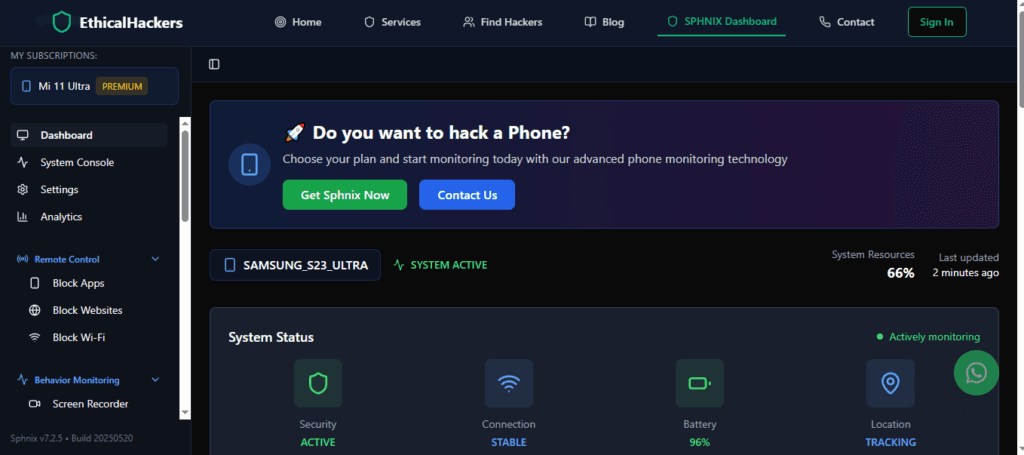
- Legitimate Purpose: These platforms connect businesses with vetted ethical hackers who perform authorized security testing (penetration testing) on the company’s own systems to find vulnerabilities.
- A Vital Warning: Any individual or service that advertises hacking or cloning personal iPhones for private clients is operating a scam. Engaging with them risks financial fraud, blackmail, or legal liability.
For professional, legal cybersecurity services, consult the marketplace.
Feature Comparison: Monitoring vs. Native Tools
| Feature | mSpy (Parental Monitoring) | Parentaler (Family Safety) | Apple Native Tools (Screen Time) |
|---|---|---|---|
| Primary Purpose | Detailed digital activity monitoring. | Location sharing & content filtering. | Device usage limits & parental controls. |
| Social Media Monitoring | Extensive (WhatsApp, Instagram, Snapchat, etc.). | Limited. | No content access, only usage time. |
| Location Tracking | Real-time GPS & geofencing. | Real-time GPS & geofencing. | Location sharing via Find My (with consent). |
| Key Differentiator | Depth of data (messages, keystrokes). | Ease of use for family location. | Built-in, private, requires no third-party app. |
| Best For | Parents needing detailed oversight of a teen’s digital interactions. | Families wanting to share locations and block inappropriate content. | Parents managing screen time and app access for younger children. |
The Ethical Imperative: Choosing Transparency
If you are considering cloning or secretly monitoring another adult’s iPhone, it signals a fundamental breach of trust that technology will not repair. Secret surveillance is illegal and destroys relationships.
- Choose Honest Conversation: Address concerns directly.
- Use Consensual Tools: For mutual trust, use transparent location sharing with Find My.
- Seek Professional Help: A relationship counselor can address underlying issues healthily.
Conclusion: Abandon the Clone, Embrace Ethical Solutions
The search for a method to clone a phone iPhone leads to technical dead ends and legal peril. True cloning is a myth. The legitimate tools available, like mSpy and Parentaler, are designed solely for the lawful protection of children, not for spying on adults. Apple’s own robust security makes unauthorized duplication practically impossible without the user’s passcode and explicit cooperation.
Prioritize ethical behavior and legal compliance. Use technology to protect and connect with consent, not to deceive and control. Investing in trust is always more powerful and sustainable than any secret monitoring.
For professional, legal cybersecurity services for business assets, explore enterprise solutions.
hire a hacker
Frequently Asked Questions (FAQs)
1. Can I use an iCloud backup to clone someone’s iPhone if I have their password?
Technically, you could restore their backup to a different device, but this is a serious legal and ethical violation. Accessing someone else’s iCloud account without permission is a violation of Apple’s Terms of Service and likely violates computer fraud laws. The restored device would also be tied to their Apple ID, triggering security alerts on their other devices.
2. What is jailbreaking, and is it required for monitoring apps?
Jailbreaking is the process of removing software restrictions imposed by iOS. Some monitoring app features (like tracking iMessages) may require it. However, jailbreaking voids the device warranty, exposes the phone to security risks and malware, and is easily detectable. It is not recommended.
3. What’s the difference between a backup and a clone?
A backup (like iCloud or iTunes) is a compressed archive of your data used for restoration. A clone implies a perfect, bit-for-bit copy that can run independently. You can back up your own iPhone legally; you cannot clone someone else’s.