
For over a decade, I’ve navigated the complex intersection of mobile technology, security, and ethics. One question that consistently arises from concerned parents and IT administrators alike is whether it’s possibleon how to access another mobile through wifi. The concept evokes images of shadowy figures intercepting data on public networks, but the reality for legitimate purposes is both more mundane and technically nuanced. This article will cut through the speculation. I will explain how WiFi networks relate to mobile monitoring, outline the only legal and practical methods for using this connectivity, introduce you to reliable tools, and, most importantly, detail how to shield your own devices from unauthorized access. If your goal is responsible oversight, you’re in the right place.
Updated February 2026
Demystifying WiFi’s Role in Mobile Monitoring
First, it’s vital to clarify a common misconception. You cannot simply join the same WiFi network as someone and magically browse their phone’s contents. Modern operating systems like iOS and Android employ strong encryption (like WPA3 for WiFi and TLS for app data) that isolates device traffic. The phrase “how to access another mobile through wifi” more accurately refers to how monitoring software uses a WiFi or data connection as a conduit to transmit information after it has been legitimately installed on a target device. The WiFi network is the data highway, not the lockpick. All legitimate methods require an initial, physical installation step on the device you wish to monitor.
The Legal Foundation: Consent and Device Ownership
Before discussing any technical method, the legal framework is non-negotiable. Monitoring a mobile device without the explicit consent of the owner (or, in the case of a minor, the parent/guardian) is illegal in most jurisdictions under computer fraud and privacy laws. The legitimate use cases are clear:
- Parental Control: Monitoring your minor child’s device to ensure their online safety.
- Company Device Management: Overseeing company-owned phones issued to employees, with transparent policies in place.
- Personal Device with Consent: Installing software on your own device or one where the user has explicitly agreed.
Any guide on how to access another mobile through wifi that bypasses this ethical and legal requirement is promoting a crime.
How Professional Monitoring Apps Utilize WiFi
Legitimate monitoring applications function by installing a lightweight agent on the target phone. Once installed, this agent runs in the background, collecting data such as keystrokes, app usage, location, and messages. It then uses the device’s available internet connection—whether through mobile data or WiFi—to securely transmit this encrypted data to a private online dashboard. This is the correct interpretation of remote access: you install locally, and then you can view the data remotely via WiFi from your own computer. The WiFi network is merely the transport mechanism for data you already have permission to collect.
Analysis of Trusted Monitoring Platforms
The market offers several established solutions that operate on this principle. Here is an analysis of three prominent platforms.
1. Sphnix Tracking App
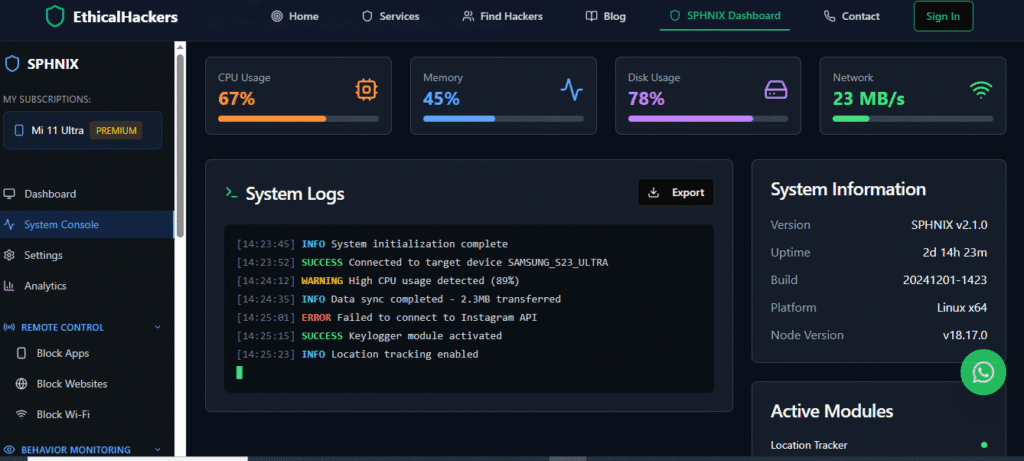
Sphnix provides a comprehensive monitoring suite designed for users who need broad visibility. After installation on the target device, it uses WiFi/data to upload a wide array of information to a user-friendly web-based control panel.
Key Features:
- Social Media & Message Monitoring: Tracks chats on Snapchat, WhatsApp, Facebook, and SMS.
- Real-Time Location Tracking: Uses GPS and WiFi positioning for accurate location.
- Call Logging & Ambient Recording: Records call details and can capture surroundings.
- Keylogger: Captures every keystroke made on the device.
2. mSpy
mSpy is one of the most recognized names in the industry, known for its reliability and detailed reporting. Its dashboard clearly organizes data sent from the target device over its internet connection, making it a top choice for parental monitoring.

Key Features:
- App & Message Tracking: Monitors social media, emails, and text messages comprehensively.
- Geofencing: Sends alerts when the device enters or leaves designated areas.
- WiFi Network Logging: Shows which WiFi networks the device connects to, useful for activity tracking.
- App Blocking & Scheduling: Allows remote control over app use and screen time.
3. Parentaler
Parentaler focuses strongly on the child safety aspect, providing tools for location assurance and well-being rather than deep surveillance. It simplifies monitoring for parents.

Key Features:
- Live Location & History: Tracks device location in real-time with historical routes.
- Safety Alerts & Geofencing: Instant notifications for location-based events.
- Screen Time Management: Helps parents manage healthy device usage habits.
- Panic Button: Allows the child to send an immediate alert to pre-set contacts.
The Significant Risks of “Free Hacking” Tools and Public WiFi Myths
Beware of websites or YouTube tutorials claiming to teach you how to access another mobile through wifi using free “packet sniffers” or “WiFi hackers.” These are almost always scams that will:
- Install Malware on Your Device: The downloaded software is often a trojan that steals your own data.
- Phish for Credentials: They trick you into entering your own account information.
- Be Technically Obsolete: They rely on old security flaws that have long been patched in modern phones and WiFi protocols.
Similarly, while public WiFi can be insecure, the risk is your data being intercepted, not someone gaining full control of your phone. Using a VPN on public networks is a critical security practice.
How to Secure Your Mobile Device from Unwanted Access
Understanding the methods is the first step to building a strong defense. Here’s how to protect yourself:
- Use Strong Lock Screen Security: Employ a complex PIN, password, or biometric lock (fingerprint/face ID). This is the first and most crucial barrier.
- Keep Your OS Updated: Always install the latest Android or iOS updates. These patches fix security vulnerabilities that could be exploited.
- Review App Permissions: Regularly check which apps have access to your location, microphone, contacts, and storage. Revoke permissions that seem unnecessary.
- Only Install Apps from Official Stores: Avoid sideloading APKs (Android) or using unauthorized enterprise certificates (iOS), as these are common vectors for spyware.
- Be Cautious on Public WiFi: Use a reputable Virtual Private Network (VPN) to encrypt your traffic when connected to untrusted networks.
- Check for Unknown Profiles/Apps: On Android, look for unknown device administrator apps. On iOS, check for unfamiliar profiles in Settings > General > VPN & Device Management.
Conclusion: Empowerment Through Responsible Technology Use
The question of how to access another mobile through wifi ultimately leads to a discussion about responsibility. True technological empowerment comes from using powerful tools like Sphnix, mSpy, and Parentaler within their intended, legal contexts—to protect children, manage assets, and secure data. The internet connection is merely the tool’s delivery system, not a magical gateway. By choosing ethical monitoring, respecting privacy, and implementing strong security on your own devices, you move from a position of potential intrusion to one of informed protection and control.
For situations that extend beyond standard monitoring needs—such as investigating a sophisticated security breach, conducting a formal digital forensic examination, or addressing complex cyber harassment—seeking the expertise of licensed professionals is the necessary and prudent step.
<a href=”https://spywizards.com” class=”cta-button” style=”display: block; width: fit-content; margin: 30px auto; padding: 15px 30px; background-color: #dc3545; color: white; text-decoration: none; border-radius: 5px; font-weight: bold; text-align: center; font-size: 1.1em;”>Hire a Hacker for Professional, Ethical Assistance</a>
Frequently Asked Questions (FAQs)
Q1: Can someone access my phone if we are on the same home WiFi?
A: Not directly. Being on the same WiFi network does not grant someone access to your files or screen. However, if they have previously installed monitoring software on your device physically, that software would use the home WiFi to send out your data. Your primary defense is physical device security and checking for unknown apps.
Q2: Do monitoring apps like mSpy work if the target phone’s WiFi is off?
A: Yes, but they switch to using the device’s cellular data connection to transmit information to the dashboard. For the app to function, the phone must have some form of internet access (WiFi or mobile data). If the phone is in airplane mode with all connectivity disabled, data cannot be transmitted until a connection is restored.
Q3: What is the single biggest sign that my phone might have monitoring software installed?
A: A significant, unexplained decrease in battery life and performance is a major red flag, as these apps run constantly in the background. Also, look for unusual data usage spikes in your phone’s settings and unfamiliar applications in your installed apps list that you don’t remember downloading.