
The late-night notifications she quickly dismisses. The sudden password protection on a device that was once open. That growing, unshakable feeling in your gut that the stories don’t add up. In today’s connected world, when trust begins to fracture, many people turn to technology for answers, asking: how can I track my girlfriend’s iPhone location?
With over a decade of experience in digital security and relationship dynamics, I’ve seen how this search for certainty can lead people down a dangerous path. This guide provides an honest, professional perspective. We will examine the legitimate reasons for location sharing, the severe legal and ethical consequences of secret surveillance, and a clear analysis of the tools often misused for this purpose. My goal is to equip you with knowledge that protects both your emotional well-being and your legal standing.
Understanding Why Trust Erodes: Behavioral Signs to Consider
Before exploring any technology, it’s important to identify what’s driving the suspicion. Often, the desire to track a location stems from observable changes in behavior and digital habits.
Key signs include a new level of phone secrecy and defensiveness. This goes beyond normal privacy. It manifests as the phone never leaving her hand, being placed face-down, or guarded with new passcodes or biometric locks you don’t recognize. You might notice her taking calls in another room or becoming visibly anxious if you glance at her screen.
Look for significant shifts in routine and communication. This includes unexplained gaps in her schedule, frequent “working late” with little detail, or a marked decrease in your shared intimacy. She may start using encrypted or ephemeral messaging apps like Signal, Telegram, or Snapchat’s disappearing mode more frequently—tools that prioritize conversations leaving no trace.
While these signs can be concerning, they are not proof of wrongdoing. They are, however, indicators that communication in your relationship has broken down, which is a problem no tracking app can solve.
The Critical Legal Reality: Surveillance Is a Crime, Not a Strategy
This is the most important section you will read: Secretly installing tracking software on another adult’s phone is illegal. It is not a relationship tactic; it is a criminal act legally classified as stalking or cyber harassment.
Applications designed for covert surveillance are known as “stalkerware.” In the United States, using them violates several laws:
- The Computer Fraud and Abuse Act, for unauthorized access to a device.
- State anti-stalking and harassment statutes.
- Wiretapping laws that protect electronic communications.
The legal consequences are severe and life-altering. You risk felony charges, substantial fines, and a permanent criminal record. Critically, any evidence gathered this way is inadmissible in any court, making it useless for any formal proceedings and likely damaging to your credibility.
Beyond the law, these actions destroy any remaining trust. If you are at the point of considering illegal surveillance, the relationship’s foundation is already severely compromised. The question shouldn’t be how can I track my girlfriend’s iPhone location, but rather, what healthy steps can you take to address the loss of trust?
Legitimate, Transparent Methods for iPhone Location Sharing
Apple provides built-in features for location sharing, all of which are based on one core principle: active, ongoing consent.
1. Find My Network
This is Apple’s official solution. For you to see her location, she must actively open the Find My app, navigate to the “People” tab, select your contact, and choose “Share My Location.” She controls the duration (one hour, until end of day, or indefinitely) and can stop sharing at any time. This is designed for coordinating meet-ups or ensuring a loved one gets home safe—not for constant, secret monitoring.
2. Family Sharing
This feature allows members of a designated family group to optionally share locations. It requires an invitation and acceptance. Using it under false pretenses to monitor a partner is a violation of its purpose and a breach of trust.
3. iCloud.com “Find My iPhone”
If you are both signed into the same Apple ID on your devices (which is unusual and not recommended for couples), you could use the Find My iPhone feature on iCloud.com. However, accessing an Apple ID that isn’t yours without permission is a violation of terms of service and potentially the law.
The throughline is transparency. If you cannot use these methods with her knowledge and agreement, you are planning an invasion of privacy.
A Professional Breakdown of Monitoring Applications
The market is flooded with applications that promise secret access. It is essential to understand their true nature. The following table provides a clear comparison of three such services, highlighting their intended use and the specific dangers of misuse.
| Application | Stated Purpose & General Capabilities | The Specific Risks & Realities of Misuse |
|---|---|---|
| Scannero | Specialized Location Tracker: Markets itself primarily for real-time GPS tracking, location history, and geofencing alerts. Often requires only a phone number. | A Stalking Facilitator: Its singular focus on pinpointing someone’s location without their knowledge makes it a pure stalking tool. It reduces a person to a moving dot on a map, inviting obsessive monitoring and dangerous confrontations. |
| Moniterro | Comprehensive Device Monitor: Advertises a wide suite of features including call logging, text message interception, social media monitoring, and ambient recording, alongside GPS tracking. | Digital Totalitarianism: This type of app doesn’t just track location; it aims to capture a person’s entire digital life—every conversation, every photo, every online interaction. This extreme invasion facilitates profound psychological abuse and control. |
| Sphnix Tracking App (via Professional Marketplace) | Professional Cybersecurity Service: Provides access to vetted experts for digital forensics, data recovery, and security consultation. This is not a consumer app. | A Mismatched Service: This marketplace is for businesses or individuals with legitimate security needs, like investigating a corporate data breach. Professionals here will not engage in illegal personal spying. Attempting to hire them for this will fail and may be reported. |
The Danger of Specialized Trackers: Scannero
Scannero exemplifies the danger of single-purpose tracking tools. By simplifying the process to just needing a phone number, it lowers the barrier to committing a crime. It fosters a detached, objectifying view of a person, where complex human behavior is replaced by coordinates on a screen. This distance can make dangerous actions feel more justifiable.
The Threat of Comprehensive Spyware: Moniterro
Moniterro represents the apex of invasive surveillance. It’s not just about “where”; it’s about “who, what, and when.” The psychological impact on the victim of such total surveillance is devastating, creating a prison without walls. For the installer, it represents the deepest possible betrayal and the highest level of legal risk.

The Professional Service Distinction
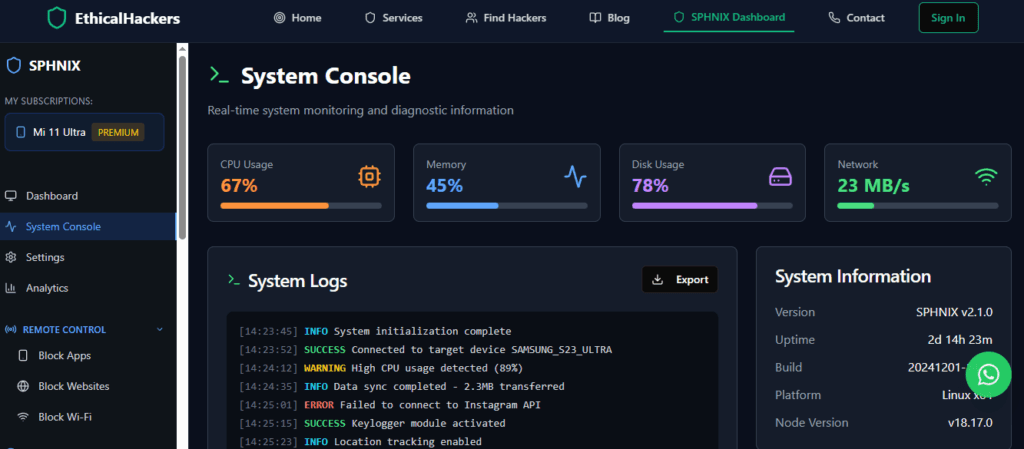
It is crucial to understand that the “Sphnix Tracking App” link leads to a marketplace for legitimate cybersecurity professionals. These experts operate under strict legal and ethical guidelines. They are a resource for solving security problems, not for creating them through personal spying.
The Responsible Path Forward: From Surveillance to Solutions
If your suspicions are strong enough to make you consider a crime, they are serious enough to warrant healthy, constructive action.
- Prioritize Personal Reflection and Documentation: Start a private journal. Objectively document specific incidents and changes without accusation (e.g., “Friday, said she was at the gym from 7-9 PM but came home without a gym bag,” not “She’s a liar”). This helps separate emotion from observable fact.
- Choose Direct Communication: When calm, initiate a conversation using “I feel” statements. For example: “I feel anxious and disconnected lately. I’ve noticed we’re not as close, and it’s hard for me when your phone is so private. Can we talk about what’s going on with us?” This focuses on the relationship issue, not just her actions.
- Seek Professional Support: A therapist can be an invaluable asset. Individual counseling can help you manage anxiety and gain clarity. Couples therapy provides a neutral, structured space to address trust issues and communication breakdowns with a trained guide.
- Understand the Core Issue: Surveillance might answer “where is she?” but it will never answer “why has our trust broken?” or “what do I need to be happy?” Addressing these fundamental questions is the only path to a real resolution, whether the relationship continues or ends.
Conclusion: Choose Clarity Over Crime, Trust Over Tracking
The painful question of how can I track my girlfriend’s iPhone location is a symptom of a deeper crisis in trust. While technology offers a tempting, immediate answer, that path leads to legal peril, ethical ruin, and the certain destruction of any relationship worth having.
True strength and clarity come from facing difficult situations with courage and integrity. Choose the path of honest communication, professional guidance, and self-respect. This approach allows you to seek the truth you deserve while ensuring you emerge from this challenge with your dignity and future intact.
Frequently Asked Questions (FAQs)
Can I track her iPhone if I pay for the phone plan?
No. Paying the monthly bill does not grant you legal ownership of the data on her phone or the right to surveil her. The law protects an individual’s reasonable expectation of privacy on their personal device. This is a common misconception that does not hold up in court.
What are the signs that spyware might be installed on my own phone?
Be alert to a rapid decrease in battery life, the device feeling warm when not in active use, unexpected spikes in mobile data consumption, or strange background noises during calls. On iOS, you cannot easily see hidden apps, but unusual behavior is a red flag. If you suspect this, consider a factory reset after backing up your data and consult a cybersecurity professional.
We share our locations through Find My for safety. Is it wrong to check it when I’m worried?
The intent matters. Mutual, consensual sharing for logistical or safety reasons is healthy. However, compulsively checking her location driven by anxiety and suspicion is a sign that the tool is being misused and that trust is eroding. This behavior can damage your mental health and the relationship. It may be time to have an honest conversation about your feelings or to seek individual counseling to address the underlying insecurity.