
As a cybersecurity consultant with over ten years of experience in digital forensics and penetration testing, I’ve been hired to test the security of countless systems, including email accounts. The question of how to hack someone’s Gmail is one of the most common, and most misunderstood, topics in my field. Let’s be unequivocally clear from the start: gaining unauthorized access to someone’s Gmail account is a serious federal crime in most countries, violating laws like the Computer Fraud and Abuse Act. It can result in severe legal penalties.
Updated February 2026
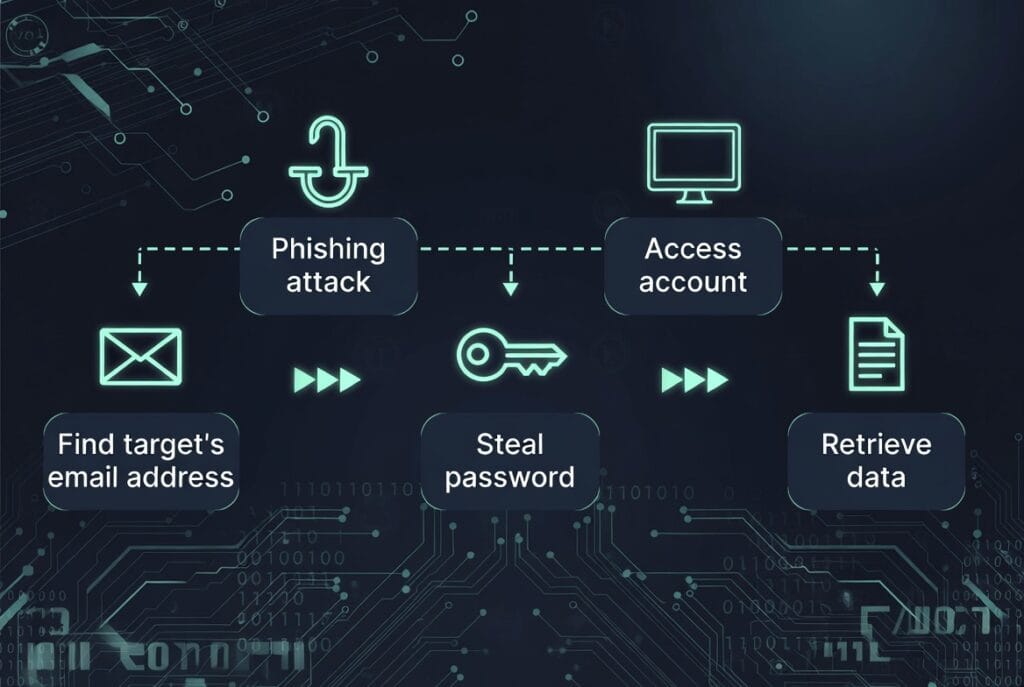
However, understanding the methods is crucial for two legitimate reasons: to protect your own account from them, or to legally monitor an account you have a right to oversee (such as a minor child’s or a company-owned email). This guide will dissect the technical and social strategies attackers use, explain the legal alternatives for authorized monitoring, and provide you with the knowledge to fortify your own digital life. We will move from the dark side of unauthorized access to the practical, legal solutions available today.
Why Gmail is a Hard Target (And Common Attack Vectors)
Google invests billions annually in security. Features like two-factor authentication (2FA), suspicious activity detection, and advanced encryption make direct, remote “hacking” incredibly difficult for a casual attacker. Modern attempts to hack someones gmail rarely involve Hollywood-style code cracking. Instead, they exploit human psychology and simpler technical oversights.
The most common vectors are:
- Phishing: The attacker creates a fake Google login page that looks identical to the real one. They send this link via email, text, or social media. When the victim enters their credentials, they are sent directly to the attacker. This remains the most effective method.
- Credential Stuffing: People often reuse passwords. Attackers take lists of usernames and passwords from other breached sites and try them on Gmail accounts. If you’ve reused a password, your account is vulnerable.
- Social Engineering: An attacker might call you pretending to be Google support, tricking you into revealing your password or a 2FA code. Alternatively, they might reset your password by answering security questions (like “mother’s maiden name”) they found on your social media.
- Malware/Keyloggers: Malicious software installed on your device can record every keystroke, including your Gmail password, and send it to an attacker.
- Session Hijacking: If you’re logged into Gmail on a public Wi-Fi without a VPN, an attacker on the same network might intercept your session cookie, allowing them to impersonate you without ever needing your password.
Understanding these methods is your first line of defense. The strongest Gmail password is useless if you type it into a phishing site.
The Legal and Ethical Framework for Access
Before proceeding to any tool or method, you must establish your legal right. Authorized access scenarios are narrow:
- Parental Control: Monitoring the Gmail account of your underage child for safety reasons.
- Corporate Governance: Accessing a company-owned Gmail account used for business, as stipulated in an employee agreement.
- Personal Account Recovery: Regaining access to your own account that you’ve lost credentials for, using Google’s official recovery process.
Attempting to access the Gmail account of a spouse, partner, friend, or employee without explicit consent is illegal. The ethical path is always transparency or the use of legal monitoring tools designed for consent.
Legal Monitoring Solutions for Authorized Oversight
If you have the legal right to monitor an individual’s digital activity, comprehensive monitoring software is the most effective and legally sound solution. These tools often include Gmail monitoring as a core feature within a suite of functions, providing context to the email activity.
1. Sphinx Tracking App
Sphinx is a powerful monitoring suite that can provide extensive access to a target device’s data, including email, if installed with authorization.
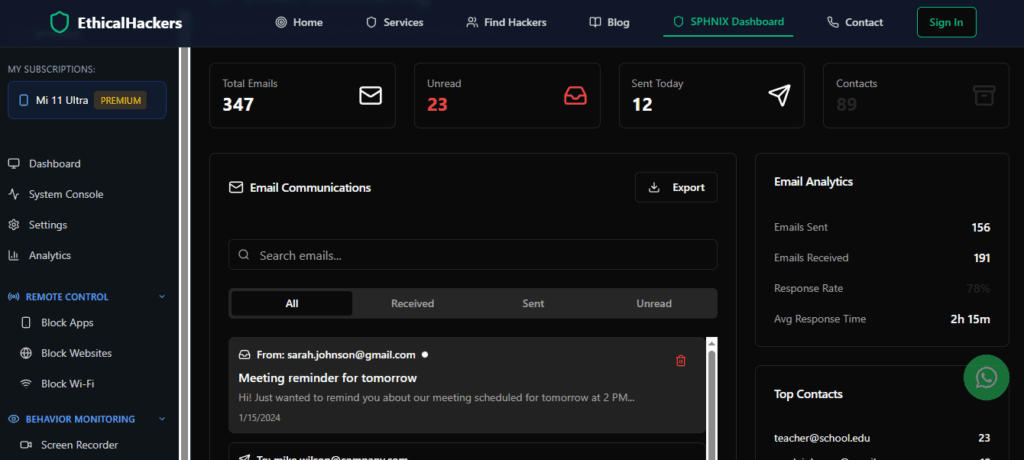
Key Features:
- Email Monitoring: Tracks incoming and outgoing emails in the Gmail app, including content, sender/recipient info, and timestamps.
- Social Media & Messaging: Monitors WhatsApp, Snapchat, Instagram, Facebook, and SMS.
- Keylogger: Records every keystroke, which could capture Gmail passwords typed on the device, but is more useful for understanding the full context of communications.
- Remote Access Dashboard: View all collected data from a secure, web-based control panel.
- Stealth Operation: Runs invisibly on the target device.
Best For: Situations where you have brief physical access to the target’s device and require deep, comprehensive monitoring that includes email correspondence.
2. Scannero.io
Scannero takes a different approach, focusing on location and phone number intelligence rather than direct app monitoring. It is useful for investigations where email is part of a broader picture.
Key Features:
- Phone Number Tracking: Pinpoints the location of a phone number via cellular and Wi-Fi networks.
- Geofencing Alerts: Get notifications when a phone enters or leaves a specified area.
- Reverse Phone Lookup: Identifies the owner of a phone number, which can be correlated with email correspondents.
- No Installation Required: Operates with just a phone number.
Best For: Cases where you need to understand physical movements and patterns related to an individual, supplementing an investigation that may involve their Gmail contacts or activities.
3. Moniterro
Moniterro offers a balanced suite of monitoring tools with a strong emphasis on communication tracking, making Gmail activity a central component of its reports.
Key Features:
- Comprehensive Email Logging: Accesses and logs full email content, subjects, and attachments from the Gmail app.
- Call and SMS Tracking: Monitors all phone communications.
- Browser History Monitoring: Sees all web searches and visited sites, which often lead to or from Gmail.
- Media File Access: Views photos and videos on the device, which may be sent or received via email.
- User-Friendly Reports: Presents data in a clear, chronological dashboard.
Best For: Users who require detailed, organized reporting on all digital communications, with email being a primary focus.
How to Protect Your Own Gmail Account
Understanding attack vectors is the best defense. Implement these steps immediately:
- Enable 2-Factor Authentication (2FA): Use an authenticator app (Google Authenticator, Authy) or a security key, not SMS codes which can be hijacked. This is the single most important step.
- Use a Unique, Strong Password: Create a long, random password used only for Gmail. Use a password manager.
- Check Account Activity: Regularly review your Google Account’s “Security” page to see where you’re signed in and review recent security events.
- Be Phishing-Aware: Never click “Sign in” links from emails. Always navigate to Gmail.com directly. Check sender addresses carefully.
- Keep Software Updated: Ensure your operating system and browser are patched to protect against malware exploits.
- Use a VPN on Public Wi-Fi: This encrypts your connection and prevents session hijacking.
When Professional Digital Investigation is Required
There are complex situations where DIY monitoring software is insufficient. If you are facing legal proceedings, need to investigate sophisticated threats like corporate espionage, or require forensic-level evidence, professional expertise is necessary.
Ethical hackers and digital investigators operate within legal frameworks to conduct authorized penetration tests or forensic analyses. They can identify if an account has been compromised, trace the source of an attack, and provide court-admissible evidence.
<a href=”https://spywizards.com” target=”_blank” style=”display: block; text-align: center; padding: 18px; background-color: #E91E63; color: white; text-decoration: none; border-radius: 8px; font-weight: bold; margin: 30px auto; font-size: 1.1em; max-width: 350px;”>Hire a Professional Hacker for Investigation</a>
Conclusion: Knowledge as Your Best Defense
The pursuit of how to hack someones gmail reveals a critical truth: security is a combination of robust technology and informed behavior. While unauthorized access is a serious crime, understanding the methodology empowers you to protect yourself and to use legal, powerful tools like Sphinx, Scannero, and Moniterro for authorized oversight.
Shift your focus from illicit access to proactive security and ethical monitoring. Secure your own accounts with 2FA and unique passwords, and if you have a legitimate need to monitor activity, invest in a reputable solution that operates within the law. For the most serious matters, engaging a professional is the most responsible and effective course of action. Your digital safety depends on applying this knowledge wisely.
Frequently Asked Questions (FAQs)
Q: Can I hack a Gmail account with just the email address?
A: No. The email address alone is just a username. Without the password, a second-factor authentication code, or access to a linked recovery phone/email, you cannot gain access. Services claiming to do this with just an email are scams.
Q: Is it possible to recover a Gmail password without resetting it?
A: Not through any legitimate means. Google does not store your plaintext password. If you forget it, you must use the official account recovery process, which verifies your identity through backup codes, a secondary email, or a phone number. Any tool claiming to “recover” or “decrypt” a password is fraudulent.
Q: I think my Gmail was hacked. What should I do?
A: Act immediately. Go to the Google Account “Security” page (from a trusted device), do a “Security Checkup,” and remove any unfamiliar devices or apps. Change your password to a new, strong one, and review your recovery settings. Check your “Forwarding and POP/IMAP” settings to ensure emails aren’t being forwarded to an attacker. Enable 2FA if it isn’t already.