
That moment of doubt—the whispered phone call, the guarded screen, the growing distance—can leave anyone searching for clarity. When trust feels fragile, the thought of accessing a partner’s phone without their knowledge might seem like a way to find answers. You may be looking for information on how to hack my girlfriend phone without touching her phone, hoping for a technical solution to an emotional problem.

With over a decade of experience in cybersecurity and digital ethics, I understand this impulse. However, true expertise means presenting the full picture: the technical possibilities, the rigid legal frameworks, and the significant personal consequences. This guide will explore the reality of remote monitoring technology, explain the strict legal boundaries, and offer a more constructive path forward. My goal is to inform you, protect you from serious legal risks, and guide you toward healthier resolutions.
The Foundation: Legal and Ethical Boundaries You Cannot Cross
Before examining any tool or method, you must understand the non-negotiable legal landscape. In virtually all jurisdictions, accessing another person’s private communications, data, or device without their explicit consent is a crime. Laws such as the Computer Fraud and Abuse Act in the United States and similar data protection regulations worldwide carry penalties including significant fines and imprisonment.
Consent is the critical line. The primary legal applications for monitoring technology are:
- Parental Control: Monitoring minor children’s digital activity for their safety, using devices the parent owns.
- Corporate Device Management: Overseeing company-owned equipment with a clear, communicated policy.
Using these tools to surveil a romantic partner without their knowledge is illegal and a profound breach of trust. If your relationship has reached this point, the core issue requires communication, not surveillance.
Understanding Remote Monitoring: Possibilities and Limitations
The idea of accessing a phone without physical contact often revolves around two technical avenues: exploiting cloud services or using deceptive links. It’s crucial to understand how these work and their substantial barriers.
- Cloud-Based Access (iCloud/Google Backup): Some monitoring tools market the ability to access data via an iCloud or Google account backup. This requires the target’s cloud credentials (username and password) and for the device to have backup services enabled. Critically, obtaining and using someone else’s login credentials without permission is a textbook example of computer fraud.
- Phishing and Deceptive Links: Another method involves sending a tracking link (often via SMS) that, if clicked, can share device location or data. Services like Scannero use this model. Its effectiveness is zero if the recipient does not click the link, and sending deceptive links to obtain data may violate anti-hacking statutes.
Analysis of Market Tools: Features and Critical Considerations
Several applications are marketed for monitoring. When used within strict legal boundaries, they offer different feature sets. Below is a professional comparison.
| Tool | Primary Method | Key Features (as advertised) | Best For Legal Use | Critical Considerations |
|---|---|---|---|---|
| Sphinx Tracking App | App installation or cloud-based access. | Call recording, message tracking, social media monitoring, stealth operation. | Requires clear, legal consent due to powerful stealth features. | Physical installation is often required for full features. Independent verification of claims is essential. |
| Eyezy | App installation on target device. | Social media & message tracker, phone call recorder, GPS locator, keylogger. | Parental monitoring with device access. | A comprehensive suite that requires installation. Its keylogger feature is particularly invasive. |
| Spynger | App installation or possibly cloud-based. | Tracks messages, calls, GPS; accesses photos and browsing history. | Strictly for legal, consensual monitoring scenarios. | Marketed as a solution for “unseen” monitoring, which directly intersects with consent laws. |
1. Sphinx Tracking App: A Closer Look
The Sphinx app is marketed as a powerful, all-in-one monitoring solution. It claims to offer a wide array of surveillance capabilities, including listening to surroundings, viewing messages across platforms, and tracking location in stealth mode.
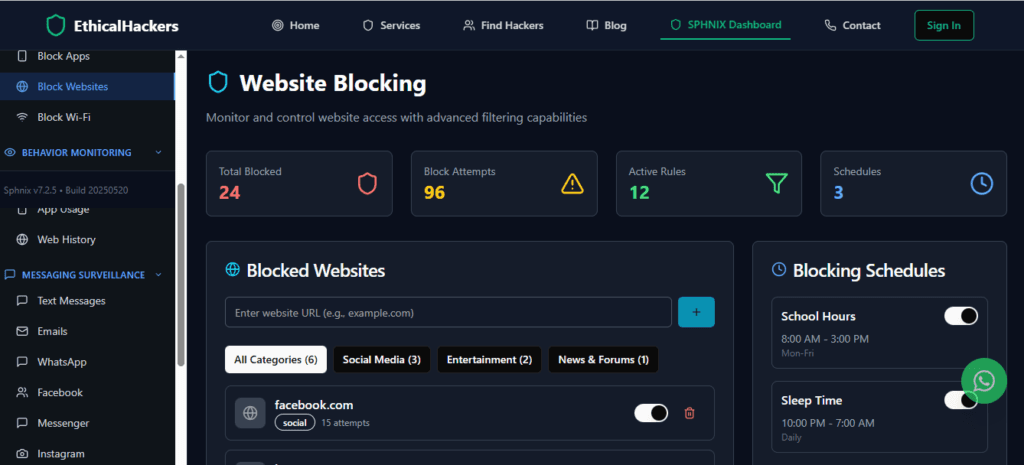
- How It’s Promoted: Vendors suggest it can sometimes be set up via iCloud, aligning with the search for methods that don’t require touching the phone. However, for full functionality, physical installation is typically needed.
- The Reality: Its promotion emphasizes covert use, which is a major red flag for ethical application. Any use must be predicated on unambiguous legal authority or consent.
2. Eyezy: Comprehensive Device Monitoring
Eyezy positions itself as a user-friendly yet powerful monitoring suite. Once installed, it provides a dashboard showcasing data from the target device, from basic location to detailed social media interactions.
- Standout Features: Beyond standard tracking, its “Plans” feature lets you see calendar entries, and “Files” can show downloaded content. The keylogger records every keystroke, which is a severe privacy intrusion.
- Installation Requirement: Despite its comprehensive nature, it requires one-time physical access to the target Android or iOS device for installation, contradicting the “without touching” ideal.
3. Spynger: Stealth and Accessibility
Spynger is another app that markets itself strongly on stealth and remote accessibility. It highlights the ability to monitor social chats, call logs, and real-time location from a web-based control panel.
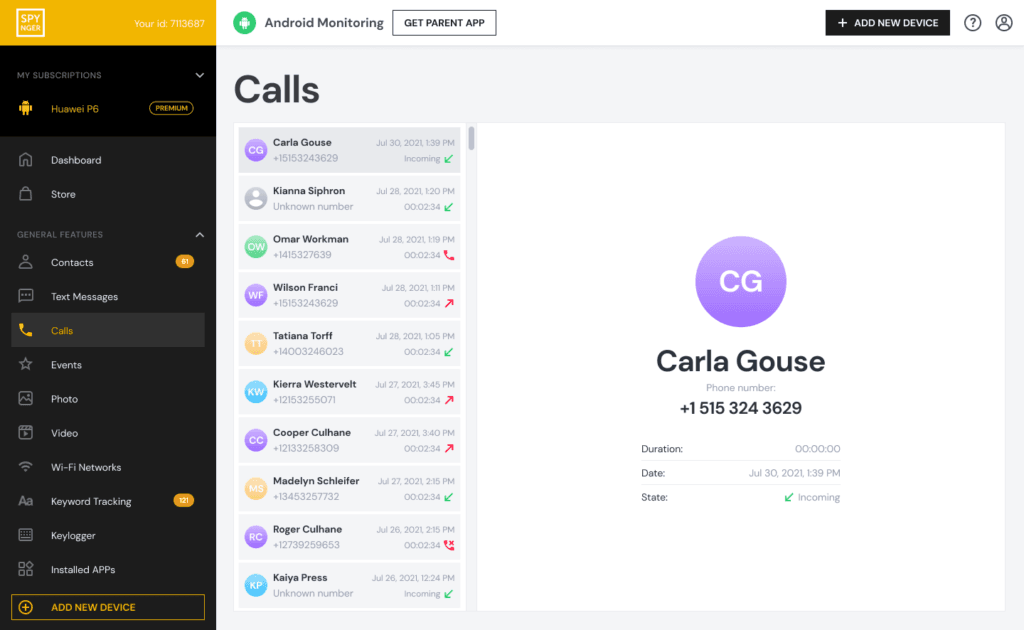
- Remote Dashboard: Its web-based interface allows the monitor to view data from any browser, which adds convenience.
- The Access Problem: To begin monitoring, the app must still be installed on the target device. Some vendors may suggest alternative setup methods, but they often require credentials or other permissions that imply consent.
The Human Cost: Why Surveillance Damages Relationships
The desire to find out how to hack my girlfriend phone without touching her phone is a symptom of deeper relational distress. Psychology shows that breaches of trust trigger anxiety and a compulsive search for certainty. However, studies on relationship recovery consistently find that secrecy and deception are toxic. Surveillance creates a false sense of control while destroying the very foundation a relationship needs to heal: mutual respect and honesty. If you discover nothing, you live with guilt. If you discover something, you’ve confirmed your fears through an act that may be unforgivable.
The Ethical Alternative: From Spying to Speaking
If you are considering monitoring, pause. Ask yourself: Is your goal to gather secret evidence or to rebuild safety and honesty?
- Reflect: Identify the specific behaviors causing doubt. Separate observable facts from fears.
- Communicate: Choose a calm, private time. Use “I feel” statements (“I feel insecure when I see you texting late at night”) rather than accusations.
- Seek Help: A licensed couples counselor provides a neutral space to navigate trust issues. This is the most constructive tool available for relationship repair.
Conclusion: Choosing the Right Tool for the Right Problem
Technology offers powerful monitoring tools like Sphinx, Eyezy, and Spynger. They have features that can, in theory, provide remote access. However, their legal and ethical use is confined to specific, consensual scenarios. The quest to monitor a partner’s phone remotely is often technically challenging, legally perilous, and relationally destructive. True security is built through transparency and communication, not through fear and secrecy. Investing in an honest conversation or professional counseling is the only path that leads to genuine, lasting resolution.
If your needs fall within a legal framework, such as parental responsibility, and you require a professional-grade solution for comprehensive oversight, it is crucial to choose a reliable service.
> For a professional solution designed for legitimate monitoring needs: hire a hacker.
Frequently Asked Questions (FAQs)
1. Is it truly possible to install monitoring software without ever touching the target phone?
In most practical cases for complete monitoring, no. While some apps may offer initial setup via phishing for iCloud credentials or sending a link, full installation of the software that tracks social media, calls, and messages almost always requires one-time physical access. Methods that don’t require touch are often unreliable, illegal, or both.
2. What is the single biggest risk of trying to monitor a phone secretly?
Beyond destroying the relationship, the largest risk is legal prosecution. Unauthorized access to computer systems and electronic data is a felony in many places. You could face criminal charges, substantial fines, and a permanent record. The personal fallout is often followed by serious legal consequences.
3. If I have her iCloud password, can I legally use it to monitor her phone?
No. Using someone else’s login credentials without their explicit permission is illegal, regardless of how you obtained the password. Even if the person shared it with you in the past for a different reason, using it to access their personal data without their current consent constitutes unauthorized access under laws like the CFAA.