
In my decade of work in cybersecurity, few questions carry as much urgency and confusion as people asking how to hack into someone’s snapchat. The anxiety is palpable—parents fear the hidden world of disappearing messages where bullying and predation can thrive unseen. The internet, unfortunately, preys on this fear. A search yields a dystopian list of “Snapchat spy apps” that are just malware, phishing links disguised as password crackers, and forums pushing illegal methods. Let me be unequivocal: those direct hacking methods are scams or crimes. However, within a strict legal and ethical framework, a legitimate and highly effective method for authorized Snapchat oversight exists. It’s the cornerstone of modern parental control technology. This guide will demystify that process, replacing dangerous fiction with professional-grade facts.
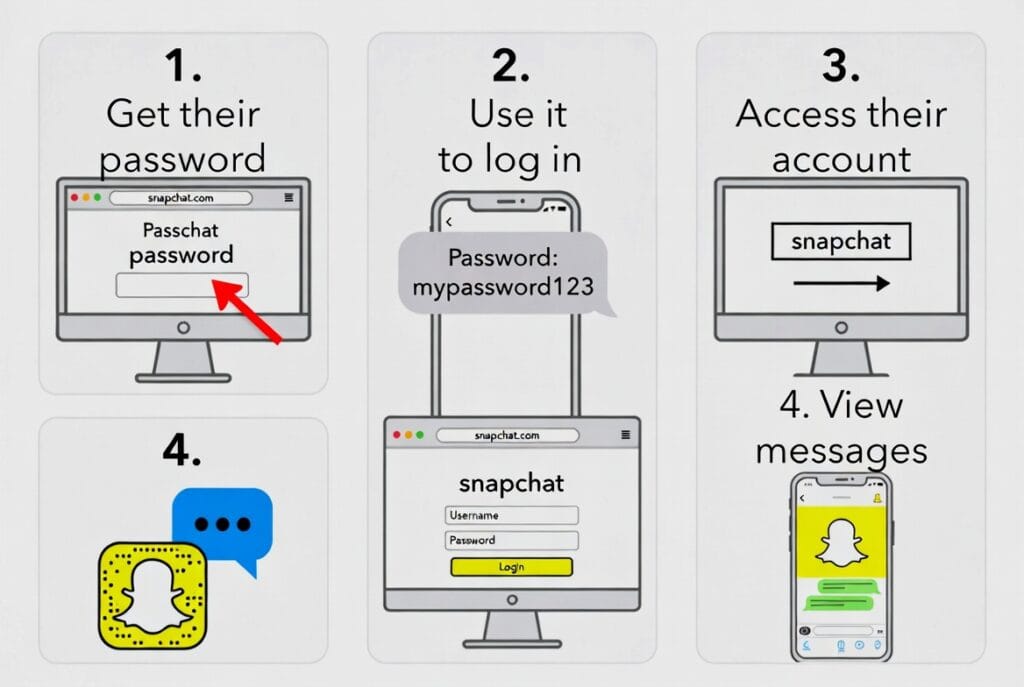
You will learn the exact technology that enables this oversight, understand the specific applications that make it work, and, most critically, master the legal boundaries you cannot cross. My goal is to provide the only responsible answer to the question of how to hack into someones snapchat when you have a rightful, protective duty to know.
Understanding the Technical Barrier: Snapchat’s Ephemeral Design
To understand the solution, you must first understand the problem. Snapchat is engineered for ephemerality. Messages and stories are automatically deleted from the company’s servers after they are viewed. This core feature means there is no permanent archive on Snapchat’s end to remotely “hack” and retrieve. The platform also employs end-to-end encryption for certain content, adding another layer of security.
This architecture makes any service claiming to “hack” Snapchat by extracting old messages from the cloud a guaranteed fraud. These scams function by stealing your data, not granting you access. The professional method takes a completely different path. Authorized monitoring software bypasses the cloud entirely. It is installed directly on the target smartphone, where it captures data locally at the moment of creation—logging keystrokes, taking screenshots, and recording screen activity before content can disappear. This device-centric approach is the technical reality behind any legitimate inquiry into how to hack into someones snapchat.
Essential Features for Snapchat Monitoring Software
Monitoring an app designed for vanishing content requires specialized capabilities. Standard screen time trackers are useless. You need software with proactive, forensic-level data capture.
- Keystroke Logger (Keylogger): The single most important feature. It records every character typed on the device, capturing Snapchat messages as they are composed, regardless of whether they are later unsent.
- Snapchat Message & Media Capture: Actively logs text chats and shared photos/videos (Snaps) within the app, often pulling this data from the device’s local storage or network traffic.
- Screen Recording or Periodic Screenshots: Provides visual evidence of Snapchat sessions, capturing the user interface and content on the screen.
- Metadata and Interaction Logging: Tracks timestamps, friend list changes, and usernames of contacts.
- Cross-Application and Location Context: Monitors other social apps (Instagram, WhatsApp) and GPS location to understand the full context of communications and movements.
Detailed Analysis of Authorized Monitoring Applications
The market offers several sophisticated applications designed for this purpose. Their use is strictly governed by law, primarily for the protection of minors. Here is a breakdown of three leading solutions.
Sphinx Tracking App
Sphinx is a comprehensive surveillance suite built for users who require broad data collection from a single device. It provides a wide-angle view of all digital activity.
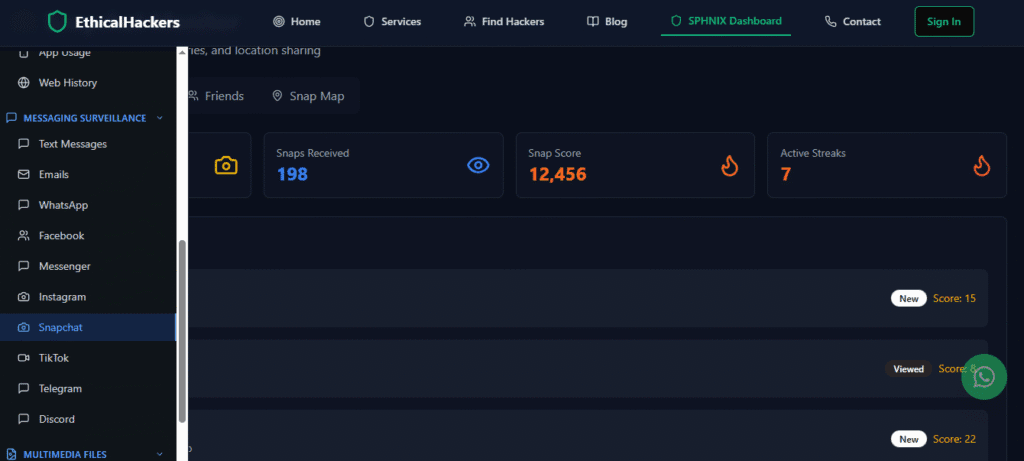
For Snapchat and general monitoring, Sphinx delivers:
- Tracking of app usage, including Snapchat sessions and interactions.
- A full keylogger to capture all typed input across the device.
- GPS location history, call and SMS logs, and web browsing history.
- A centralized reporting dashboard that compiles information from all tracked features.
Sphinx is a powerful tool for compiling a detailed digital audit trail, ideal for situations where a complete overview of device usage is necessary.
mSpy
mSpy is an industry leader in parental control, specifically renowned for its deep and reliable social media monitoring capabilities. It is engineered to handle the challenges of apps like Snapchat.

mSpy’s robust feature set for Snapchat includes:
- Advanced Snapchat Monitoring: Tracks sent/received messages, shared media, and conversation timestamps.
- Integrated Keylogger & Screen Recorder: Captures keystrokes and can record screen activity to visually log Snapchat use.
- Social Media Suite: Monitors over 30+ apps including Instagram, Facebook, TikTok, and WhatsApp from one control panel.
- Real-Time GPS with Geofencing: Offers precise location tracking and allows setting up automatic alerts for boundary crossings.
- User-Friendly Interface: Presents complex data in clear, visual reports that are easy for parents to understand.
For a guardian needing a complete, reliable picture of a child’s social interactions, especially on ephemeral platforms, mSpy is a top-tier, all-in-one solution.
Parentaler
Parentaler offers a streamlined, intuitive approach to digital child safety. It focuses on delivering core monitoring functions through a clean and simple interface, minimizing complexity.

Parentaler’s key oversight features are:
- Snapchat message and social media interaction tracking.
- A very straightforward dashboard that highlights recent activity and potential alerts.
- Location tracking and web filtering to manage exposure to inappropriate content.
- A design philosophy centered on giving parents essential insights quickly and without a technical hurdle.
Parentaler is an excellent choice for those who want effective, no-fuss monitoring focused squarely on core safety concerns without advanced features that may go unused.
The Legal Framework: The Critical Boundary Line
This is the most important section of this guide. Installing monitoring software on a device you do not own or without the explicit, informed consent of the adult user is a serious crime. In the United States, this violates the Computer Fraud and Abuse Act (CFAA) and state-level electronic surveillance laws, which are felony offenses.
Legal authority exists only under these specific conditions:
- Parental Authority: You are the parent or legal guardian monitoring the smartphone of your minor child.
- Device Ownership with Consent: You own the device (e.g., a company phone) and are monitoring its use, with clear prior disclosure in a formal policy acknowledged by the user (e.g., an employee).
Using tools like mSpy or Parentaler to monitor a spouse, partner, or any other adult without their knowledge is illegal, unethical, and can be considered a form of domestic abuse. The intent must be protection, not control or invasion of privacy.
Practical Implementation and Risk Management
If you have the legal right, implementation is a technical process. For Android devices, it requires brief physical access for installation. iOS installation is more complex due to Apple’s security and often requires iCloud credentials.
Professional applications are designed for stealth: no icon, minimal battery drain, no notifications. However, they are not perfectly invisible. A technically skilled user might notice unusual background data usage or device behavior. Furthermore, the security of the monitoring service provider itself is a risk factor; past breaches in the industry have exposed customers’ personal data.
The Ethical Goal: From Observation to Empowerment
The ultimate purpose of this technology should be safety and education, not passive spying. The data should serve as a tool for building trust and guiding better decisions, not for punishment.
Use the information to start open, non-accusatory conversations. A concerning Snapchat conversation can lead to a discussion about online peer pressure. Location data can open a dialogue about honesty and curfews. The software provides an objective snapshot of digital behavior; your role is to provide the wisdom, support, and boundaries that help a young person develop their own critical judgment and digital citizenship.
Frequently Asked Questions
1. Can I hack a Snapchat account with just the username or phone number?
No. This is a pervasive and dangerous myth. There is no technical method to gain access to a private Snapchat account using only public information like a username or phone number without engaging in illegal phishing or social engineering. Any tool claiming to do this is fraudulent.
2. Will Snapchat notify the user if I’m monitoring their account through these apps?
No. Snapchat the company will not send a notification. The monitoring occurs locally on the device, independent of Snapchat’s servers. The monitoring app itself is designed to be undetectable. However, some phone operating systems may show a brief indicator if a screen recording is active.
3. What is the safest and most legitimate reason to use this technology?
The safest and only universally legitimate reason for a private individual is parental protection. Using authorized monitoring software like mSpy or Parentaler to safeguard your minor child from online dangers—such as predators, cyberbullying, or exposure to harmful content—is a legally recognized application when done on a device you provide for them.
Conclusion
So, how to hack into someones snapchat? The responsible answer is: you don’t hack the account; you implement authorized monitoring on a device you have the legal right to oversee, using professional tools like Sphinx, mSpy, or Parentaler. This process is bounded by strict laws designed to protect privacy. The illegal shortcuts promoted online are traps that compromise your security and ethics. The authorized path requires understanding both the capability of the technology and the weight of the legal responsibility that governs its use.
If you are considering this path for protective reasons and are unsure about the legal nuances or technical implementation, consulting with a professional can provide the clarity and confidence needed to proceed correctly and ethically.