
The question of how to check a partner’s text messages for free often surfaces during moments of deep doubt and anxiety in a relationship. That persistent worry, the feeling of being shut out, or noticing sudden changes in behavior can lead anyone down a path of searching for digital answers. This desire drives many to search online for quick, secretive solutions.
As someone with extensive experience in digital communication and security, I’m here to provide the straightforward facts: while certain technologies exist, the journey to “How to check my girlfriends text messages for free” is fraught with significant legal dangers, technical hurdles, and profound ethical consequences that can permanently damage trust. This guide will explain the reality of what’s technically possible, the serious risks involved, and most importantly, healthier ways to address the relationship concerns at the heart of your search.
Understanding the Technology: How Message Monitoring Claims to Work
To evaluate any solution, you must first understand the mechanics behind how these services claim to operate. Consumer-grade tools that advertise message monitoring typically function in one of two ways, and neither is as simple or foolproof as marketing suggests.
For Android devices, most applications require direct physical installation. This means you need access to the target phone, the lock screen passcode, and about 5-10 minutes to download and install the software from a website, bypassing the official Google Play Store for security reasons. Once installed, the app runs in a hidden or stealth mode, logging keystrokes, text messages (SMS), and sometimes data from social media apps before uploading it to a private online dashboard.
For iPhones, the process is more constrained due to Apple’s strict security protocols. Many services attempt to use iCloud backup access. The theory is that if you have the Apple ID and password for the target iPhone, and iCloud Backups for Messages are enabled, the service can extract message logs from the cloud. In practice, this method is often inconsistent and can be blocked by security features like two-factor authentication. More invasive monitoring usually requires jailbreaking the iPhone, a complex process that voids warranties and exposes the device to security risks.
It is critical to understand a major limitation: encrypted messaging apps. Platforms like WhatsApp, Signal, and iMessage use end-to-end encryption. This means messages are scrambled and can only be read on the sender’s and recipient’s devices. No third-party app can simply intercept these messages. They can only capture this data if they log keystrokes or screen activity after the message is decrypted and displayed on the device, which is an unreliable method.
The Critical Legal Landscape: It’s Not Just About Trust
Before considering any technical method, you must understand the legal reality. In almost all jurisdictions, including the United States under laws like the Electronic Communications Privacy Act (ECPA), it is a serious crime to install monitoring software on a device you do not own or without the explicit consent of the device’s owner.
The legal consequences are severe and can include:
- Criminal Charges: Prosecution for computer fraud, unauthorized access, or unlawful interception of communications.
- Civil Lawsuits: The person you monitored can sue you for invasion of privacy, potentially resulting in substantial financial damages.
- Self-Sabotage in Legal Proceedings: If you are in a relationship dispute, evidence gathered illegally is almost always inadmissible in court and can negatively impact a judge’s view of your actions.
The only generally accepted legal uses for such monitoring technology are: 1) Parents monitoring the devices of their minor children, and 2) Employers monitoring company-owned devices issued to employees, provided this is clearly stated in company policy.
Examining Common Monitoring Applications and Their Claims
The market is filled with applications that promise comprehensive monitoring. It is essential to evaluate them with a critical eye, understanding they are legally intended for parental control, not spousal or partner surveillance. Here is an objective look at the apps you’ve asked about, based on their marketed features and common industry practices.
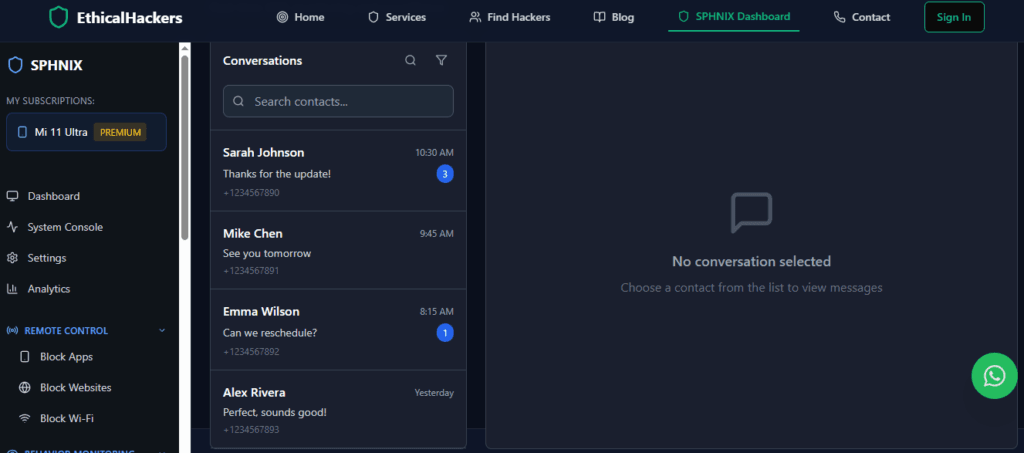
Sphnix Tracking App
Sphnix is marketed as an all-in-one tracking suite. Services like these typically promote the ability to monitor SMS text messages, view call logs, track real-time GPS location, and access social media apps. They operate by installing software that runs in stealth mode on the target device. A key consideration is that apps operating in this clandestine manner have been involved in significant data breaches, with one notable incident exposing 21 million private screenshots. This highlights the severe security risk of trusting a third party with such sensitive data.
mSpy
mSpy is one of the most well-known names in this industry. Independent testing has shown it can track SMS, social media activity on platforms like WhatsApp and Facebook Messenger, and record keystrokes (keylogging) on Android devices. However, the same testing found it had significant trouble functioning on iPhones due to Apple’s security, and it was noted for lacking features that nurture a safe environment, focusing purely on surveillance. Its high price point, ranging from $11.56 to $69.99 per month, and features like remote camera access position it as an intrusive tool rather than a wellness-oriented one.
Parentaler
Parentaler’s branding suggests a focus on parental management. Apps in this category often combine message and call log monitoring with more active control features, such as app blocking, web content filtering, and screen time scheduling. This positions it as a tool for setting digital boundaries for children, which is its intended legal purpose. However, when repurposed to monitor another adult without consent, it crosses into the same illegal territory as other spyware.

The Practical and Personal Risks of Covert Monitoring
Beyond the clear legal peril, attempting to monitor a partner’s phone carries devastating practical and personal consequences.
- Detection is Likely: No software is perfectly undetectable. Signs like rapid battery drain, increased data usage, the phone running warm, or unusual background processes can alert a tech-savvy user. Discovery will almost certainly result in an immediate and catastrophic loss of trust.
- You Compromise Everyone’s Security: By installing such software, you are creating a major security vulnerability. These apps require extensive permissions and can be used to steal passwords, financial data, and other sensitive information, not just from your partner but potentially from you as well through the dashboard.
- It Addresses the Symptom, Not the Cause: Using spyware treats the symptom—your suspicion—while completely ignoring the underlying disease in the relationship, which is a breakdown of communication and trust. It provides data, not understanding, and often fuels paranoia rather than providing peace.
Ethical and Constructive Alternatives to Surveillance
If you feel compelled to check your girlfriend’s text messages, the real issue is a crisis of trust that requires a human solution, not a technological one. Here are responsible paths forward:
- Open and Honest Communication: This is the most difficult but only sustainable solution. Choose a calm, private time to express your feelings using “I” statements. For example, “I have been feeling anxious and disconnected lately, and I would like us to talk about how we communicate,” is more productive than an accusation.
- Seek Professional Relationship Counseling: A licensed therapist or counselor provides a neutral, safe space for both partners to express concerns, improve communication skills, and rebuild trust with the guidance of a professional.
- Practice Digital Transparency Together: Some couples, by mutual consent, agree to share passwords or use location-sharing features as a gesture of openness. The critical elements here are mutual agreement and voluntary participation from both sides. It cannot be one-sided or coerced.
Conclusion
The technical capability to monitor text messages through apps like mSpy, Sphnix, and Parentaler exists, but using this technology to secretly check my girlfriend’s text messages for free is an illegal act that violates privacy laws and will almost certainly destroy your relationship. The temporary answer it might provide comes at the permanent cost of your integrity, your partner’s autonomy, and any future trust.
True resolution comes from having the courage to address relationship issues directly—through vulnerable conversation, professional guidance, or honest reflection. If the foundation of trust is too damaged to repair, it is more respectful to both parties to end the relationship with integrity rather than to degrade it with surveillance. Choosing the ethical path is the only way to find a resolution that doesn’t create greater legal and emotional problems than the one you started with.
If you require professional consultation on digital security, ethical investigation within legal boundaries, or understanding your rights, expert guidance is available.
Frequently Asked Questions (FAQs)
1. Are there any truly free apps that can do this?
Any service claiming to offer powerful phone monitoring for free is highly suspect. It may be a scam designed to steal your payment information, a Trojan horse to install malware on your own device, or a limited trial that requires a paid subscription to see any data. The old adage applies: if you’re not paying for the product, you are the product.
2. Can I just use her iCloud credentials if she’s logged in on a shared computer?
Accessing someone’s private account without their permission, even if you have the password, is generally illegal under computer fraud laws. It is a violation of their digital privacy, similar to reading a physical diary you found.
3. What if I own the phone or pay the phone bill? Does that make it legal?
In most legal interpretations, no. Ownership of the hardware or the service plan does not negate the primary user’s reasonable expectation of privacy on the device. If it is understood to be their personal device for private communication, secretly installing spyware remains illegal. Legal authority for monitoring typically requires the user to be a minor child.