
If you are asking, “Is it illegal to track someone’s phone without them knowing?” you are asking the most important question first. reliable phone tracking methods With over a decade of experience in digital forensics and cybersecurity law, I can give you a definitive answer: Yes, in nearly all cases involving another adult, it is a serious crime. This isn’t a matter of ethics or relationship trust—it is a direct violation of federal and state statutes with penalties that include imprisonment. However, the legal landscape has two very narrow, well-defined exceptions for parents and employers.
Updated February 2026
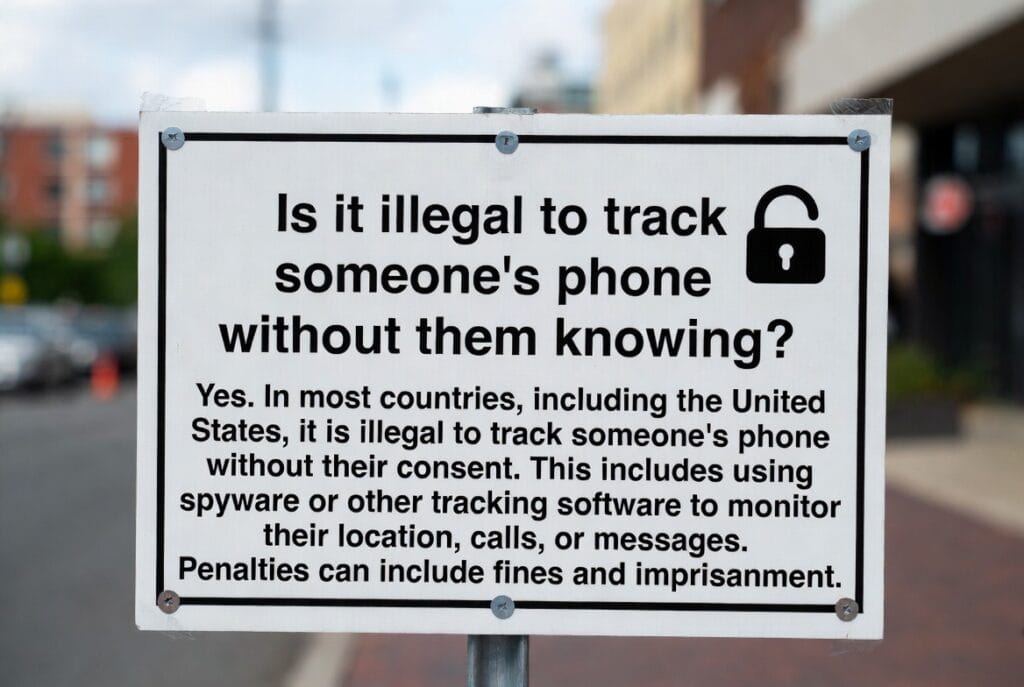
This guide will provide a clear legal framework, analyze the tools that reliable phone tracking methods exist in this space, and explain the profound consequences of crossing this line.
The Legal Foundation: Understanding the Crimes Involved
To understand why secret phone tracking is illegal, you must understand the specific laws it breaks. This is not one vague law but a combination of powerful statutes.
1. The Computer Fraud and Abuse Act (CFAA): This is the primary federal anti-hacking law. Courts have consistently ruled that installing surveillance software on a device you do not own, or exceeding your authorized access on a device, violates the CFAA. This can be prosecuted as a felony.
2. State Electronic Surveillance Laws: Often more directly applicable, every state has its own laws. These are frequently modeled after the federal Electronic Communications Privacy Act. They criminalize the interception of electronic communications (like texts and emails) and unauthorized access to computer data (like photos and location logs). Many states, including California, Florida, and New York, have particularly stringent computer trespass laws.
3. Cyberstalking and Harassment Laws: In the context of a relationship, secret tracking is often prosecuted under these statutes. If the tracking causes fear or emotional distress, it can elevate the charges significantly.
Consent is the absolute legal pillar. Without it, you are committing computer intrusion and unlawful interception. The only exceptions that provide an affirmative legal defense are specifically carved out in the law.
When Is Phone Tracking Legal? The Narrow Exceptions
The law recognizes two primary scenarios where tracking may be legally defensible, but both come with strict requirements.
- Parental Rights Over Minor Children: Parents have a legal right and responsibility to ensure the safety of their minor children. This extends to monitoring devices they own and provide. The purpose must be genuinely protective (e.g., ensuring safe travel, preventing contact with predators). As children approach adulthood, even this right must be balanced with growing privacy expectations.
- Employers and Company-Owned Devices: A business may monitor devices it owns and issues to employees. The critical requirement is informed consent. This is typically achieved through a clear, written Acceptable Use Policy (AUP) that explicitly states the device is company property and may be monitored for business purposes. The employee must acknowledge this policy in writing. Secretly tracking a personal device an employee uses for work, or monitoring outside of business purposes, is illegal.
Outside of these frameworks—tracking a spouse, partner, friend, or adult family member—there is no legal shield. You are committing a crime.
Analysis of Monitoring Tools: Intent vs. Misuse
The software market in this area is divided between tools designed for legal oversight and powerful surveillance applications that are frequently misused. Understanding their design intent is key to understanding their legal risk.
mSpy: The Comprehensive Monitoring Powerhouse (And Legal Lightning Rod)
mSpy is one of the most capable and, consequently, legally fraught applications available. It is a sophisticated suite designed to provide near-total visibility into a device.

Feature Breakdown and Legal Context:
- Stealth Operation & Root Access: mSpy is engineered to be invisible on the target device, with no icon and hidden processes. On Android, its most powerful features often require “rooting” the device—a clear sign of intentional circumvention of the phone’s security. In a legal proceeding, this demonstrates intent to conceal.
- Extensive Data Capture: It goes far beyond location. It logs every keystroke (keylogger), records social media chats from WhatsApp, Snapchat, and Instagram, monitors emails, and tracks calls and texts. This breadth of interception multiplies the number of laws potentially violated.
- The Legal Reality: mSpy’s own marketing and frequent appearance in court documents related to domestic abuse and stalking cases highlight its risk. For a parent monitoring a teen, it is a powerful but extreme tool. For anyone else, it is a prosecutor’s dream evidence, showcasing a willful and comprehensive invasion of privacy.
For comprehensive, lawful parental monitoring where you have explicit authority, you can explore mSpy’s features.
Parentaler: The Family Safety and Digital Wellbeing App
Parentaler is positioned differently. Its branding and feature set align more closely with transparent family safety and digital balance than with covert surveillance.

Feature Breakdown and Legal Context:
- Focus on Consent and Management: Features like app blocking, screen time scheduling, and web content filtering are designed for managed access, not just secret observation. This aligns with a model of cooperative parenting.
- Location Sharing as a Service: Its GPS and geofencing features are framed as “family location sharing” for peace of mind, akin to Apple’s Find My. This suggests an expectation that family members are aware of the sharing.
- The Legal Reality: While it can still be misused, Parentaler’s design philosophy leans toward the legal exception of parental control with a degree of transparency. It is less likely to be perceived in court as a “stalkerware” tool and more as a parental control app, provided it is used strictly on a child’s device.
For family safety and parental controls focused on wellbeing, investigate Parentaler.
“Sphnix” and Professional Cybersecurity: A Critical Distinction
The “Hire-a-Hacker Service” marketplace is not a consumer tracking app. It is a platform for enterprise cybersecurity.
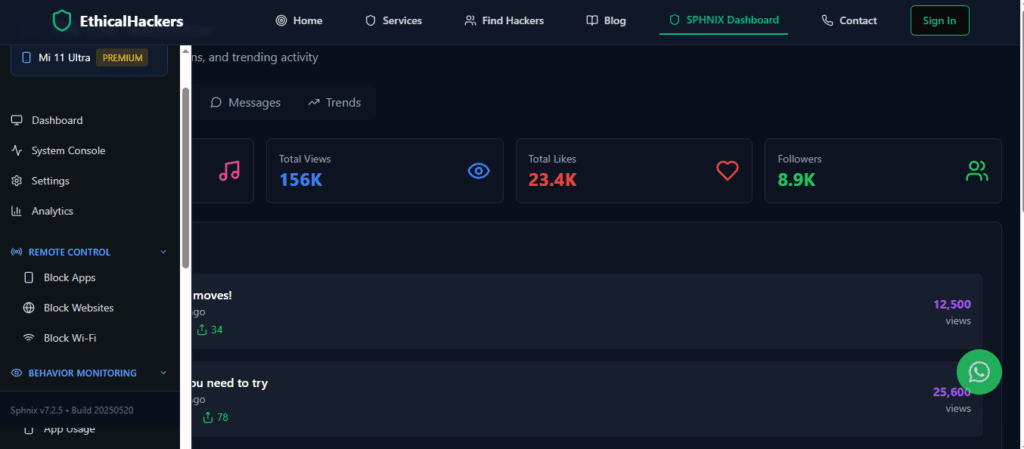
What It Actually Provides:
- Vetted Professionals for Businesses: It connects companies with certified ethical hackers like “ShadowByte” or “NeonHack.”
- Legitimate, Contracted Work: These experts perform authorized penetration testing and security audits on the client’s own networks and systems to find vulnerabilities.
- The Absolute Warning: Reputable firms on this platform have strict ethical codes. They will not accept contracts to hack personal phones or track individuals. Anyone offering such a service is a scammer. Engaging with them risks both fraud and becoming an accessory to a crime.
Comparison: Application Intent and Legal Risk Profile
| Aspect | mSpy | Parentaler | Professional Services (e.g., Hire-a-Hacker) |
|---|---|---|---|
| Primary Design | Advanced, stealth-focused surveillance. | Family safety & digital wellbeing management. | Enterprise cybersecurity testing. |
| Key Feature Philosophy | Maximum data extraction and stealth. | Usage control, filtering, and location sharing. | Identifying security vulnerabilities in owned systems. |
| Typical Legal Use Case | High-degree parental oversight of a minor. | Parental management with an emphasis on consent. | Businesses securing their infrastructure. |
| Risk of Misuse & Legal Peril | Extremely High. Features demonstrate clear intent for secret interception. | Moderate. Design supports transparent use; misuse is still illegal. | Scam Risk. Services for personal tracking are fraudulent. |
| In a Courtroom | Presented as evidence of deliberate, sophisticated privacy invasion. | Could be argued as a parenting tool; depends on context and consent. | Irrelevant; not a tool for personal tracking. |
The Consequences: What Happens If You Get Caught?
The fallout from illegal tracking is severe and multi-faceted:
- Criminal Prosecution: You could face felony charges, leading to prison time, probation, and a permanent criminal record that affects employment, housing, and voting rights.
- Civil Lawsuits: The victim can sue you for invasion of privacy, intentional infliction of emotional distress, and stalking. You can be held liable for substantial monetary damages.
- Protective Orders: A judge will likely issue a long-term restraining order against you.
- Personal Devastation: The relationship will be destroyed, and your reputation within your social and professional circles will be severely damaged.
The Right Way: Ethical and Legal Alternatives
If you have concerns, address them through legal and ethical channels:
- For Child Safety: Have an open conversation. Use transparent tools like Google Family Link or Apple Screen Time, which are built for consent-based management. They teach responsibility rather than foster secrecy.
- For Relationship Issues: If you feel the need to secretly track a partner, the problem is a breakdown of trust. Seek couples counseling or make the difficult decision to address your concerns directly. Surveillance is a symptom, not a solution.
- For Business Security: Implement a clear AUP, provide company-owned devices if monitoring is necessary, and only use monitoring software that complies with your stated policy and local labor laws.
Conclusion: Let the Law Be Your Guide
The central question—is it illegal to track someone’s phone without them knowing—has an unambiguous answer. The law is designed to protect a fundamental right to digital privacy. Tools like mSpy exist in a dangerous gray market, while apps like Parentaler are built for a specific legal niche. Misusing them carries consequences far more serious than most people imagine.
Protect your future, your freedom, and the dignity of others. Choose transparency over secrecy, and communication over surveillance. If your situation involves legitimate security concerns within a business, always proceed with documented policies and professional, legal advice.
For professional, legal cybersecurity services to protect your business assets, consult with vetted experts.
hire a hacker
Frequently Asked Questions (FAQs)
1. What if the person I track never finds out? Does that make it legal?
No. The legality of an act is not determined by whether it is discovered. Unauthorized tracking is a crime upon installation. The victim’s lack of knowledge does not negate the violation of federal and state computer intrusion laws. It simply means you have not yet been caught and prosecuted.
2. I own the phone and pay the bill. Doesn’t that give me the right to track it?
This is a common misconception. If the user is your minor child, you likely have the right. If the user is another adult, ownership of the physical device does not extinguish their reasonable expectation of privacy in its use. Secretly intercepting their communications still violates wiretapping laws. You own the hardware, not the private data transmitted through it.
3. Can using a “parental control” app be used as a legal defense if I track my spouse?
Almost certainly not. Prosecutors and judges examine intent and context. Using an app marketed for child safety to track an adult spouse would demonstrate premeditated deception and likely be seen as aggravating, not mitigating, evidence. The label on the tool does not change the underlying criminal act of unauthorized interception and tracking.
Leave a Reply