

During my ten-year career in cybersecurity and digital investigations, I’ve been asked countless times about accessing social media accounts. One of the most common questions is how to find out someone’s twitter password. Whether it’s a concerned parent, a suspicious partner, or someone managing a corporate account, the desire to gain entry is understandable. However, the path to obtaining a password is fraught with legal peril and technical challenges.
Updated February 2026

Let’s be perfectly clear: Attempting to gain unauthorized access to someone’s Twitter account is a violation of the Computer Fraud and Abuse Act and similar laws worldwide. This article does not provide instructions for illegal activity. Instead, I’ll share my professional knowledge about why direct password extraction is difficult, the methods that scammers promote (and why they fail), and the legal alternatives for monitoring social media activity when you have proper authorization. Understanding these distinctions could save you from legal trouble while helping you achieve your legitimate goals.
Why Twitter Passwords Are Difficult to Obtain
Modern social media platforms like Twitter (now X) employ robust security measures that make password extraction challenging:
- Encryption: Passwords are hashed and salted in databases, making them unreadable even if someone accesses Twitter’s systems
- Two-factor authentication (2FA): Even with a correct password, access often requires a secondary code sent to the user’s phone or email
- Login notifications: Users receive alerts when their account is accessed from new devices or locations
- Rate limiting: Systems detect and block multiple failed login attempts, preventing brute force attacks
These security layers mean that directly finding out someones twitter password through technical means alone is exceptionally difficult for the average person.
Common Methods That Don’t Work (And Why)
Many websites and forums promote questionable methods for obtaining passwords. As a professional, I can explain why these typically fail:
Phishing Scams:
Scammers create fake Twitter login pages that look authentic. When users enter their credentials, the information is captured. While this method sometimes works against inexperienced users, it requires technical skill to set up properly, is illegal, and modern browsers often detect phishing attempts. Even if successful, 2FA can still block access.
Keylogging Software:
Keyloggers record every keystroke on a device. While theoretically capable of capturing passwords, they require installation on the target’s device (which is itself problematic legally and technically). Modern antivirus software frequently detects and removes keyloggers, and they won’t capture passwords if the user utilizes a password manager or autofill features.
Social Engineering:
This involves manipulating people into revealing their passwords through deception. While potentially effective, it’s unethical, often illegal, and requires significant psychological skill. Most people are reasonably cautious about sharing passwords today.
“Password Recovery” Scams:
Services claiming to hack Twitter passwords through the “forgot password” feature are almost always fraudulent. Twitter’s recovery process typically sends reset links to the account’s associated email or phone number, which the attacker wouldn’t have access to.
Legal and Ethical Monitoring Alternatives
For those with legitimate reasons to monitor social media activity (such as parents overseeing minor children or employers managing company accounts), legal alternatives exist that don’t require obtaining passwords directly.
Device Monitoring Approach
Instead of trying to extract the Twitter password, you can monitor the activity on devices that are already logged into the account. This requires proper authorization and in many cases, physical access to the target device for initial setup.
1. Sphnix Tracking App: Comprehensive Social Media Monitoring
Sphnix provides extensive monitoring capabilities that include social media activity without needing the actual password.
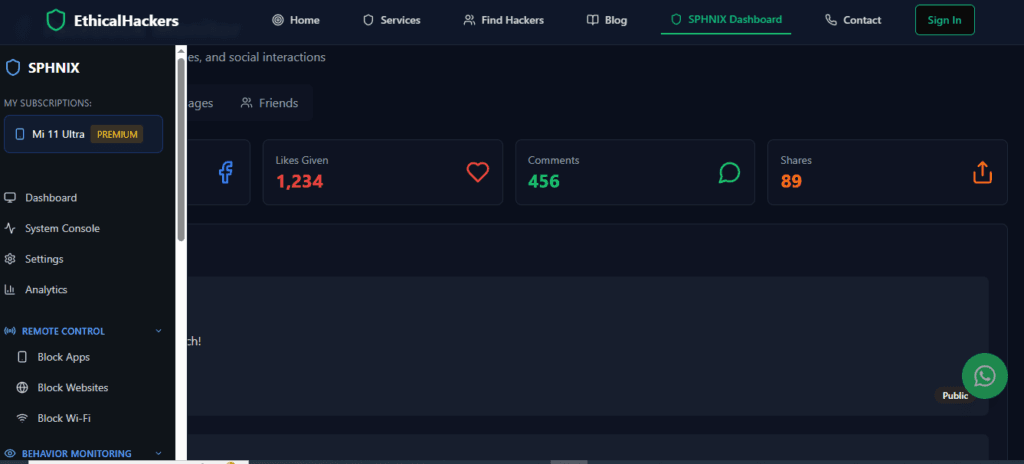
Key Features for Twitter Monitoring:
- Social media tracking: Monitor Twitter/X activity including direct messages, tweets, and interactions
- Keystroke logging: Capture typed messages and potential password entries
- Screenshot capture: Periodic screenshots that might show Twitter activity
- Browser history monitoring: See all visited websites including Twitter sessions
- Real-time reporting: Access data through a secure online dashboard
Sphnix operates discreetly on the target device, providing insight into Twitter activity without triggering security alerts from Twitter itself.
2. mSpy: Industry-Leading Monitoring Software
mSpy is one of the most established monitoring solutions with specific features for social media oversight.

Key Features for Twitter Monitoring:
- Social network tracking: Detailed monitoring of Twitter/X activity
- Message monitoring: Read sent and received direct messages
- Media access: View images and videos shared through Twitter
- Contact monitoring: See who the target interacts with on the platform
- Geolocation tracking: Optional feature that shows where tweets are posted from
mSpy’s strength lies in its comprehensive approach to digital monitoring, providing context around social media usage rather than just password capture.
3. Parentaler: Family-Focused Social Monitoring
Parentaler is designed specifically for parents concerned about their children’s online activity.

Key Features for Twitter Monitoring:
- Social media oversight: Monitor Twitter usage and interactions
- Content filtering: Alert systems for concerning content or interactions
- Time management: Track how much time is spent on social platforms
- Safety alerts: Notifications about potentially risky online behavior
- Activity reports: Comprehensive summaries of online behavior
Parentaler takes a protective approach, focusing on safety rather than surveillance, making it appropriate for parental monitoring situations.
Professional Account Recovery Services
In legitimate situations where you need to access an account you have rights to (such as a deceased family member’s account or a company account where the password has been lost), professional services exist that work within legal frameworks.
These services typically:
- Require proof of relationship or ownership
- Work with platform policies and legal requirements
- Utilize official channels rather than “hacking” methods
- Provide documentation and maintain legal compliance
This approach is slower and requires proper authorization, but it’s the only ethical way to access accounts when passwords are genuinely lost.
Protecting Your Own Twitter Account
Understanding how others might attempt to access accounts can help you protect your own. Consider these security measures:
- Enable two-factor authentication: This adds a critical layer of security beyond your password
- Use a unique, strong password: Avoid reusing passwords across multiple sites
- Regularly review active sessions: Check which devices are logged into your account
- Be wary of phishing attempts: Never enter credentials on unfamiliar sites
- Use a password manager: Generate and store complex passwords securely
When Professional Help Is Appropriate
There are situations where seeking professional assistance is both ethical and necessary:
- Parental concerns about child safety: When there are genuine worries about exploitation or harmful content
- Corporate security investigations: When company resources or reputation are at risk
- Legal proceedings: When social media evidence is relevant to legal matters
- Account recovery: When you have legitimate rights to an account but cannot access it
In these cases, professionals can operate within legal boundaries to address legitimate concerns without resorting to unauthorized access methods.
Conclusion: The Smart Approach to Social Media Monitoring
The question of how to find out someones twitter password often stems from legitimate concerns, but the direct approach is legally risky and technically challenging. Modern security measures make password extraction impractical for most people, and attempts often violate laws.
The intelligent alternative lies in authorized monitoring solutions like Sphnix, mSpy, and Parentaler, which provide insight into social media activity without requiring password access. These tools respect legal boundaries while offering the visibility needed for legitimate oversight purposes.
For situations that fall outside typical monitoring scenarios, professional services can navigate the complex intersection of technology, law, and ethics to address genuine concerns through proper channels.
Attempting to obtain someone’s Twitter password without authorization carries significant legal risks. If you have legitimate reasons for needing insight into social media activity but want to ensure complete compliance with laws and ethics, professional guidance can help. Our team at SpyWizards offers confidential consultations to explore legal approaches to digital monitoring and investigation.
Frequently Asked Questions (FAQs)
Q1: Can I legally find out someone’s Twitter password if they give me permission?
Yes, with explicit permission, you can legally access someone’s account. The simplest method would be for them to share their password directly or use Twitter’s official feature to add you as an account manager. Without permission, accessing someone’s account is illegal regardless of your relationship to them.
Q2: Will monitoring software like mSpy notify the user that I’m tracking their Twitter activity?
Quality monitoring software like mSpy operates in stealth mode and doesn’t send notifications to the device user. However, it’s crucial to only use such software on devices you own or have explicit permission to monitor, as unauthorized installation is illegal in most jurisdictions.
Q3: How can I tell if someone has accessed my Twitter account without permission?
Check your Twitter security settings for unfamiliar login locations or devices. Enable login notifications to receive alerts for new sign-ins. Regularly review your account’s active sessions and immediately revoke access to any unfamiliar devices. Use strong, unique passwords and enable two-factor authentication for maximum security.
Leave a Reply